Accurate and reliable water analysis depends on more than the measurement itself. From sample collection and preservation to reagent chemistry and UV/Vis spectrophotometry, every stage plays a critical role in ensuring consistent and reproducible results.
In this interview, AZoCleantech speaks with Dr. Frederik Heins, Product Specialist Water Analysis at MACHEREY-NAGEL, and Dr. Fabian Müller, Product Manager for UV/Vis Spectrophotometers at METTLER TOLEDO, about the challenges of modern water testing. They discuss best practices for sample preparation, the importance of matching reagent chemistry with analytical instrumentation, and how the collaboration between MACHEREY-NAGEL and METTLER TOLEDO is helping laboratories streamline workflows, reduce handling errors, and improve measurement reliability.
Walk us through what happens the moment a water sample arrives at the lab – what decides whether it's even usable?
Dr. Frederik Heins: The quality of any water analysis depends largely on the quality of the sample collected. To obtain meaningful and reliable results, the sample should accurately represent the water source and be protected from contamination or changes during collection, transport, and storage. Specific sampling requirements may vary depending on the parameter being tested.
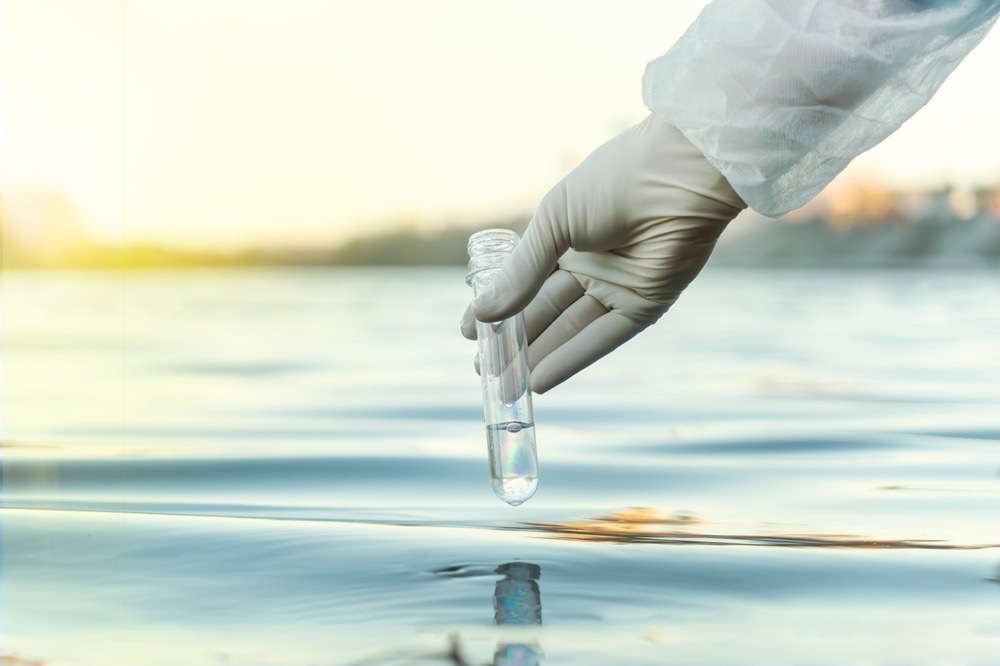
Image Credit: Melnikov Dmitriy/Shutterstock.com
Which sample preservation and preparation practices are most important to ensure reliable results, especially for sensitive or volatile analytes?
Dr. Frederik Heins: For sensitive or volatile analytes, preserving the original sample condition is critical. This requires using the correct sample container, minimizing headspace where appropriate, protecting samples from light, controlling temperature, and analyzing within the specified holding time.
Preparation steps such as filtration, pH adjustment, digestion, or stabilization must always match the analytical method. Even small deviations can lead to losses of volatile compounds or chemical transformations before the measurement begins. Good water analysis is therefore not only about measuring correctly but also about ensuring the sample remains representative from sampling through final analysis.
What's the most common preparation mistake that quietly undermines everything measured afterward?
Dr. Frederik Heins: The most common mistake is treating sample preparation as a routine step rather than part of the analytical method. Improper filtration, poor mixing, contamination during handling, or the use of the wrong preservation procedure can introduce significant bias.
These mistakes often go unnoticed because the instrument still generates a result. The danger is that the number looks precise even though the sample no longer represents the real water matrix. That's why quality assurance during preparation is just as important as the measurement itself.
How do you match a test kit or reagent chemistry to a specific parameter – nitrate, phosphate, COD?
Dr. Frederik Heins: The selection starts with the target parameter and expected concentration range. Different analytes require different chemical reactions that convert the parameter into a measurable signal.
For nitrate, phosphate, and COD, the reagent chemistry is specifically designed to react selectively with the substance of interest and produce a defined color intensity that can be evaluated photometrically. We also consider matrix effects, required detection limits, applicable standards, and whether the sample requires pretreatment before choosing the most suitable test kit.
Why does this chemistry step matter just as much as the instrument that reads the result?
Dr. Frederik Heins: The instrument only detects the signal produced by the chemistry. If the chemical reaction is incomplete, non-selective, or affected by poor sample preparation, even the most advanced photometer will report an inaccurate result.
The chemistry determines selectivity, sensitivity, and robustness, while the instrument quantifies the response. Reliable water analysis therefore depends on both parts working together. In practice, good reagent chemistry and proper sample preparation are often the foundation of accurate measurements
Once a sample is “measurement-ready,” what actually happens inside a UV/Vis photometer?
Dr. Fabian Müller: The instrument sends light through the prepared sample in a cuvette. The sample absorbs part of that light at a defined wavelength. A detector measures how much light passes through.
The instrument compares this value with a reference measurement and calculates the absorbance. According to the Lambert-Beer law, absorbance is proportional to concentration.
With a calibration curve, the instrument converts absorbance into a concentration, for example in milligrams per liter of nitrate or phosphate. With NANOCOLOR® tests on the EasyPlus UV/VIS, the calibration is already stored in the method. The user inserts the cuvette and reads the result.
What determines reliability and reproducibility when concentrations are very low?
Dr. Fabian Müller: At low concentrations, the signal is small and every disturbance matters. Four factors count the most:
- The instrument needs low noise, low stray light, and stable wavelength accuracy.
- The cuvette must be clean, scratch-free, and always placed in the same position.
- The blank value must be measured correctly.
- The chemistry must be consistent from lot to lot.
Pre-filled cuvettes and stored reference curves remove several manual steps. Fewer manual steps mean fewer sources of variation between users and between days.
How does an instrument fit into a water lab's daily routine – who's running it, how often, under what pressure?
Dr. Fabian Müller: In many water labs, technicians run the photometer several times a day. They measure parameters such as nitrate, phosphate, ammonium, and chemical oxygen demand (COD). Sample volumes are high, and results are often needed the same day, for example for process control or compliance.
Time is tight, and staff change between shifts. The instrument must therefore be easy to operate and give the same result for every user. The EasyPlus UV/VIS guides the user through the method, reducing training effort and the risk of operator errors.
What happens to a result after the measurement: limit checks, reporting duties, sign-off?
Dr. Fabian Müller: The lab first compares the result with the limit value for that parameter. This limit comes from a regulation, a permit, or an internal specification. If the value is within limits, the lab documents it and a responsible person approves it. If the value is out of limits, the lab repeats the measurement, checks the sample and the method, and informs the responsible person.
Why does this chain only hold up when sampling, chemistry, and measurement are all solid, not just one of them?
Dr. Fabian Müller: Each step can introduce an error that later steps cannot correct. A contaminated sample yields an incorrect result even with the best instrument; a poor reagent yields an incorrect result even with a perfect sample; an unstable instrument gives a wrong result even with perfect chemistry.
The result is only as reliable as the weakest link. This is why matched components matter. Sampling, reagent, and instrument have to work together, and that is the idea behind the collaboration. All methods were developed by the team at MACHEREY-NAGEL, ensuring that EasyPlus UV/VIS is a suitable instrument for this application.
What does the collaboration between MACHEREY-NAGEL and NANOCOLOR mean in practice for a lab running this workflow day to day?
Dr. Fabian Müller: MACHEREY-NAGEL supplies the NANOCOLOR® test kits, while METTLER TOLEDO supplies the EasyPlus UV/VIS spectrophotometer. The two are designed to work together.
The kits come in pre-filled round cuvettes. The reference curves, with defined limit values, are available as free downloadable methods for the instrument.
The lab does not need to perform manual calibration, and method setup and result verification are automated. For the lab, this means fewer handling steps, more repeatable results, and a faster start for new users.
This collaborative design suits environmental monitoring, water treatment, and industrial quality control, from small labs to large ones.
Where can readers find more information?
About Dr. Frederik Heins
Dr. Frederik Heins obtained his Ph.D. in Chemistry from the University of Münster in 2018. Since joining MACHEREY-NAGEL in Düren, Germany, he has held various positions in technical support, product management, and commercial product development for water analysis. In his current role as Product Specialist Water Analysis, he combines scientific expertise with market and customer insights to support the development and application of innovative water analysis solutions.
About Dr. Fabian Müller
Dr. Fabian Müller, PhD, is an accomplished chemist from the ETH Zürich in Switzerland. After completing his doctoral studies, Dr. Müller joined the team at METTLER TOLEDO as an Application Specialist for UV/Vis spectroscopy, where he quickly established himself as a skilled and knowledgeable professional. His expertise in this area led to his promotion to Product Manager for UV/Vis spectrophotometers.
About METTLER TOLEDO and MACHEREY-NAGEL
METTLER TOLEDO is a leading global supplier of precision instruments and services. The Company is the world’s largest manufacturer and marketer of weighing instruments for use in laboratory, industrial, and food retailing applications. METTLER TOLEDO also holds top-three market positions in several related analytical instruments and is a leading provider of automated chemistry systems used in drug and chemical compound discovery and development. In addition, the Company is the world’s largest manufacturer and marketer of metal detection and other end-of-line inspection systems used in production and packaging and holds a leading position in certain process analytics applications. Additional information about METTLER TOLEDO can be found at www.mt.com.
MACHEREY-NAGEL, founded in Düren in 1911, is a family-run company now in its fourth generation. It develops and distributes over 25,000 products for chemical and biomolecular analysis worldwide. With subsidiaries in Germany, Switzerland, France, and the USA, the company stands for innovative solutions that are developed in-house. With a strong focus on quality, customer service, and research, MACHEREY-NAGEL offers customized solutions for scientific and industrial applications. The company's products enjoy an excellent reputation in research laboratories, clinics, and industry worldwide. More information can also be found at www.mn-net.com.

This information has been sourced, reviewed, and adapted from materials provided by Mettler-Toledo International Inc.
For more information on this source, please visit Mettler-Toledo International Inc.
Disclaimer: The views expressed here are those of the interviewee and do not necessarily represent the views of AZoM.com Limited (T/A) AZoNetwork, the owner and operator of this website. This disclaimer forms part of the Terms and Conditions of use of this website.