In this interview, industry expert Brian Mills examines how PV connection technology has evolved to improve safety, reliability, installation consistency, and long-term system performance.
Looking back over the last 30 years, what did the photovoltaic industry look like when Stäubli first entered the market, and what challenges was the company aiming to address with its first pluggable PV DC connection technology?
At the time, the photovoltaic industry was still relatively niche and evolving very quickly. There was a lack of standardized products, installation was often expensive and labor-intensive, and the long-term reliability of modules and system components was still developing.
Europe was also further ahead than the US in deploying PV for domestic and residential applications, while much of the early US technology had been developed primarily for space programs such as satellites.
Against this backdrop, Stäubli, then Multi-Contact, set out to develop a safe, reliable, and consistent connection method for PV modules that could simplify installation while also improving cost-effectiveness and safety.
Solar has grown from a relatively niche market into a global, utility-scale industry. How have the demands placed on PV connection technology evolved alongside that growth, and how has Stäubli responded?
The PV industry is in a constant state of innovation, with an ongoing focus on achieving higher energy output at a lower cost. This has led to higher voltages, higher currents, and significantly greater product demand, often requiring manufacturers to scale production very quickly.
In response, Stäubli has worked to anticipate future needs by continuously developing its materials and designs while also increasing production capacity. Throughout that growth, the main focus has remained on performance, reliability and dependability.
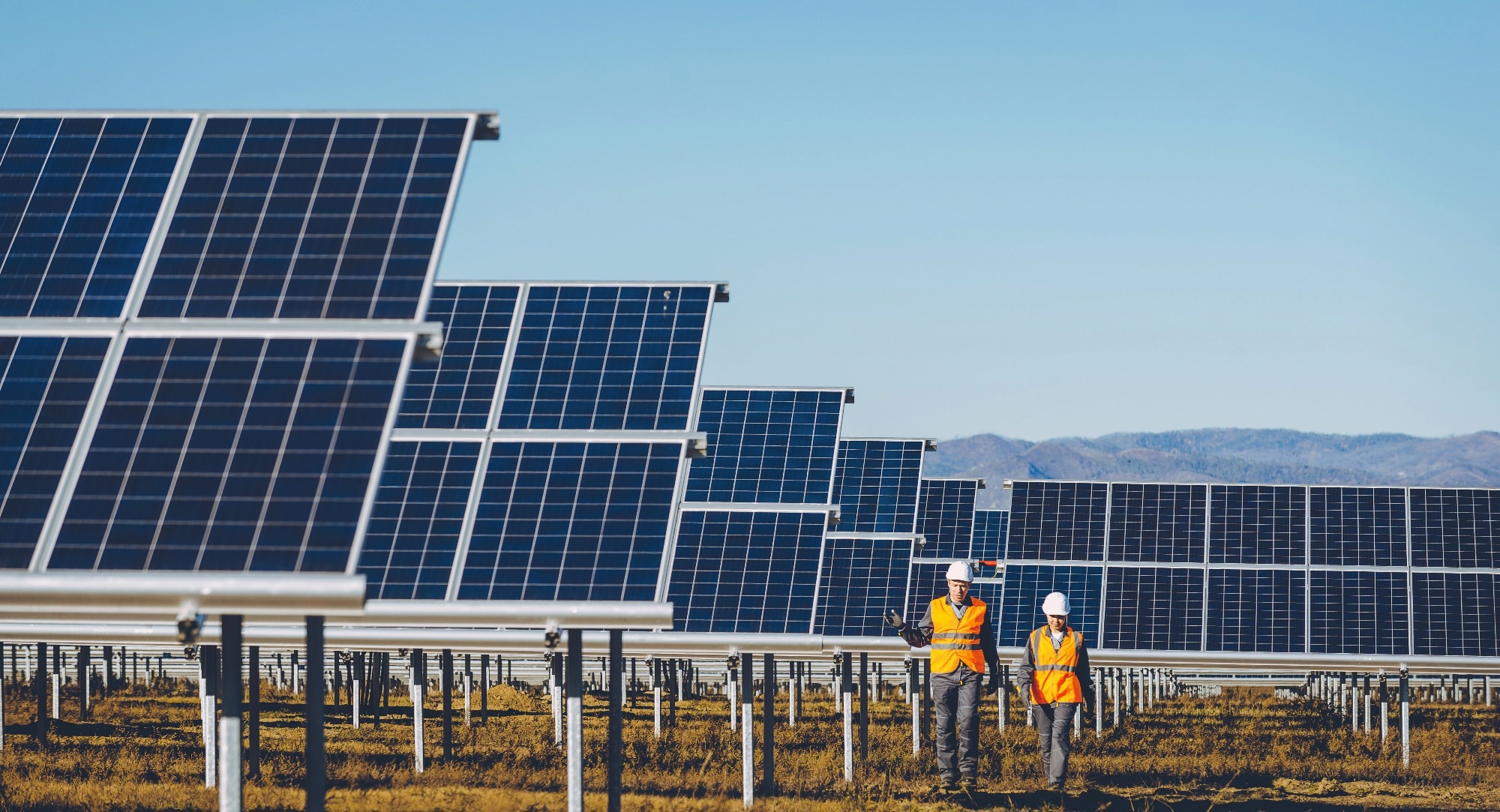
Image Credit: Mark Agnor/Shutterstock.com
Which Stäubli innovations do you believe have had the greatest influence on industry expectations around PV connection safety, reliability, and quality?
One of the most significant developments was Stäubli’s introduction of the original PV connector, which fundamentally changed the way PV modules were installed. Over time, this connectorized approach expanded beyond the modules themselves and became part of wider electrical balance-of-system designs, helping to reduce variability and the risk of installation errors.
Another important element is MULTILAM, the precision-engineered contact technology used at the heart of Stäubli PV connectors. It is designed to maintain a long-term, low-resistance connection between the plug and socket, which is particularly important in PV applications, where connectors must remain reliable across a wide range of outdoor conditions for decades.
Stäubli has accumulated extensive real-world experience from PV installations worldwide. How has feedback and field performance from earlier generations of PV systems influenced the way Stäubli engineers and tests connection technology today?
Stäubli is committed to rigorous testing and validation of our PV products beyond what is required by industry standards. This approach is supported by stringent quality controls designed to maintain the same level of performance regardless of production volume or geographic region.
The aim is to deliver consistent product quality worldwide, so a Stäubli PV connector supplied in the US, for example, is the same product you would find in Australia.
Beyond the connectors themselves, how has Stäubli contributed to developing more consistent connection practices across the industry through areas such as tooling, installer training, testing, and technical guidance?
Stäubli is dedicated to being a complete solution provider rather than simply supplying the connector itself. We endeavor to support customers throughout the process of selecting, assembling, and installing the product correctly, with our industry experts providing support with system design, and field engineers working directly with products and customers in real-world applications.
Stäubli also has a dedicated services team focused on training and installation support to help promote consistent connection practices in the field.
Was there a particular point in the industry’s development when DC connections began to be viewed less as a small component and more as a critical factor in the long-term performance and risk profile of a PV plant?
Yes. As PV connectors became increasingly popular, the market was flooded with competing products of very different designs and quality levels. Many attempted to directly copy the Stäubli Original MC4 connector, to the point where one could physically plug them together.
However, this did not necessarily mean the combination was safe, and a number of failures occurred, including some that unfortunately resulted in fires and structural damage. Over time, the industry responded more proactively, particularly by restricting the practice of “cross-mating” connectors from different manufacturers.
Are there any Stäubli developments or contributions from the past 30 years that have become so established within the solar industry that their significance is sometimes taken for granted today?
One example is the widespread use of pre-made, fully connectorized cable harnesses in modern PV system designs. Today, connectorized solutions are commonly used across PV modules, inverters, combiner boxes, shutdown devices, and other parts of the system.
This approach has become so established that it can be easy to overlook how important the original development of PV connectors was in enabling that type of system architecture. Much of what is now standard practice in connectorized PV system design can be traced back to Stäubli’s original contribution of the first PV connectors, which helped establish the foundation for how these systems are connected today.
Image Credit: Stäubli
BosCon is one of the newer additions to Stäubli’s portfolio. What changes in solar and energy infrastructure created the need for a purpose-built high-power connection solution such as BosCon?
BosCon represents the next step in the development of pre-made, connectorized harness systems by extending the concept to larger conductor cables. This helps make the electrical balance of systems easier and faster to install, which can have a direct impact on both project time and long-term reliability.
The need for this type of high-power connection solution is also not limited to PV, with similar requirements emerging in energy storage and e-mobility applications.
How does BosCon build on Stäubli’s experience in connection technology, and what new technical or application challenges did its development need to address?
Stäubli has decades of experience across a range of industries and high-power applications, providing a strong foundation for developing new application-specific connection technologies.
BosCon faces the unique challenge of safely connecting very high-powered conductors in demanding outdoor environments. The product also needs to be designed to work effectively with rigid cabling systems while still remaining straightforward to install and use in the field.
As Stäubli celebrates 30 years of PV connection technology, what lessons from its history will be most important as the solar industry enters its next phase, and where do you see Stäubli making its next major contribution?
Even though the MC4 connector itself is a single component, it is part of a wider connection system that includes the cable, connector, tooling, and assembly process.
Every part of that system contributes to the eventual performance and lifespan of a PV connector, so each needs to be treated as a critical system component. Alongside this, proper training is equally important to ensure that products are assembled and installed correctly in the field.
As the industry places greater emphasis on reliability and safety, Stäubli’s focus remains on consistency, experience, and a holistic approach to supporting both customers and the wider industry.
About Brian Mills 
Brian Mills holds a BS in Mechanical Engineering from the University of California. He has spent more than 22 years at Stäubli Electrical Connectors starting in Product Development (design, certification compliance, and testing), moving into Product Management for Photovoltaics-related projects, and eventually taking his newest role as Head of Renewable Energy, North America in 2021.

This information has been sourced, reviewed, and adapted from materials provided by Stäubli.
For more information on this source, please visit Stäubli.
Disclaimer: The views expressed here are those of the interviewee and do not necessarily represent the views of AZoM.com Limited (T/A) AZoNetwork, the owner and operator of this website. This disclaimer forms part of the Terms and Conditions of use of this website.