Testing drinking water for microplastics (MPs) is increasingly becoming a standard laboratory activity rather than an investigation limited to research settings. As regulatory requirements develop and monitoring schemes become more widely implemented, laboratories are expected to process growing numbers of drinking-water samples.
Analytical workflows must therefore provide both accurate polymer identification and sufficient throughput for regular, high-volume testing
The LUMOS II ILIM and ParticlePlus™ workflow are designed to support this type of application. The system enables complete 25 mm filters to be measured and evaluated in less than 30 minutes per sample.
Automated spectral acquisition, combined with AI-based polymer classification, produces consistent results while minimizing dependence on operator interpretation.
This article outlines the analysis of a drinking-water sample collected in Hungary.
Experimental
ParticlePlus™ is an automated workflow intended for use with IR laser imaging (ILIM) microscopes. The following experimental configuration was applied:
- Sample details: Eurofins Analytical Services Hungary Kft. provided a 20 L raw drinking-water sample collected in Hungary. The sample was filtered through a 25 mm Whatman® aluminum oxide filter with a pore size of 0.2 μm.
- Measurement conditions: Whole-filter imaging was carried out in transmission mode using a LUMOS II ILIM and the ParticlePlus™ software workflow. Measurements were performed across the MIR fingerprint region between 1800 and 1250 cm-1, using a laser wavenumber increment of 4 cm-1.
- Data evaluation: Once spectral acquisition was complete, Bruker’s Microplastic Identifier (MPID) automatically processed the hyperspectral data without user intervention. The identification threshold was defined as 750.
Results
A complete 25 mm filter was used, and the filtration was completed in 17 minutes to reach the final analytical result. The acquisition of 22.5 million IR spectra across the entire filter required 12 minutes; automated data processing accounted for the remaining five minutes.
MPID applied machine-learning (ML) models to detect and classify particles without supervision. In addition to assigning particle identities, the software determined individual particle characteristics, including dimensions, morphology, and location on the filter. Additional information on MPID is available in Product Note M210.
The analysis identified 71 particles in total. Of these, 59 were assigned as polymer particles, while 12 were identified as calcium carbonate (CaCO3). The result demonstrates that the workflow can separate polymeric particles from inorganic material.
Polyethylene (PE) was the most commonly detected polymer, with 21 particles representing 36% of the total polymer count. Other identified materials were polypropylene (PP, 11 particles), polyethylene terephthalate (PET, nine), polyamide (PA, seven), and polymethyl methacrylate (PMMA, one). When the particle count was related to the analyzed water volume, the sample corresponded to a concentration of 2.9 MPs per liter.
Particle dimensions covered a range from 8 μm to 83 μm. Forty-three percent of the measured particles were between 20 and 50 μm. This size profile is consistent with ranges frequently reported for environmental microplastics found in drinking water.
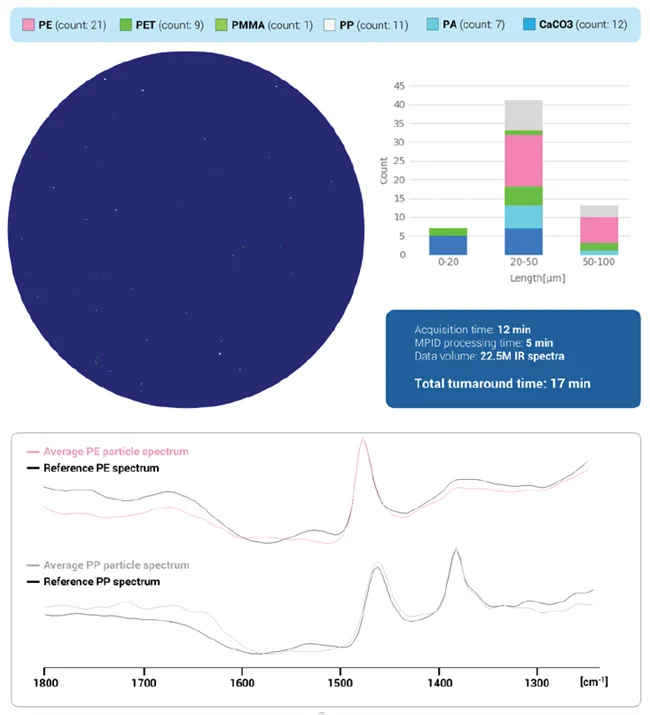
Fig 1. Comprehensive results summary for the drinking water sample. Image Credit: Bruker Optics
The quality of the unsupervised polymer assignments was assessed by comparing average spectra from the detected PE and PP particles with the corresponding reference spectra in the spectral library. These two polymer classes were the most abundant in the sample.
The close spectral correlation supports the reliability of the AI-driven classification and indicates that accurate polymer identification can be achieved without extending the measurement time substantially.
Conclusion
- Complete analysis of a 25 mm filter in under 30 minutes enables efficient, high-throughput testing.
- MPID performs automated particle detection and polymer classification using AI-based, unsupervised models, removing the need for manual spectral assessment.
- Each identified particle can be evaluated for polymer type, size, morphology, and position, providing a detailed description of the sample.
- The combination of LUMOS II ILIM and ParticlePlus™ is ideal for routine monitoring programs involving large numbers of drinking-water samples.
The Fastest IR Microscope Ever Built: LUMOS II ILIM
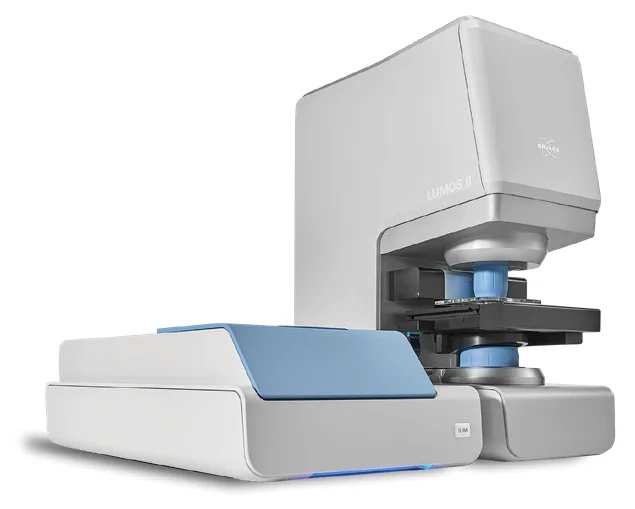
Image Credit: Bruker Optics
Acknowledgments
Produced using materials originally authored by Domenic Dreisbach (PhD), Product Manager, Bruker Optics GmbH & Co. KG.

This information has been sourced, reviewed and adapted from materials provided by Bruker Optics.
For more information on this source, please visit Bruker Optics.