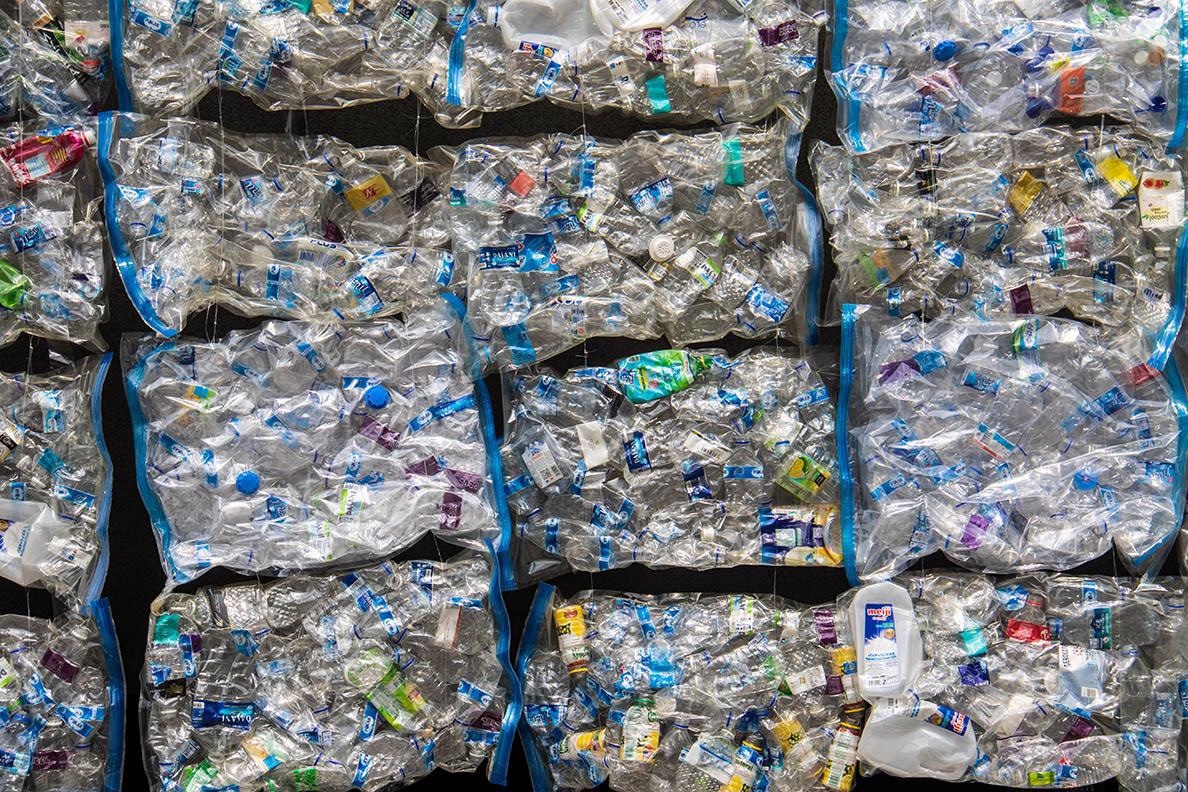
Image Credit: Nick Fewings on Unsplash.
The authors stressed that plastic waste is still considered a big issue, particularly for developing countries, as a major portion of them do not get recycled and even recycled plastics still eventually end up negatively impacting the environment. This study just denotes that certain plastic wastes are being acquired and repurposed prior to being discarded.
For the research, Bai and Givens examined data from the United Nations and the World Bank by observing numerous economic variables as well as trade data on common plastic wastes like polyethylene and polystyrene, also called #1 and #2 plastics, respectively.
Furthermore, they examined data on 45 countries with high income that are mostly found in the Global North, such as European countries and the United States—and 40 lower-income countries which are mainly found in the Global South like Vietnam, El Salvador, and Botswana.
The data spanned from 2003 to 2013, thereby enabling the scientists to carry out a longitudinal analysis—displaying change over time—which can disclose a powerful connection among the efforts.
While they discovered a link between plastic waste imports and economic benefits in the lower-income countries, there was no connection between importing waste and economic growth for the high-income countries.
While the study did not precisely evaluate how plastic waste was being utilized in developing countries, the authors noted that it is probable they are recycling some of the plastic for use in manufacturing and industry. Also, there was little proof that the lower-income countries were trading the plastic waste among themselves locally.
Most plastic doesn’t get recycled – that’s important to keep in mind. A lot of plastic waste ends up in landfills or in the environment, so maybe it’s a silver-lining that importing plastic waste is associated with economic development in developing countries. At least they are recycling some of it and not using virgin materials because plastics are made from fossil fuel chemicals.
Jennifer Givens, Assistant Professor of Sociology, Utah State University
The scientists highlighted that there is huge complexity in the global trading of plastic waste. Going forward, they plan to examine the regional trade among countries as well as variations in more recent years, particularly taking into account the fact that China stopped taking plastic waste imports in 2018.
Besides the economic advantages of importing plastic waste, decreasing environmental harm from plastics would still probably need variations from both high-income countries and lower-income countries, specifically high-income countries, stated Bai.
Some people might argue that developed countries need to create more ways to better process plastic waste domestically, instead of looking for other destinations for plastic waste overseas. The way we recycle plastic waste varies greatly across the United States. Some communities may do it well, but in others, there is still room for improvement. Producing and using less plastic would be another way to reduce environmental harms.
Yikang Bai, Study Lead Author and PhD Sociology Graduate, Washington State University
Journal Reference:
Bai, Y & Givens, J E, (2021) Ecologically Unequal Exchange of Plastic Waste? Journal of World Systems Research. doi.org/10.5195/jwsr.2021.1026.