The EU-funded MULTIPLY project brings together 17 partners to develop microalgae-based alternatives for everyday products that reduce dependence on fossil and food resources.
They will be applied in the form of colourings and ingredients for food, animal feed, cosmetics, lubricants and packaging.
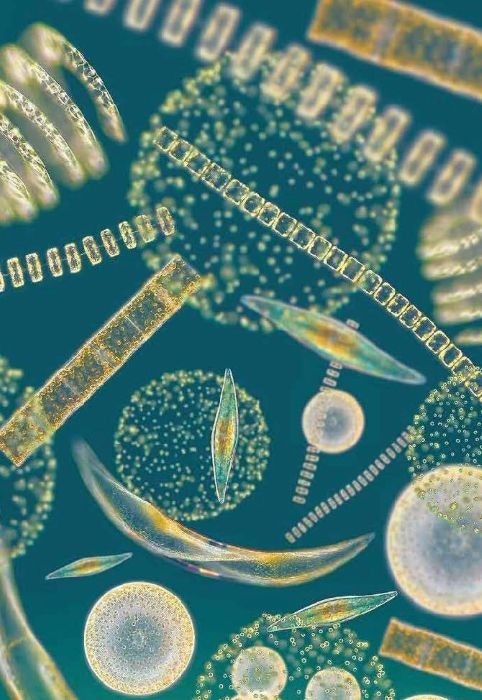 Image Credit: AIMPLAS
AIMPLAS, the Plastics Technology Centre, is participating in the European MULTIPLY project, an initiative launched in June 2025 that seeks to transform industry through the use of microalgae. Funded by the Horizon Europe programme, the project brings together 17 strategic partners to develop and scale up ten biological solutions for five key sectors, thereby accelerating the arrival of these sustainable ingredients on the mass market.
By replacing ingredients derived from fossil and food sources with bio-based alternatives, MULTIPLY not only reduces the environmental footprint of everyday products but also promotes the sustainable and profitable cultivation of microalgae across Europe.
The consortium is working with five species of microalgae – diatoms, Arthrospira (Spirulina), Tetraselmis, Nannochloropsis and Chromochloris zofingiensis – to develop ten high value-added products. These applications are aimed at sectors as diverse as food (natural colorings and protein-rich ingredients), animal feed (salmon feed components enriched with microalgae compounds), cosmetics (oils and esters for personal care), lubricants (bio-based esters for high-performance applications) and biomaterials and packaging (compostable films, paper coatings and packaging solutions based on algae oils and starch).
AIMPLAS is developing sustainable solutions and materials from compounds and polymers extracted from microalgae for different packaging applications. Activities include the formulation of recyclable barrier coatings for paper substrates, with water and grease resistance, as an alternative to conventional paper/PE multilayer structures. AIMPLAS is also participating in the development of an active cosmetic packaging that integrates materials derived from microalgae, including functional compounds, encapsulation matrices and structural materials, with the aim of improving product stability and reducing the need for preservatives in cosmetic formulations.
‘The idea that microalgae will drive a circular future sums up our approach,’ said Marta Paiva, project coordinator at A4F, during the latest project review meeting in Berlin. ‘We focus on specific products and sectors where algae can replace conventional ingredients, backed by data on their performance, sustainability and scalability.’
In the coming months, the project will launch pilot activities for nutrient recovery and test a new monitoring tool. It will also deliver the first algae extracts and oils for product development, key steps in bringing these solutions to market. At the same time, the consortium will advance sustainability and market acceptance studies, laying the groundwork for a future generation of algae-based products in Europe.