The initiative will transform wastewater and organic waste into high-value bio-based products, including nutrients and proteins.
The POST-PURPLE project, funded by the Horizon Europe programme, is aligned with the objectives of zero waste and zero pollution, contributing to the sustainability of urban waste treatment systems.
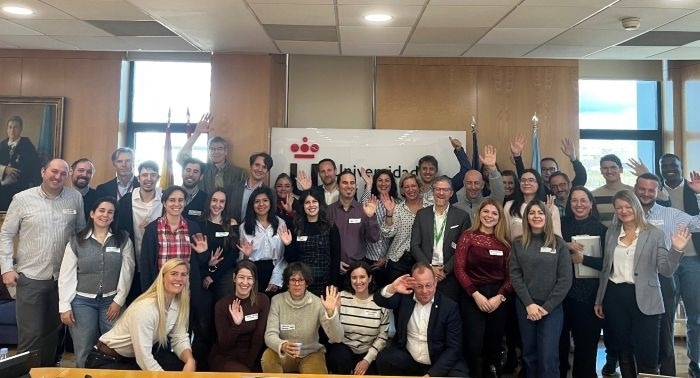 Image Credit: AIMPLAS
POST-PURPLE, a new research and innovation project under the Horizon Europe program, will transform urban wastewater and organic waste into valuable resources by developing innovative bio-based technologies that produce nutrients, proteins and natural compounds. AIMPLAS, the Plastics Technology Centre, is participating in this initiative, which seeks to promote zero-waste urban biorefineries.
Wastewater treatment plants and organic waste management facilities are among the main sources of greenhouse gas (GHG) emissions and energy consumption in Europe. At the same time, large volumes of valuable organic material continue to go unused. POST-PURPLE addresses this dual challenge by introducing advanced circular solutions that convert waste streams into resources, helping cities reduce pollution and generating new value chains.
By recovering these waste streams and reducing associated emissions, the project contributes to the European objectives of zero-waste and zero-pollution objectives, thereby improving the efficiency of urban waste treatment systems.
POST-PURPLE was officially launched on 21 and 22 January 2026 at the Rey Juan Carlos University (URJC) campus in Móstoles, Madrid. Over two days, the consortium partners, from different European countries, agreed on the project's objectives, technical work plans and collaboration strategies to move towards more sustainable urban waste management.
The project stands out for its integrated approach, which for the first time jointly addresses solid waste, wastewater and gas emissions as the core of its innovation. During the launch meeting, the partners presented their technical approaches and discussed the pilot activities planned at the demonstration sites, under the premise of transforming emissions and waste into resources rather than destroying them.
Within the POST-PURPLE project, AIMPLAS will work on three lines of action to achieve the established objectives. Firstly, in order to reduce CO2 emissions from anaerobic digestion processes, it will develop and validate photocatalysts aimed at converting this CO2 into methanol using low-energy processes. Secondly, with the aim of continuing to reduce GHG emissions, AIMPLAS will study the synthesis, modification and application of different porous materials that act as NOx adsorbents, in order to minimise the emission of these compounds generated as unwanted by-products in certain photobioreactors. Finally, given that some of the processes involved in POST-PURPLE are highly energy-intensive, AIMPLAS will develop advanced coatings that allow the thermal conductivity of equipment and current conduction systems to be controlled, thus ensuring greater energy efficiency.
Daniel Puyol Santos, project coordinator at Rey Juan Carlos University, emphasised the importance of the social dimension: ‘Technology alone is not enough. If we don't clearly explain what we do and why we do it, even good ideas can fail. We want to get people on board with the project from the outset.’
In the coming months, POST-PURPLE will begin to develop and validate its portfolio of integrated technologies, with the aim of demonstrating practical pathways towards cleaner and more circular urban biorefineries, as well as a quantifiable reduction in diffuse emissions to air and water.
The project is funded by the European Union (Grant No. 101181162), and the consortium consists of:
- Rey Juan Carlos University (URJC), Spain
- Bioenergy and Sustainable Technologies GmbH (BEST), Austria
- Strane Innovation (STRANE), France
- Imperial College of Science, Technology and Medicine (ICL), United Kingdom
- Food4Sustainability – Associação para a Inovação (F4S), Portugal
- FCC Aqualia SA (Aqualia), Spain
- Water Europe (WE), Belgium
- University of Valladolid (UVA), Spain
- Anonymi Etaireia Diacheirisis Aporrimmaton Dytikis Makedonias (DIADYMA), Greece
- Tehnološki Fakultet Novi Sad (FTNS), Serbia
- Association for Research on Plastics and Related Materials (AIMPLAS), Spain
- Cluster Bioeconomy and Environment of Western Macedonia (CLUBE), Greece
- University of Western Macedonia (UOWM), Greece
- Econward Tech, S.L. (ECW), Spain
- European Science Communication Institute (ESCI), Germany