On-line analyzers have become increasingly central to process monitoring, control, and optimization in a wide range of large-scale applications spanning the refining, metals, petrochemical, power generation, and biotechnology industries.
Instruments are required to deliver accurate, rapid, and comprehensive real-time gas measurements within an industrial process. These instruments ensure that operational conditions can be routinely checked and rapidly adjusted if they drift away from the application’s specified parameters.1
The safe and efficient operation of production plants is also dependent on the availability of reliable on-line analytical data. This is key to meeting the strict legislative requirements that are increasingly being set by emissions control, health and safety, and energy conservation protocols.
It is also essential to select an appropriate technology and system, considering factors such as footprint, ease of maintenance, long-term cost, sample time, precision, and sensitivity.
On-line monitoring has historically relied on gas chromatography (GC). Technicians are familiar and confident with this strong industry standard, but mass spectrometry (MS) is quickly becoming the more popular choice for these applications.
This article compares the use of GC and MS analyzers for on-line monitoring of industrial processes, outlining clear reasons that plants should upgrade to scanning magnetic sector MS instruments for more precise, faster, and more comprehensive gas analysis with improved long-term cost-effectiveness.
The Need for Accurate Real-Time Monitoring
On-line analyzers perform continuous measurements of gas streams to improve control, detect impurities, and provide product details.
Industrial plants must leverage reliable gas stream data to fine-tune the reaction mixture to maximize product yields, optimize processes, enhance finished product quality, and ensure safety within the production plant.
Large-scale operations often require meticulously balanced conditions and rapid decisions on changes to process parameters, because even short delays can result in colossal losses.
Gas Chromatography: The Industry Standard
GC is the most widely employed on-line gas monitoring method in production lines, primarily due to widespread familiarity with the technique, its relatively low cost per instrument, ease of automation, and its capacity to simultaneously measure many components.
GC can be used to separate and analyze hundreds of individual species in even complex mixtures, both qualitatively and quantitatively, and measure sample composition.
GC works by distributing gaseous samples between a stationary and mobile phase, leveraging a chemically inert gas to carry molecules through a heated column. Precise results with very low detection limits are available within minutes.
Challenges of Gas Chromatography for Process Monitoring
GC is a popular technique, but it does have a number of limitations. Time is a major challenge because a process gas chromatograph only delivers results intermittently, typically at intervals of minutes.
This restricts the method’s suitability for on-line analysis and automatic control, because even a slight delay between sampling and analytical time in these settings does not allow for instant reaction correction.2
This limitation primarily stems from the time-consuming chromatographic separation of components as the sample passes through the column.3,4
On-line protocols benefit from speed, particularly as plants will typically assess two or three sequential data points prior to taking action to adjust a process. Leveraging this advantage when using GC involves using a number of instruments or columns in tandem to circumvent the slow analysis time by reducing the measurement interval.
Facilities generally install an array of GC units to ensure the continuous monitoring of multiple components. This is usually done on a single-stream basis due to the longer cycle time of GC.
This setup suffers from extra costs and constraints. For example, large configurations of GC units are often housed outdoors to save valuable lab space, requiring large, expensive, purpose-built shelters.
Intensive maintenance schedules are also required in order to guard against retention time drift, with additional consumables costs for replacement columns, as well as carrier and calibration gases.
Mass Spectrometry: Enabling Rapid and Comprehensive Analysis
MS is a sensitive and powerful technique that offers a versatile and specific solution for the analysis and control of industrial production lines.
MS offers a range of key advantages versus GC. For example, mass spectrometers are able to characterize many facets of a chemical reaction, including the consumption of reactants and the formation of products and impurities.
They work by ionizing neutral sample gas molecules to charged particle components, separating them according to their molecular weight. MS’s analytical strength primarily stems from its sensitivity, dynamic range, speed, and capacity for multiplexing and multicomponent analysis.5
MS detectors enable the simultaneous determination of compounds featuring diverse elemental composition, allowing the structural features of components to be established.4
Benefits of Process Mass Spectrometry
Process MS analyzers are comparatively more complex and initially more costly to implement than their GC counterparts, but they offer more favorable long-term cost-effectiveness and unparalleled speed and precision, typically several orders of magnitude higher.3
MS instruments based on scanning magnetic sector technology work by separating charged particles in a variable magnetic field. These instruments provide flat-topped peak profiles able to tolerate mass scale drift with no impact on measurement results. These characteristics ensure high stability, lower maintenance times, and maximum availability and plant productivity (Figure 1).5
The clean baseline between peaks means that these analyzers offer excellent reproducibility and linearity, as well as the ability to measure very small concentrations that are immediately adjacent to high concentrations.
This powerful and flexible technology offers exceptionally fast and stable analysis of gases with unrivalled accuracy, precision, resistance to contamination, and long intervals between recalibration.
Process MS analyzers can be used to perform direct analysis on multiple sample streams, with a single instrument replacing multiple GC units. This key capability results in a reduced total footprint and lower overall capital costs.
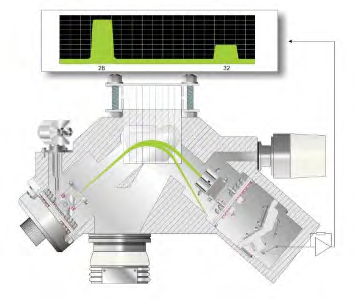
Figure 1. Schematic of a magnetic sector process mass spectrometer. Image Credit: Thermo Fisher Scientific – Environmental and Process Monitoring Instruments
Instruments like the rugged, compact Thermo Scientific Prima PRO (Figure 2) that leverage scanning magnetic sector MS are ideally suited to use in challenging process monitoring applications.
The Prima PRO magnet is laminated to allow scanning at high speeds. This underpins the system’s capacity for rapid analysis while maintaining excellent stability.
It is also equipped with a unique rapid multi-stream sampler (RMS), offering reliable and fast sample selection from up to 64 streams (Figure 3).
Gas component concentrations can be measured in the range of 10 parts per million (ppm) to 100 % with a single Faraday detector. The GasWorks software from Thermo Scientific is also integrated into the analyzer, guiding operations and ensuring a stable, secure process analytics platform (Figure 4).
The company has also implemented service and support options with promised response rates in order to ensure timely instrument optimization.
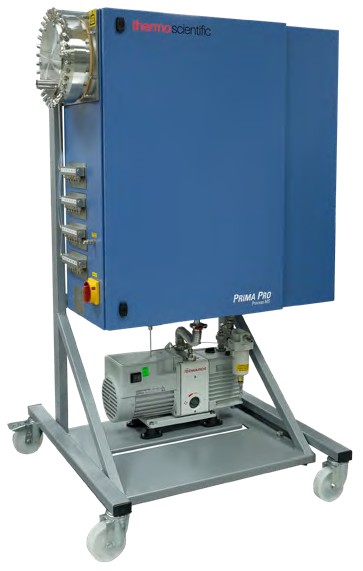
Figure 2. Prima PRO Process Mass Spectrometer. Image Credit: Thermo Fisher Scientific – Environmental and Process Monitoring Instruments
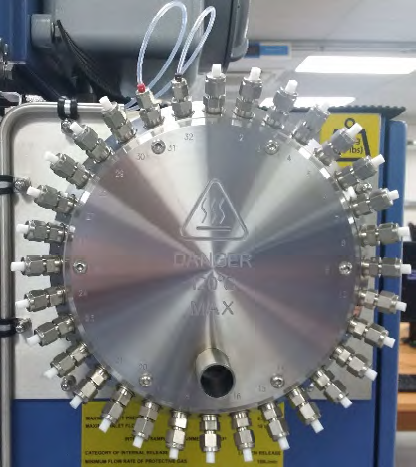
Figure 3. The Prima PRO’s 32-port rapid multi-stream sampler (RMS). Image Credit: Thermo Fisher Scientific – Environmental and Process Monitoring Instruments
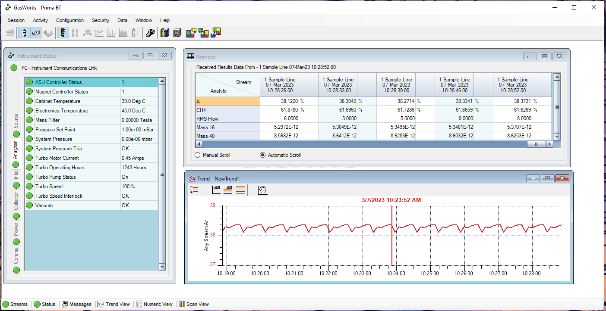
Figure 4. GasWorks Software sample display. Image Credit: Thermo Fisher Scientific – Environmental and Process Monitoring Instruments
Table 1. Comparing the features of a standard process GC with the Prima PRO process MS. Source: Thermo Fisher Scientific – Environmental and Process Monitoring Instruments
| Feature |
Standard process GC |
Prima PRO process MS |
|
Sample time
|
3-4 minutes
7-15 minutes |
10 seconds
20 seconds |
| Multicomponent analysis |
Requires an array of multiple units |
Analysis of up to 64 sample streams performed by a single instrument. |
| Precision |
0.1 % |
0.01 % on most components and with better linearity. |
| Footprint |
Compact single instrument with small footprint. The overall footprint of a bank of multiple instruments is larger. |
Less compact, but with a smaller overall footprint, as fewer instruments are required. |
| Shelter |
An array of units often requires a large, expensive outdoor shelter. |
A smaller shelter is required if the instrument is housed outdoors
|
| Maintenance, calibration, and lifetime |
- Prone to retention time drift and lower stability
- Higher maintenance with a standard process
- GC requires, for example, a six-week preventative maintenance schedule for valves, alongside quarterly maintenance on other instrument parts, with common applications needing daily calibrations
|
- Minimal drift due to the inherent stability of the magnetic sector analyzer
- Minimal maintenance
- Automatic calibration (30-day or 30- to 90-day intervals)
|
Approximate
analyzer cost
(USD) |
$50-75 k |
$175 k |
| Associated costs |
High cost of consumables, including carrier gases and replacement columns. |
- Low lifetime cost of consumables (no carrier gases or column replacement)
- Long replacement intervals (one year or more)
|
Direct Comparison of a Standard Process GC with the Prima PRO
Reduced Sample Times
The Prima PRO can complete its analysis in 10 to 20 seconds in applications where the analyzer inlet remains on a single sample stream, in stark contrast with the three to 15 minutes typically observed when using standard process GC analyzers. Actual analysis depends on the target gas's complexity in these cases.
A single Prima PRO is able to measure multiple sample points with extremely short cycle times. This is achieved by plumbing several streams into an instrument’s RMS and reading data points on these multiple sample streams every 30 seconds, including the 10 seconds required to flush out the previous gas.
Unparalleled Precision and Linearity
Analysis of fuel gas components is approximately five times more precise on the Prima PRO versus a standard process GC. Performance assessments have underscored the significantly improved linearity offered by the Prima PRO when analyzing complex gas mixtures versus a thermal conductivity detector fitted to a gas chromatograph (Figure 5).6,7
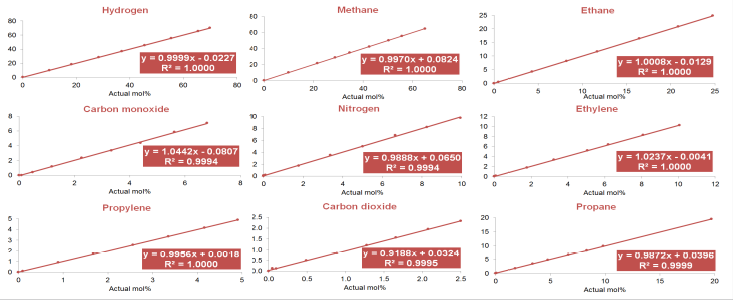
Figure 5. Prima PRO linearity data generated by EffecTech. Image Credit: Thermo Fisher Scientific – Environmental and Process Monitoring Instruments
Exceptional Availability for Streamlined Calibration and Maintenance
The fault-tolerant and rugged design of the Prima PRO delivers exceptional availability, typically exceeding 99.7 % and reaching 100 % with redundant installation.
This reliability considerably reduces the Prima PRO’s maintenance requirements, further reducing operating cost and allowing a maintenance manager more time for other tasks. This is especially notable when compared with the maintenance required by many legacy GC units.
The Prima PRO’s calibration interval is generally between one month and 90 days, typically taking place automatically. A standard process GC may require, for instance, quarterly maintenance on various instrument parts, a six-week preventative maintenance schedule for valves, and daily calibrations in some cases.
Reduced Overall Long-term Costs
The capital outlay for the Prima PRO is greater than that of a standard process GC (approximately USD 175,000 versus USD 50,000-75,000). A single Prima PRO system does the job of several GC units. However, reducing the total cost of ownership, maintenance, and shelter size.
The Prima PRO does not require sample separation via a column, avoiding the consumables costs on replacement columns and the need for calibration and carrier gases associated with a process GC analyzer.
Table 2 outlines a 10-year customer case study analyzing the total cost differential linked with replacing two legacy process GCs used for flare gas monitoring with a single Prima PRO.
The Prima PRO offers rapid, accurate, multicomponent analysis for a plant stack, and is ideally suited to this demanding application that requires extremely complex gas streams to be analyzed.
Total operating costs were reduced by almost a half at the close of the decade, primarily due to significantly reduced consumables expenses and lower utility costs.
Table 2. Customer case study cost analysis over 10 years, comparing one process MS (Prima PRO) with two legacy process GCs. Source: Thermo Fisher Scientific – Environmental and Process Monitoring Instruments
| Flare gas monitoring |
1x Prima PRO MS |
2 x process GC |
| Analyzer cost (USD) |
$155,400 |
$155,000 |
| Utilities (USD) |
$39,000 |
$278,000 |
| Consumables |
$67,257 |
$100,000 |
| Total operating costs for 10 years |
$261,691 |
$533,000 |
Summary
The demands of legislative requirements and manufacturing processes themselves have prompted a need for accurate, rapid, and reliable process analyzers at affordable prices.
The choice of on-line analyzer has historically been driven by familiarity, but it is increasingly clear that a highly versatile magnetic sector MS has the potential to provide faster, more precise analysis with a reduced number of analyzers.
The Thermo Scientific Prima PRO is an ideal example of the reasons for these systems’ increasing popularity. It is optimally suited to industrial process monitoring, and while MS is comparatively more expensive and complex to implement, a single instrument can accommodate the workload of multiple GC units.
This is key to reducing sample time, streamlining maintenance, and reducing overall costs. The Prima PRO MS delivers unparalleled on-line gas composition analytics that are rapid, precise, comprehensive, and flexible, especially when compared to a standard process GC.
An excellent return on investment is delivered, as these instruments have been developed to meet today’s application-specific needs.
The Prima PRO MS is set to be the industry standard in the future and is already the system of choice in plants and refineries worldwide, underpinning their work to monitor emissions and optimize a diverse range of production processes.
References and Further Reading
- Valcárcel M, Luque de Castro MD. 16 Process analysers. Techniques and Instrumentation in Analytical Chemistry, (online) pp.524–556. DOI: 10.1016/s0167-9244(08)70028-3. https://www.sciencedirect.com/science/chapter/bookseries/abs/pii/S0167924408700283?via%3Dihub.
- Frauendorfer, E., Anna Maria Wolf and Wolf-Dieter Hergeth (2010). Polymerization Online Monitoring. Chemical Engineering & Technology, 33(11), pp.1767–1778. DOI: 10.1002/ceat.201000265. https://www.researchgate.net/publication/229740573_Polymerization_Online_Monitoring.
- Cheng, Z., et al. (2018). A method for the quantitative analysis of gaseous mixtures by online mass spectrometry. International Journal of Mass Spectrometry, (online) 434, pp.23–28. DOI: 10.1016/j.ijms.2018.09.002. https://www.sciencedirect.com/science/article/abs/pii/S1387380618302343.
- Borisov, R.S., Kulikova, L.N. and Zaikin, V.G. (2019) 'Mass Spectrometry in Petroleum Chemistry (Petroleomics) (Review), Petroleum Chemistry, 59(10), pp. 1055–1076.DOI: 10.1134/s0965544119100025. https://link.springer.com/article/10.1134/S0965544119100025.
- Cook, K.D., Bennett, K.H. and Haddix, M.L. (1999). On-Line Mass Spectrometry: A Faster Route to Process Monitoring and Control. Industrial & Engineering Chemistry Research, 38(4), pp.1192–1204. DOI: 10.1021/ie9707984. https://pubs.acs.org/doi/10.1021/ie9707984.
- EffecTech UK (2023). EffecTech UK | Global Leaders in Gas Measurement. Available at: https://www.effectech.co.uk/.
- ISO. ISO 10723:2012 - Natural gas - Performance evaluation for analytical systems. ISO. Available at: https://www.iso.org/standard/55712.html.

This information has been sourced, reviewed, and adapted from materials provided by Thermo Fisher Scientific – Environmental and Process Monitoring Instruments.
For more information on this source, please visit Thermo Fisher Scientific – Environmental and Process Monitoring Instruments.