Imagine a city where every breath is cleaner and safer. For millions living in the world’s busiest urban centers, that vision may seem out of reach. However, advances in ambient air quality monitoring are bringing it closer to reality.
As urban populations continue to grow, the need to monitor and improve air quality has never been more urgent. This article explores the science behind ambient air quality monitoring and the transformative impact these technologies can have on public health and urban environments.
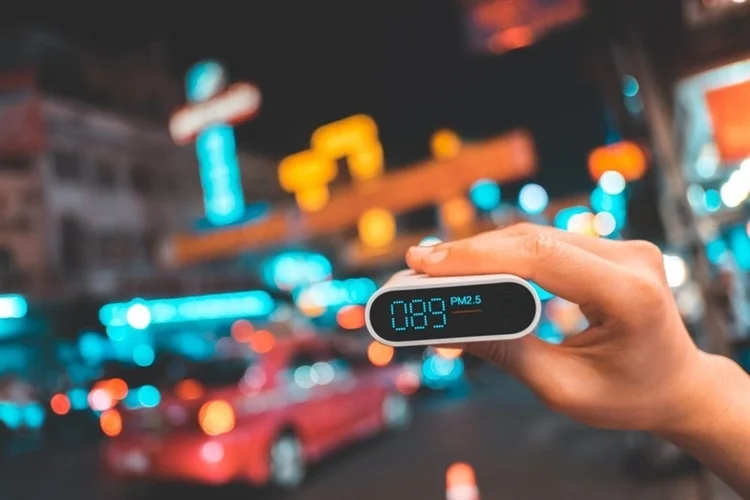
Image credit: Oatawa/Shutterstock.com
The Urban Challenge
Urban regions are lively centers for culture, innovation, and community. However, they face unique environmental concerns.
Traffic congestion, industrial activity, and large population densities all contribute to air pollution levels that can exceed health-based air quality standards. Urban inhabitants are often exposed to particulate matter, nitrogen dioxide, and other hazardous pollutants.
Nitrogen dioxide (NO2) is one of several extremely reactive gases known as nitrogen oxides or NOx. The primary source of NO2 in the atmosphere is fuel combustion: emissions from automobiles, trucks, and buses, as well as power plants and off-road equipment, produce NO2.
The US Environmental Protection Agency states that:
Breathing air with a high concentration of NO2 can irritate airways in the human respiratory system. Such exposures over short periods can aggravate respiratory diseases, particularly asthma, leading to respiratory symptoms (such as coughing, wheezing or difficulty breathing), hospital admissions and visits to emergency rooms. Longer exposures to elevated concentrations of NO2 may contribute to the development of asthma and potentially increase susceptibility to respiratory infections.
Understanding and controlling these contaminants necessitates a thorough monitoring strategy that can decipher the intricate tapestry of urban air quality.
The Science of Air Quality Monitoring
The science of air quality monitoring is fundamental to improving urban air quality. This method involves collecting and analyzing air samples to determine the amounts of various pollutants. Both traditional and cutting-edge technologies are used to detect anything from tiny amounts of nitrogen dioxide to large levels of particulate matter.
Depending on the type of gas being monitored and the intended data output, numerous air quality monitoring and analysis systems have been proved to efficiently analyze ambient air and detect its components, including:
- Optically Enhanced Fourier Transform Infrared (OE-FTIR)
- Non-Dispersive Infrared (NDIR) Technology
- Pulsed Fluorescence Technology
- Gas Chromatography (GC)
- Gas Filter Correlation (GFC)
- Chemiluminescence
- Gas Scrubbing
- UV Photometry
Innovations in data distribution methods and sensor design have also played important roles in providing more precise, real-time insights into the air we breathe. These developments provide a clearer understanding of pollution sources and trends, allowing for more effective treatments.
Global Efforts and Innovations
Cities around the world are turning to science and technology to revitalize their efforts to improve air quality. From London's Ultra Low Emission Zone to Seoul's network of air quality sensors, cities use a combination of policy and technology to battle air pollution.
These efforts frequently use real-time data to inform politicians and the public alike, resulting in improvements ranging from traffic management tactics to industrial pollution limits. Such programs highlight technology's ability to monitor and drive action for better air.
The Impact on Communities
The benefits of cleaner air go far beyond the environment, affecting every area of urban life. Improved air quality has a huge public health impact, lowering the incidence of respiratory disorders, cardiovascular ailments, and other pollution-related health problems.
The importance of effective air quality monitoring goes beyond creating a healthier and more sustainable urban environment. It is also crucial for understanding the specific applications of various monitoring tools and how they can provide accurate data so cities and communities can track air quality trends and make informed decisions.
As communities become increasingly involved in monitoring and improving air quality, they also become change agents, contributing to a global push for cleaner, healthier cities.
Conclusion
The quest for cleaner urban air is a multidisciplinary challenge that requires the collaborative efforts of scientists, policymakers, and residents. Air quality monitoring not only provides insights into environmental health, but also methods for improving it.
As solutions continue to be discovered and deployed, the dream of easy breathing in cities becomes increasingly realistic. By being aware and engaged, we can all help to clear the air for future generations.
Additional Resources
- Thermo Fisher Scientific Inc. (2026). Technologies and Solutions for Ambient Air Quality Monitoring | Thermo Fisher Scientific - US. Available at: https://www.thermofisher.com/us/en/home/industrial/environmental/air-quality-analysis/ambient-gas-monitoring.html?icid=CAD_blog_safety_2024July.
- Taiwan Addresses Ambient Air Pollution by Mercury with Advanced Technology and Pollution Countermeasures. Available at: https://assets.thermofisher.com/TFS-Assets/CAD/Application-Notes/mercury-cems-case-study-taiwan.pdf?icid=CAD_blog_safety_2024July.
- Gasdia-Cochrane, M. (2023). How Seoul Metro Improves Indoor Air Quality in Subway Stations. (online) Identifying Threats. Available at: https://www.thermofisher.com/blog/identifying-threats/how-seoul-metro-improves-indoor-air-quality-in-subway-stations?icid=CAD_blog_safety_2024July.
Acknowledgments
Produced using materials originally authored by Whitney Hatcher.

This information has been sourced, reviewed and adapted from materials provided by Thermo Fisher Scientific – Environmental and Process Monitoring Instruments.
For more information on this source, please visit Thermo Fisher Scientific – Environmental and Process Monitoring Instruments.