Thermo Fisher Scientific has recently announced the most recent advances in air quality monitoring: the Thermo Scientific 5014iQ Beta Attenuation Monitor and the Thermo Scientific 5030iQ SHARP (Synchronized Hybrid Ambient Real-time Particulate) Monitor.
These novel models are designed to fulfill the growing expectations of regulatory agencies as they tighten health-based ambient air quality criteria for fine particulate matter.
Why Choose the 5014iQ and 5030iQ Monitors?
These monitors provide unparalleled accuracy, dependability, and ease of use. They use beta attenuation monitoring technology to produce accurate mass concentration readings, which are required for continuous environmental monitoring and air quality assessment.
Advanced Technology for Accurate Real-Time Data
The 5030iQ SHARP Monitor stands out for its hybrid method, which combines light scattering nephelometry and beta attenuation technology. This combination ensures that particulate matter is continuously measured with high resolution and updated in real time at one minute intervals.
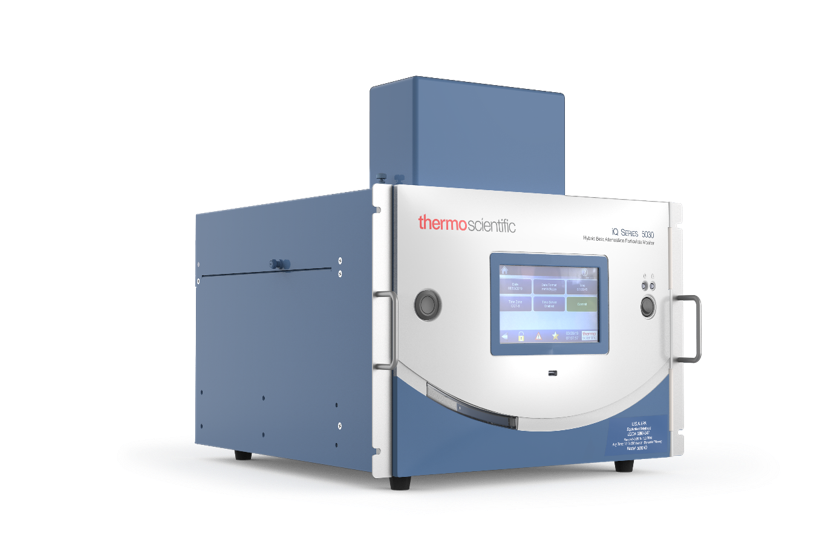
Image Credit: Thermo Fisher Scientific
Accuracy and speed are critical for successful air quality control. Similarly, the 5014iQ employs beta attenuation to provide accurate readings of PM-2.5, PM-10, and PM-1 in ambient air.
Designed for User Convenience
Both models have an easy-to-use interface, front-door access, and automated filter tape advancement. These features decrease the need for manual maintenance, increasing operational efficiency and reducing downtime.
Reliable Performance in Any Environment
These monitors are designed to work in a variety of environmental settings and offer long-term reliability. The 5014iQ and 5030iQ function successfully across a wide temperature range, making them appropriate for a variety of climates while maintaining accuracy under similar settings.
They monitor sample conditions, changing the control system to heat only when necessary, removing moisture effects, and ensuring that volatile aerosols are intact for accurate measurement. The US Environmental Protection Agency and CCEP have certified both models for ambient air monitoring, and TUV testing is underway.
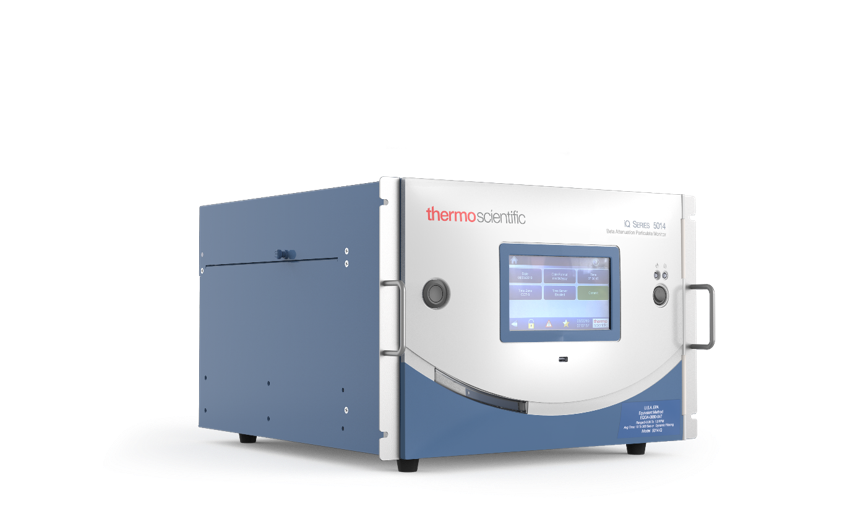
Image Credit: Thermo Fisher Scientific
Relevance in Today's Air Quality Landscape
Current air quality reports show that problems are becoming more severe. According to the American Lung Association's 2024 ‘State of the Air’ report, 131 million people in the United States are exposed to harmful levels of air pollution, with fatal particle pollution surges at their highest in 25 years.
In addition, wildfires and seasonal weather patterns continue to have an impact on air quality across the country, as witnessed in Texas and Colorado, where Ozone Action Days and particle matter problems are common.
These monitors are critical in resolving these concerns because they provide the accurate, real-time data required for successful environmental monitoring and public health protection.
Experience the Future of Air Quality Monitoring
Thermo Fisher Scientific is committed to offering the best solutions for air quality monitoring requirements. The 5014iQ and 5030iQ monitors are intended to provide the precision, dependability, and easy of use necessary for effective environmental monitoring.

This information has been sourced, reviewed and adapted from materials provided by Thermo Fisher Scientific – Environmental and Process Monitoring Instruments.
For more information on this source, please visit Thermo Fisher Scientific – Environmental and Process Monitoring Instruments.