*Important notice: This news reports on an unedited version of an accepted paper and is awaiting final editing. Therefore, the paper should not be regarded as conclusive or treated as established information.
Researchers have developed and evaluated a computer vision-based framework to monitor ecological changes associated with marine renewable energy projects, with a focus on automating fish detection, species identification, and spatial interaction assessments.
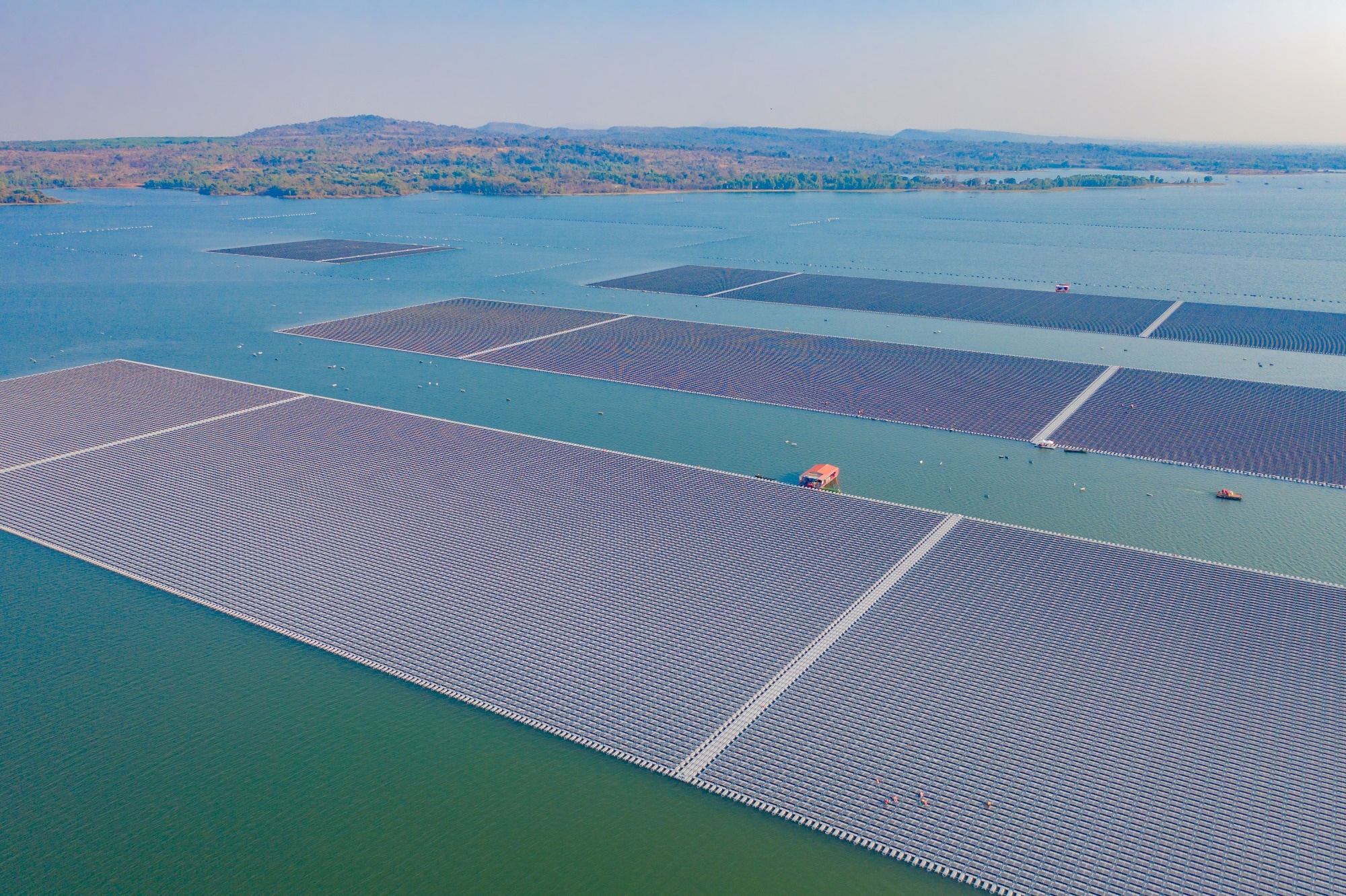
Study: A computer vision-based approach to monitor changes in ecosystems associated with marine renewable energy projects. Image Credit: Tavarius/Shutterstock.com
Ecosystem Monitoring Challenges in MRE
Marine renewable energy (MRE) offers a promising avenue for low-carbon electricity generation, contributing to climate change mitigation by harnessing oceanic resources such as currents and waves.
However, introducing MRE devices into marine environments raises concerns about their ecological impacts, including behavioral changes, habitat modifications, and potential harm to marine fauna. Establishing robust environmental baselines and continuous monitoring throughout the lifecycle of MRE projects, from installation to decommissioning, is critical to understanding these effects.
Traditional monitoring methods are often invasive, costly, or impractical in high-energy aquatic settings. This study investigates whether recent advances in computer vision and artificial intelligence can provide an effective, scalable approach to monitor biodiversity and ecosystem dynamics around MRE infrastructure, focusing on fish populations as an illustrative case.
Automated video analysis may reduce manual workload, improve detection accuracy, and offer fine-scale spatial and temporal resolution essential for sustainable ocean energy development.
Click here to download a free PDF copy of this page
Computer Vision Framework Development
The researchers developed and tested a semi-automated framework integrating computer vision techniques to analyze underwater video footage collected near a prototype vertical-axis turbine installed in Puerto Morelos, Mexico.
The approach involved filtering out video frames without fish to reduce processing time, followed by fish detection and species identification using a YOLOv11 (You Only Look Once) deep learning model. Expert validation supplemented automated identification via a public species database.
To estimate spatial relationships between marine organisms and the energy device, a monocular depth estimation algorithm reconstructed three-dimensional distances from two-dimensional video images, enabling assessment of proximity for potential interactions or collision risks. The entire workflow was designed with scalability and flexibility, allowing adaptation across various project phases and marine environments.
The case study focused on local fish communities, training models specifically for species presence and including an invasive species detection exercise targeting lionfish (Pterois volitans). The computational tools were chosen for their open-access nature and ease of integration into environmental monitoring protocols.
Fish Detection and Depth Estimation
Application of the workflow markedly reduced video analysis time by eliminating empty frames, decreasing footage from over 16 hours to just above 1 hour for manual review. This substantial time saving illustrates the potential for processing large datasets efficiently, a significant advantage given the extended monitoring periods required in marine ecological assessments.
The YOLO model accurately detected fish presence and demonstrated promise for automating species identification, particularly for conspicuous or invasive species. In the case of lionfish, distinctive morphology enabled reliable detection despite limited training data.
Nonetheless, the study highlighted challenges in identifying smaller or less distinctive species, emphasizing the ongoing need for expert verification and expanded training datasets. The monocular depth estimation method showed effective distance measurement between fish and the camera, suggesting its applicability in evaluating behavioral responses, collision likelihood, and displacement around MRE devices.
The study highlights the advantages of using readily deployable video systems, such as fixed cameras, remotely operated vehicles, or autonomous underwater vehicles, combined with computer vision, to capture comprehensive ecological data.
The data can inform environmental impact assessments by tracking species richness, abundance, spatial interactions, and functional diversity before, during, and after MRE device deployment.
The authors note limitations related to site-specific conditions, such as water turbidity, light availability, and the effects of mounting hardware or artificial lighting, which may influence organism behavior or video quality.
Future improvements include integrating other sensing techniques, such as acoustic monitoring, to complement visual data, expanding species identification capabilities, and refining depth estimation under varied environmental conditions.
The framework’s adaptability positions it as a valuable tool for ongoing ecosystem evaluation in regions with high marine biodiversity, where traditional monitoring methods face particular constraints.
Implications for MRE Monitoring
This study demonstrates that combining advanced image analysis and deep learning offers a practical approach to monitoring ecological effects associated with marine energy infrastructure.
By automating the detection and identification of marine fauna and estimating spatial interactions, this method significantly reduces processing time while providing detailed insights into species behavior and ecosystem changes. Its implementation across different project phases supports informed mitigation and adaptive management, enhancing the sustainability of ocean energy developments.
While technical and environmental challenges remain, the proposed framework lays the groundwork for scalable, non-invasive environmental monitoring tailored to the complexities of marine renewable energy sites.
Continued refinement and broader application of these computer vision techniques will be essential for balancing energy production goals with marine ecosystem integrity.
Journal Reference
Alamillo-Paredes A., Lagunes-Díaz E.G., et al. (2026). A computer vision-based approach to monitor changes in ecosystems associated with marine renewable energy projects. Scientific Reports. DOI: 10.1038/s41598-026-62922-4, http://nature.com/articles/s41598-026-62922-4