Food and beverage manufacturing facilities operate effluent treatment systems that must consistently meet discharge consent limits, even as production volumes, raw material properties, and upstream processing conditions change.
Achieving reliable compliance in such a variable environment requires an accurate understanding of treatment performance at any time, rather than depending only on historical or retrospective results.
At Boortmalt, one of the UK’s leading malt producers, online effluent monitoring was installed during a broader mechanical upgrade of the site’s effluent treatment works. The upgrade was designed to deliver continuous information about treatment performance across several process stages, including aeration, secondary clarification, and dissolved air flotation (DAF).
This enabled operators to track changing conditions in real time instead of waiting for laboratory results. Pi supported the installation in collaboration with Aqua Operations, which manages the site’s effluent treatment process.
Why Is Online Monitoring Used as the Basis for Operational Effluent Control?
Effluent quality at food and beverage facilities can change considerably when production inputs fluctuate, raw materials differ, or cleaning activities are carried out. If process control depends mainly on laboratory testing, responses to these changes are inevitably delayed; by the time laboratory data becomes available, conditions within the treatment system may have shifted again.
Online monitoring delivers continuous readings for important process parameters, enabling operators to identify developing trends and modify operating conditions during routine operation. This allows aeration rates, chemical dosing, and flow conditions to be adjusted according to live process information rather than isolated historical measurements.
How Is Dissolved Oxygen Used to Control Biological Treatment Performance?
In the biological treatment stage, dissolved oxygen is a key control parameter in aeration tanks; the amount of available oxygen directly affects microbial activity and the degradation of organic material.
When dissolved oxygen concentrations become too low, biological treatment may be restricted or not completed. Conversely, excessive aeration can raise energy use without providing an equivalent improvement in treatment performance.
Maintaining the correct balance requires dependable dissolved oxygen measurement. At this facility, dissolved oxygen is measured with Pi’s OxySense optical dissolved oxygen sensor installed in the aeration tank. OxySense applies an optical measurement method intended to deliver consistent readings in the abrasive and highly fouling conditions commonly associated with industrial effluent.
Its automatic self-cleaning and self-verification functions help reduce sensor drift and decrease the need for regular maintenance. Operators can therefore set aeration rates using dependable dissolved oxygen information instead of making adjustments based on occasional laboratory results.
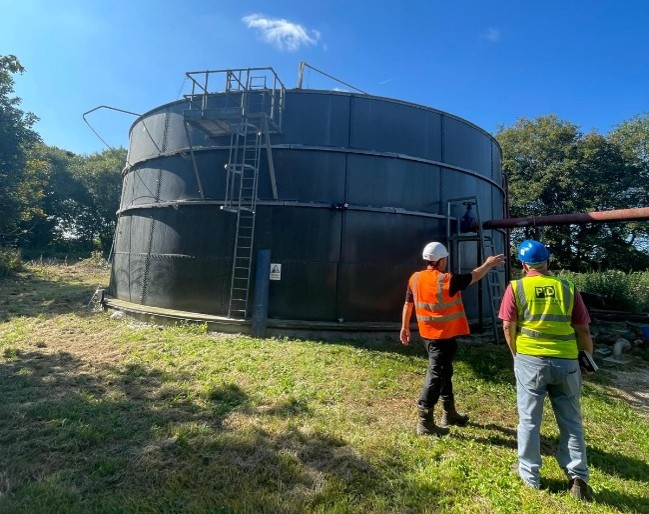
Aeration tank on site. Image Credit: Process Instruments (UK)
Why Is Suspended Solids Monitoring Required Through Clarification Stages?
After biological treatment, secondary clarification separates treated water from biological solids before the water reaches the final discharge point. Variations in suspended solids during this stage can indicate emerging settling problems, increased hydraulic loading, or changes in upstream biological treatment.
Without prompt detection, solids carryover may influence downstream operations and reduce discharge quality, potentially resulting in substantial fines from the License to Discharge body.
Suspended solids measurement must remain reliable across both low- and high-concentration ranges to provide effective oversight under changing operating conditions. At this facility, suspended solids are measured with Pi’s SoliSense® suspended solids sensor, which operates from low NTU values up to 8% solids.
This broad measurement range supports continuous monitoring while process conditions vary. When combined with an automatic water cleaning system, SoliSense® helps maintain consistent optical measurement in fouling conditions and limits the requirement for manual intervention.
How Is Solids Removal Verified at the DAF Outlet?
Dissolved air flotation serves as the final solids removal stage, capturing residual suspended material before discharge. Monitoring the DAF outlet is important for confirming flotation efficiency and checking that chemical dosing and hydraulic conditions remain appropriately balanced.
A SoliSense® sensor installed at the DAF outlet continuously measures suspended solids at this important process location. The resulting data enables operators to detect process disturbances as they develop and verify that solids removal continues to perform effectively before final discharge.
How Does Multiparameter Monitoring Improve Understanding of the Overall Treatment Process?
Integrating dissolved oxygen and suspended solids measurements across several treatment stages gives operators a broader understanding of the effluent treatment system as a whole, rather than viewing each unit as an independent process.
Examining aeration, clarification, and polishing data together helps reveal cause and effect relationships and makes it easier to evaluate the consequences of operational adjustments.
At this facility, continuous multiparameter monitoring provides real-time information from important treatment stages. Operators use these measurements to manage aeration, chemical dosing, and flow conditions during normal operation. This supports consistent compliance with discharge consent limits while helping to maintain stable treatment performance.
For facilities assessing effluent monitoring as part of a compliance upgrade or process improvement program, Pi can assist with evaluating and selecting monitoring solutions informed by practical experience of treatment processes.

This information has been sourced, reviewed, and adapted from materials provided by Process Instruments (UK).
For more information on this source, please visit Process Instruments (UK).