Chemical oxygen demand (COD) indicates the amount of oxygen required to oxidize organic matter in a body of water. It can therefore be used to assess how potentially polluting an effluent may be when released into the natural environment.
Discharging effluent with a high COD can lower dissolved oxygen levels in the receiving environment. This reduction may damage local ecosystems, including the organisms and biological communities that depend on them. As environmental regulations become increasingly stringent, COD is monitored to confirm that effluent discharge will not adversely affect nearby ecosystems.
How Is COD Measured in Wastewater?
Several techniques are available for determining COD in wastewater. These include colorimetric analysis with dichromate reagents, closed reflux methods, and approaches based on the time required to digest organic compounds.
However, operators often encounter difficulties because these methods are not only complicated but also expensive. They also generally do not allow COD to be monitored continuously or in real time.
Can UV254 Be Used to Estimate or Replace COD?
A more straightforward and cost-effective approach is to estimate COD through a surrogate parameter, such as UV254 absorbance.
What Is the Relationship or Correlation Between UV254 and COD?
The absorbance measured at a particular wavelength is related to the concentration of organic compounds that absorb light at that wavelength. Wavelengths around 254 nm are especially useful because many organic substances absorb ultraviolet light in this region.
Because UV254 absorbance generally increases with the concentration of organic matter, a linear correlation between UV254 and COD can often be developed. UV254 can then serve as a surrogate for COD, provided that the types of organic compounds contributing to the absorbance remain reasonably consistent.
It is important to recognize that UV254 absorbance does not necessarily correlate with all water quality parameters. A correlation may be absent when the relevant parameter in a particular water source is associated with substances that do not absorb UV254 light.
For example, a water supply containing a substantial amount of dissolved sugar could have a high COD, even though sugar does not absorb UV254.
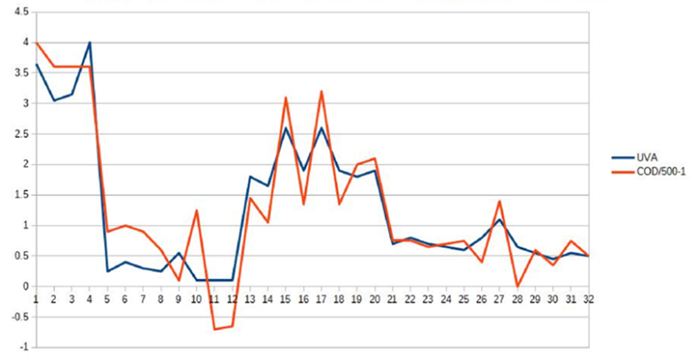
Correlation study between COD and UV254 absorbance on industrial wastewater. Image Credit: Process Instruments (UK)
The data above come from a correlation study comparing COD with UV254 absorbance in industrial wastewater samples. The results provide a visual illustration of the relationship between COD and UV254 absorbance.
How Can a UV254 Sensor be used to Measure COD?
The UV254Sense probe from Pi uses a high-quality, long-life UV LED that produces light at a wavelength of 254 nm. The light passes through a sapphire window and travels through the water sample before reaching a photodiode detector on the opposite side.
The proportion of light lost through absorption is referred to as UVA. Since absorbance is the measurement of interest, the UVA value can be used to establish a correlation factor and produce a surrogate estimate of COD.
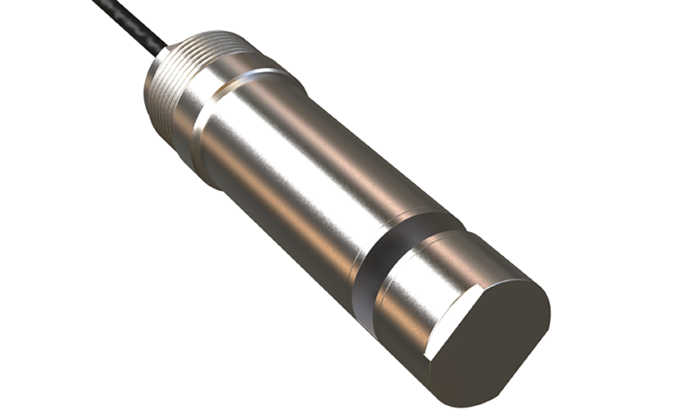
UV254Sense Probe. Image Credit: Process Instruments (UK)
UV254 COD Correlation Example: Wastewater and Water
Pi’s service engineers recently upgraded a UV254 COD monitoring system at a wastewater treatment works in Türkiye. The facility uses Pi’s UV254 COD monitoring technology to help ensure that its effluent discharge into a nearby river remains below the legal limit of 5 mg/L.
The system has operated reliably and continuously for more than six years.
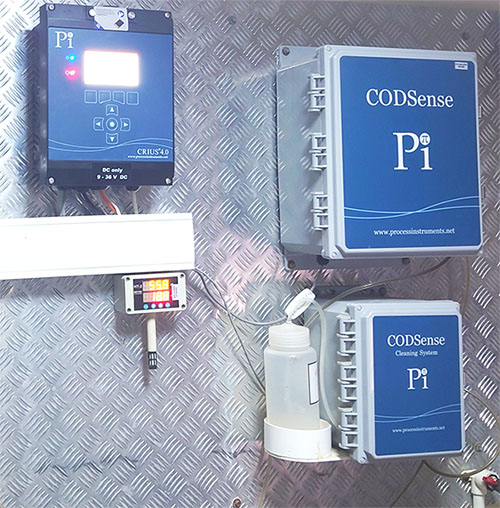
Pi’s UV254 COD monitoring system. Image Credit: Process Instruments (UK)
What Is a “Good” UV254 Probe?
Pi’s new UV254Sense probe is designed to offer advantages over other UV probes on the market. It is relatively simple to operate and maintain because it contains no moving parts. Furthermore, its running costs are also comparatively low, as the system does not require reagents.
Further information is available about using UV254 as a surrogate for other measurements, including total organic carbon (TOC) and biological oxygen demand (BOD).

This information has been sourced, reviewed, and adapted from materials provided by Process Instruments (UK).
For more information on this source, please visit Process Instruments (UK).