Even if demand, policy incentives, and technical pathways are all in the right places, hydrogen refueling infrastructure projects often fail to launch. This is especially true for projects designed to support heavy-duty vehicle fleets.
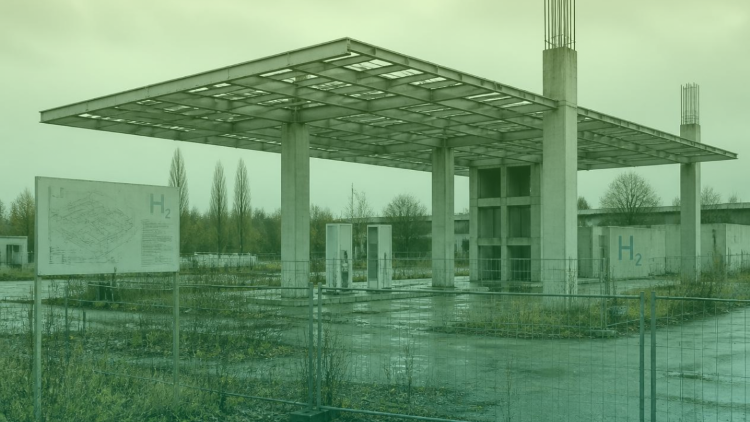
Image Credit: Power to Hydrogen
There are five key reasons why these projects so often stall in early development.
The Cost of PEM Technology
Proton exchange membrane (PEM) electrolyzers have been the default recommended technology for hydrogen refueling stations for a decade. They are compact and efficient, and the engineering consultants who write the majority of feasibility studies are familiar with them.
However, they rely on rare and expensive materials, such as iridium, platinum, and titanium, which means the cost of these materials and the barriers they create cannot be solved by engineering innovations in the next product generation.
The cost of a PEM system is not compatible with the majority of refueling project budgets. The typical starting point for a bus fleet or light truck corridor is a capacity of 1 megawatt (MW). The levelized cost of hydrogen usually means that diesel remains the fuel of choice for project teams, despite hydrogen being a viable option for heavy-duty transport.
However, these calculations are often completed with the wrong technology in the denominator.
Reducing capital costs without sacrificing performance is essential for projects in 2026, a significant technological challenge.
Delivered Hydrogen Is Not a Viable Solution at Scale
When on-site hydrogen production is economically infeasible, project teams often opt for delivered hydrogen instead, using tube trailers, centralized production, and scheduled deliveries to get the system running without the high upfront investment.
While this can be the right option for very small operations, delivered hydrogen is not a viable solution at scale. For instance, transport alone adds roughly €1.10 per kilogram (kg) for every 50 kilometers (km) between the production facility and the station, quickly compounding the overall cost of the hydrogen.
Additionally, project teams must consider price volatility, their limited control over their supply and manufacturing infrastructure, and the logistical complexity of scheduling deliveries. This can embed a long-term structural disadvantage that often makes it economically impossible to grow a fleet on delivered hydrogen.
In contrast, projects that choose to produce hydrogen on-site typically achieve a viable cost per kilogram at full capacity.
Real-World Hydrogen Offtake Is Underestimated
Hydrogen refueling station development projects typically follow a simple trajectory: secure land, design the system, commission the engineering, apply for the grant, issue the RFQ, and confirm the fleet demand at a suitable point.
However, confirming fleet demand should be one of the first considerations for project managers, so the station is not creating a hydrogen supply before demand has been secured.
The fleet customer, whether they are a city bus operator, a private logistics company, or a waste collection contractor, forms the economic foundation for a hydrogen station. Without a committed offtake agreement or a letter of intent (LOI), the station may not be able to rely on its demand, thereby undermining its financial foundation.
Examples of this can be seen in stations in Europe that were built on government grants. They opened without a committed fleet to use the hydrogen they produced and operated at a fraction of capacity for years before closing.
Successful projects position the fleet operator as a co-developer early on in the project. If conversations about offtake volume and refueling schedules happen at the start of the working relationship, hydrogen suppliers can ensure supply and demand work in tandem in the future.
Electrolyzers Are Being Evaluated for the Wrong Operating Conditions
Most electrolyzer specifications are written for steady-state operation, in which a system runs at a consistent load and produces hydrogen at a predictable rate. This is the right specification for industrial hydrogen users with flat, continuous demand, but it is not applicable to refueling stations.
A bus depot might fill 20 buses within a four-hour morning window. However, a truck corridor station might have bursts of heavy demand during driver changeovers, with quiet periods in between. The electrolyzer paired with an on-site solar array is going to see significant load variability as cloud cover and time of day affect power availability.
This creates a problem that does not appear on the spec sheet: cycling. Every time an electrolyzer starts up, shuts down, ramps up, or ramps down, it puts mechanical and chemical stress on the stack. For most electrolyzer technologies, frequent cycling accelerates degradation and shortens the operational lifetime of the system.
Affordable electrolyzer technologies have historically carried a durability trade-off under cycling conditions. That gap has been closed by newer hybrid AEM electrolyzer designs that maintain the cost advantage without the lifetime penalty. But these are not yet the default option in most feasibility studies, and not every project team is aware of them.
Project teams should ask electrolyzer vendors about degradation rates under real-world cycling conditions and investigate the testing they have conducted under variable, renewable loads to gain a realistic idea of the total cost of ownership.
Communication Problems and Permitting Constraints can Delay Construction
Refueling stations have physical constraints that interact directly with local permitting rules, which vary by municipality. These constraints can include setback requirements, compression equipment footprints, and hydrogen storage volumes.
Issues can arise when the teams responsible for acquiring technology and those responsible for buying land work in isolation, when the station footprint does not fit the chosen site, when setbacks do not clear, or when local authorities raise concerns about storage volume.
These problems can be expensive to fix in the later stages of a project, and can also extend commissioning timelines, use up a team’s contingency budget, and may encourage procurement teams to reopen vendor negotiations.
To avoid these risks, good practice suggests that site selection and technology selection should happen at the same time. Project teams will have a clear picture of the system footprint, including the electrolyzer and the compression, cooling, water treatment, and storage, before the site is selected.
This also requires understanding the difference between alkaline- and membrane-based systems on this dimension. Alkaline electrolyzers require additional compression and purification equipment that membrane technologies do not, which means a significantly larger installation footprint. For an urban bus depot with limited outdoor space, that difference is significant and will have real-world implications.
What Successful HDV Hydrogen Refueling Projects Have in Common
The factors distinguishing the refueling station projects that have been commissioned in the past several years include:
- The fleet offtake was confirmed early. Project leaders had genuine commitment from operators who were invested in the station's success.
- The technology was selected based on total cost of hydrogen, not capital cost alone. Projects that included long-term calculations of how much a kilogram of hydrogen would cost to produce over the next decade were more successful.
- The engineering was done with the actual operating profile in mind and factored in variable load and frequent start-stop cycling in the design.
- The system was sized with its ultimate location in mind, not its current state. A station built to serve 10 buses that cannot scale up will require expensive retrofitting when a fleet operator expands.
The Case to Move Forward with HDV Refueling Projects
European clean transport policy is creating a genuine demand for HDV refueling projects. Diesel vehicles are coming under increasing restrictions in city centers, pressure is mounting on logistics operators to decarbonize, and transport operators are weighing up the benefits of choosing battery, electric, or hydrogen fuel cell vehicles for their future fleets. Hydrogen is becoming the best option for long routes and heavy loads, too.
The projects positioned to benefit from this demand are those designed with realistic cost assumptions, committed offtake, and technology that withstands real operating conditions. It is also important that project teams pressure test their hydrogen projects before they commission a feasibility study, as variables influencing the success of a hydrogen refueling station are easier to fix earlier in the process.
The technology that changes the economics already exists, and the demand is growing. Plus, the durability challenges that once made affordable systems risky have been solved. However, business cases based on the right operational assumptions are still needed to move forward.

This information has been sourced, reviewed, and adapted from materials provided by Power to Hydrogen.
For more information on this source, please visit Power to Hydrogen.