Hydrogen is one of the key energy sources employed in the worldwide effort to lower carbon emissions. One of the most promising advancements in clean hydrogen technology is the Anion Exchange Membrane (AEM) electrolyzer.
AEM electrolyzers combine essential attributes of two established technologies: the cost-effective design of alkaline electrolyzers and the superior performance of Proton Exchange Membrane (PEM) systems.
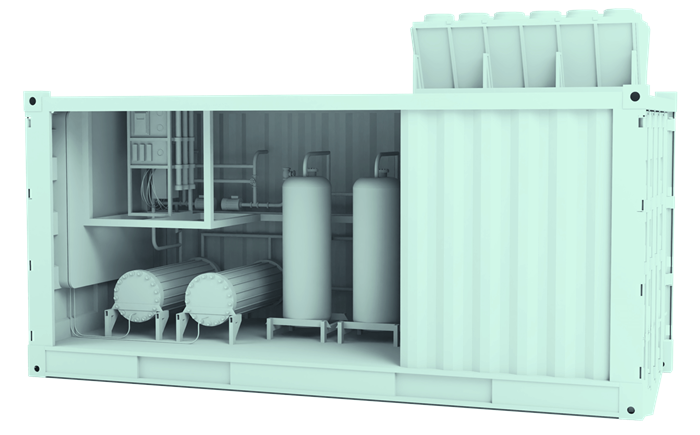
Image Credit: Power to Hydrogen
By using non-precious materials and operating efficiently with renewable energy sources such as wind and solar, AEM electrolyzers offer a balanced approach to sustainable hydrogen generation.
This article delves into the operational principles of AEM electrolyzers, highlights what distinguishes them from other electrolysis techniques, and discusses how Power to Hydrogen’s AEM stack is ushering in the next generation of clean hydrogen production.
How AEM Electrolyzers Operate
AEM electrolyzers generate hydrogen and oxygen by splitting water through electrochemical processes powered by external energy sources. Each AEM electrolyzer cell features an anode and a cathode, separated by an anion exchange membrane.
Process Flow:
- Anode reaction: Water oxidizes at the anode, producing oxygen gas and protons (H+):
2H2O → O2 + 4H+ + 4e−
- Cathode reaction: Water at the cathode receives electrons, generating hydrogen gas and hydroxide ions (OH-):
4H2O + 4e− → 2H2 + 4OH−
- Ion transport: Hydroxide ions (OH-) move through the AEM to the anode.
- Proton neutralization: Protons (H+) combine with hydroxide ions to form water:
4H+ + 4OH− → 4H2O
This ion-exchange process removes the need for precious-metal catalysts while ensuring high efficiency.
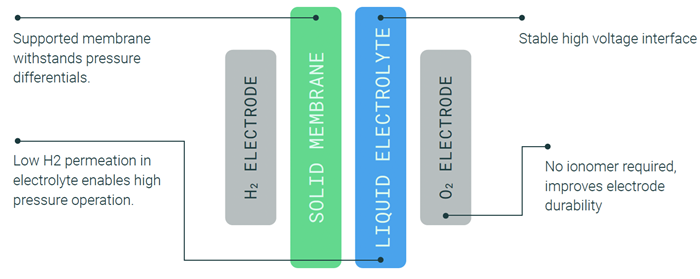
Figure 1. Novel cell design enables high performance and durability. Image Credit: Power to Hydrogen
Why AEM Electrolysis?
AEM electrolysis is considered revolutionary because it achieves high efficiency without relying on precious metals such as platinum (Pt) or iridium (Ir). As a result, it serves as a cost-effective substitute for PEM electrolyzers and avoids some of the complexities associated with traditional alkaline water electrolysis.
Unlike conventional alkaline electrolyzers, which require concentrated potassium hydroxide (30–40 % KOH) for ion conduction, AEM systems operate well with dilute electrolytes (less than 1 M KOH). This significantly reduces corrosion risks, maintenance expenses, and hazards related to handling caustic substances.
Additionally, the solid anion exchange membrane enables stable operation at pressures up to 30 bar, far exceeding the standard three-bar limit of traditional alkaline systems, thereby making hydrogen compression and storage much more efficient.
Power to Hydrogen’s AEM Electrolysis Stack
Power to Hydrogen is at the forefront of AEM electrolysis innovation by merging the structural advantages of PEM with the material affordability of alkaline systems. The engineered membranes provide enhanced electronic structure stability and low charge transfer resistance, improving durability and performance.
Other Types of Hydrogen Electrolyzers
To fully understand AEM technology, comparing it with the two other main hydrogen electrolysis methods is beneficial:
Proton-Exchange-Membrane Electrolyzer (PEM)
PEM electrolyzers use a solid polymer electrolyte to facilitate proton conduction between the anode and cathode. When water enters the anode side with voltage applied, it splits into oxygen, electrons, and hydrogen ions (protons).
The protons travel through the PEM to the cathode, where they join electrons to form high-purity hydrogen gas. PEM systems can rapidly transition from idle to full load, making them suitable for use with variable renewable power sources and applications requiring ultra-clean H2.
However, PEM systems often rely on costly platinum-group metals, leading to higher initial and operational costs.
Alkaline Water Electrolyzer (AWL)
Alkaline electrolyzers use a liquid electrolyte composed of potassium hydroxide (KOH) or sodium hydroxide (NaOH) to facilitate the movement of hydroxide ions (OH-) between electrodes. When voltage is applied, water is split into hydrogen at the cathode and oxygen at the anode, with hydroxide ions passing through a diaphragm to complete the circuit.
As one of the oldest commercial electrolysis methods, alkaline systems benefit from established manufacturing processes and readily available materials. However, their slower dynamic response makes them less suited for highly variable renewable energy inputs.
AEM, PEM, and Alkaline Electrolyzers: A Comparison
Source: Power to Hydrogen
| Feature |
AEM |
PEM |
Alkaline |
| Membrane Type |
Anion exchange |
Proton exchange |
Liquid electrolyte |
| Catalyst Requirement |
Non-precious (Ni, Co) |
Precious (Pt, Ir) |
Non-precious (Ni) |
| Operating Cost |
Medium |
High |
Low |
| Current Density |
Moderate to high |
High |
Low |
| System Compactness |
Moderate |
High |
Low |
| Maturity Level |
Emerging |
Mature |
Mature |
| Hydroxide Ion Conductivity |
High (with optimized membranes) |
N/A |
Moderate |
| Electronic Structure Degradation |
Being addressed in newer membranes |
Low (but expensive) |
Moderate |
Cost and Efficiency of AEM Electrolyzers
AEM electrolyzers strike a notable balance between performance and affordability, as confirmed by independent studies and real-world applications.
The costs associated with AEM stacks are around 65 % lower than those of PEM systems, with catalyst costs approximately 75 % lower. This significant cost benefit arises primarily from the use of non-precious-metal catalysts and standardized manufacturing processes that simplify design.
Transparent Cost Breakdown
Source: Power to Hydrogen
| Cost Component |
AEM Advantage |
Details |
| Stack Cost |
65 % lower than PEM |
Enabled by non-titanium materials |
| Catalyst Cost |
75 % lower than PEM |
Nickel vs. platinum-group metals |
| System Efficiency |
80 % (HHV) |
At 1.8 V operation voltage |
| H2 Production Cost |
$2.00/kg |
At $0.03/kWh electricity input |
Note: $2/kg assumes renewable electricity at $0.03/kWh and 80 % system efficiency. Costs drop below $1.50/kg with economies of scale.
Benefits
- Cost Savings: Using non-precious-metal catalysts such as nickel (Ni) significantly reduces costs. These materials are substantially less expensive than the platinum-group metals used in PEM electrolyzers, and they operate with benign liquid electrolyte solutions.
- High Efficiency: AEM systems can achieve efficiency exceeding 80 % (higher heating value) by optimizing charge transfer and minimizing energy losses. High membrane conductivity allows efficient ion movement, enhancing overall energy efficiency.
- Longer Lifespans and Durability: AEM electrolyzers offer rapid reaction times and lower corrosion risks, leading to increased durability and longer lifespans. Improved catalyst layers minimize energy losses, making the systems more resilient. This is crucial as corrosion poses a significant challenge in traditional alkaline water electrolyzers.
- Scalability: The modular nature of AEM electrolyzers allows for easy scaling, suitable for both small test setups and large installations. When powered by renewable energy, AEM systems enable zero-emission hydrogen production.
Limitations and Challenges
Despite its promise, AEM technology still requires technical refinements as it approaches commercial readiness. These challenges are primarily refinements rather than insurmountable obstacles: manageable issues that must be addressed as the technology scales.
Specific areas needing improvement include:
- Short Device Lifespan: A key concern is understanding how vital components degrade over time. Currently, elements like the membrane and catalysts don’t last as long as those found in PEM systems, impacting overall stability and performance. While the goal is to exceed the longevity of competitors (PEM systems last 60,000–80,000 hours, and AWL lasts 80,000–100,000 hours), most AEM electrolyzers currently have a lifespan of less than 10,000 hours. However, advancements in Power to Hydrogen's patented AEM electrolyzers have enabled them to match the durability of PEM and Alkaline systems, as demonstrated by 2023 IEC 62282-8-201 accelerated degradation tests at 1 A/cm² and 60 °C.
- Membrane Durability: Ongoing research and development focus on improving membrane durability. Although recent advances made by Power to Hydrogen have enhanced performance, some risk of electronic structure degradation still exists, especially during fluctuating loads or high-temperature operations.
- Commercial Scaling: While lab-scale units have been extensively tested, large-scale deployments of AEM water electrolyzers are still maturing. The first pilot program from Power to Hydrogen was initiated in 2024 and has now achieved commercial maturity with stack installations across the United States and internationally.
Energy Applications and Use Cases
AEM electrolyzers are emerging as powerful tools for the transition to hydrogen energy. Their modular design supports a variety of applications, from powering heavy mobility fleets to providing long-duration grid storage for intermittent solar or wind energy. Notable use cases include:
- Hydrogen generation for ammonia/methanol production, where clean hydrogen is crucial for decarbonizing chemical feedstocks
- Providing fuel-cell-grade hydrogen for vehicle refueling networks, including trucks, buses, and marine transport
- Hydrogen storage and grid balancing through the retention of excess renewable energy for long-term storage and off-peak usage
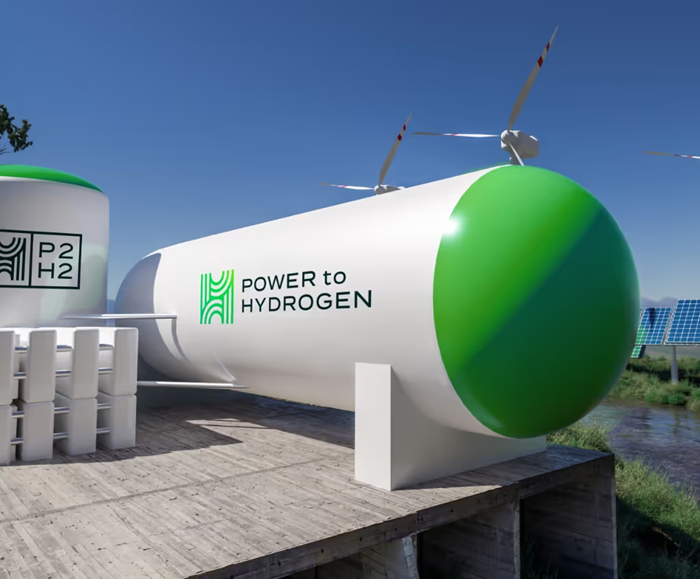
Image Credit: Power to Hydrogen
Frequently Asked Questions
What distinguishes AEM from PEM electrolyzers?
Both AEM and PEM electrolyzers produce hydrogen from water, but operate differently. AEM electrolyzers use anion exchange membranes that conduct hydroxide ions (OH-), while PEM electrolyzers employ proton exchange membranes for hydrogen ions (H+). Generally, AEM systems are more affordable and better suited for green hydrogen applications.
What is the cost of an AEM electrolyzer?
The cost of AEM systems varies significantly, from around $25000 for small pilot units to several million dollars for industrial configurations. The average AEM stack cost is about 65 % lower, and catalyst expenses are 75 % lower compared to PEM systems.
Power to Hydrogen's AEM stack is capable of producing hydrogen at two dollars per kilogram, with expected reductions to one dollar per kilogram within the next five years.
How efficient is AEM electrolysis?
Modern AEM electrolyzers generally operate at an efficiency of 80 % (higher heating value). Ongoing research into catalyst layers, electronic structures, and membrane durability is likely to further enhance these efficiency metrics.
Take The Next Step Towards Energy Independence
As the demand for green hydrogen rises in sectors such as transportation, chemical production, and energy storage, AEM electrolyzers are emerging as versatile, affordable, and scalable solutions.
With continuous enhancements in membrane materials, catalyst efficiency, and system design, AEM systems are well-equipped to contribute to the global transition to clean energy through sustainable hydrogen production.

This information has been sourced, reviewed, and adapted from materials provided by Power to Hydrogen.
For more information on this source, please visit Power to Hydrogen.