A new phase of data center development is beginning. These facilities are consuming more power from the grid than ever before, particularly due to the expansion of AI and edge computing services.

Image Credit: Shutterstock/UNIKYLUCKK
The Power to Hydrogen team recognizes that stable and dependable energy storage will be crucial in the design of future facilities. The company manufactures hydrogen electrolyzers that supply data centers with reliable energy, allowing them to thrive in this rapidly evolving market.
Whether a facility aims for zero-carbon objectives, plans to ensure off-grid resilience, or prepares for swift growth, it requires energy storage systems capable of providing immediate response and long-term support.
This article explores how emerging technologies, particularly hydrogen-based electrolysis systems, are influencing the next generation of robust data center infrastructure.
The Importance of Energy Storage for Data Centers
The demand for data is increasing as facilities that once managed predictable loads now engage in AI model training, medical imaging, streaming services, real-time gaming, financial processing, and cloud storage. In these scenarios, even a brief period of instability can disrupt services, damage hardware, void agreements, or necessitate costly restarts.
On-site energy storage mitigates these situations by supplying additional power during peak loads. It also enables facilities to maintain steady output while alleviating pressure on utility connections.
Uptime and Reliability Needs
From discussions with operators conducted by Power to Hydrogen, uptime stood out as the key priority; every significant data center contract embodies this need. Advanced energy storage systems bolster uptime by delivering immediate backup power during grid disruptions.
Even minor voltage fluctuations can lead to cascading failures. Solutions that respond quickly, such as hydrogen electrolyzers, help stabilize power during these transitions.
Energy Storage Solutions for Data Centers
Hydrogen Energy Storage and Fuel Cells
Hydrogen electrolysis systems are quickly becoming an ideal option for high-capacity, long-duration energy storage. They store energy by producing hydrogen and then release it to convert the hydrogen back into electricity. This method supports extended operational periods without releasing particulate emissions or requiring onsite combustion.
Data center operators often prioritize hydrogen due to its compatibility with renewable energy generation, grid stabilization, and microgrid solutions.
Battery Energy Storage Systems (BESS)
Battery systems are still commonly used to handle short-term peaks in energy demand. A row of backup batteries can handle power fluctuations during the brief period it takes for backup generators to be activated. Instead of relying solely on uninterrupted power supplies that offer limited discharge times, modern BESS provide more stable temporary coverage.
Lithium-Ion Versus Flow Batteries
Lithium-ion batteries occupy less space and offer quick discharge capabilities, making them suitable for facilities requiring compact, immediate support. However, larger setups necessitate thorough thermal management and long-term monitoring. Flow batteries and hydrogen fuel cells deliver different advantages, with their liquid electrolyte design allowing for extended cycle life and easier capacity modifications.
Flywheels for Short-Term Stabilization
Flywheel systems store kinetic energy in a spinning rotor and can deliver fast bursts of power. They are typically used for voltage regulation and transition support, as their mechanical nature enables repeatable cycling with minimal wear and tear.
Thermal and Alternative Storage Solutions
A large portion of a data center's energy is used for cooling systems. Consequently, some operators investigate thermal systems that help alleviate energy spikes during peak periods by running cooling systems during off-peak times or renewable energy production. Other alternatives may aim to reduce energy consumption or combine various technologies into a hybrid strategy.
The Future Role of Hydrogen in Data Centers
Advanced electrolysis technologies, such as those developed at Power to Hydrogen, employ water electrolysis to generate high-purity hydrogen from electricity and water. This hydrogen is stored onsite and subsequently converted back into electricity via fuel cells. The outcome is a low-emission energy source that meets operational needs across multi-hour and multi-day timeframes.
Benefits Over Traditional Storage Methods
Hydrogen offers longer operational times compared to standard battery systems. It also simplifies large-scale installations because its capacity increases through modular units rather than extensive battery banks.
Many teams opt for hydrogen when they need multi-day support, as it ensures a consistent power supply without the thermal stress issues commonly seen with large battery systems. Moreover, hydrogen systems perform well across a wide range of temperatures, making them effective in areas with stringent energy demands or restricted cooling options.
Scalability for Large-Scale and Edge Data Centers
As data centers expand, flexible infrastructure that can grow alongside technology and project requirements is essential. Power to Hydrogen often hears from project teams wanting systems that can easily scale as new racks are added or workloads increase. The company’s electrolyzer stacks provide this adaptability, allowing capacity expansion through a modular approach rather than complete system overhauls.
Edge data centers also benefit from using hydrogen. These smaller facilities frequently operate in regions with limited grid stability. Hydrogen fuel cells can deliver quiet, reliable power without the air quality issues associated with diesel generators.
Power to Hydrogen's Contribution to Energy Storage Innovation
Power to Hydrogen specializes in hybrid AEM electrolyzers designed for efficient, cost-effective hydrogen production. These systems prioritize reliability, seamless integration with renewable energy, and scalability to meet data center demands. By emphasizing reliability and cost-effectiveness, Power to Hydrogen is pioneering the next generation of energy storage solutions for data centers.
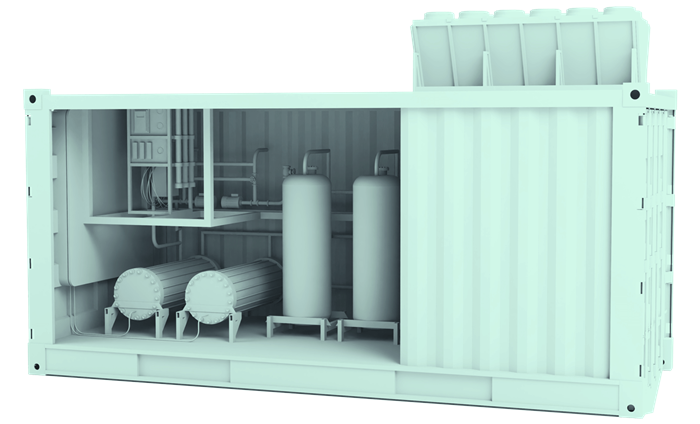
Image Credit: Power to Hydrogen
Benefits of Advanced Energy Storage in Data Centers
Enhanced Reliability and Power Quality
Energy storage mitigates the effects of grid faults, voltage dips, and sudden load fluctuations, while facilitating smooth transitions during generator activation or switching events. Many operators note less equipment wear following the installation of responsive storage, as sensitive components receive steadier power
Integration with Renewable Energy Sources
The growth of solar and wind energy continues to shift the energy landscape. Data centers generating their own power often aim to capture excess energy for later use. Storage systems enable this capability and help maintain stable output amid fluctuating renewable output. By combining on-site renewable energy with storage, facilities can lessen their dependence on the grid and bolster energy independence
Reduced Operating Costs and Improved Efficiency
Advanced energy storage systems help lower costs and enhance efficiency for operators through peak shaving and load shifting. Facilities can schedule energy-intensive operations during off-peak hours when rates are lower, and rely on stored energy during periods of higher prices.
Hydrogen systems offer additional savings: fuel cells have significantly fewer moving parts than combustion generators, resulting in lower maintenance needs. Over a system's lifespan, these savings add up, particularly for large sites with stringent uptime goals.
Implementation Steps for Data Center Operators
Thorough planning is essential to avoid costly redesigns. The Power to Hydrogen team collaborates with customers to determine the appropriate layout (including spacing between elements, utility connections, and ventilation needs) so that the final system aligns with operational objectives.
Hydrogen storage tanks, electrolyzers, and fuel cells require dedicated space. Additionally, battery rooms necessitate careful thermal management and fire-rated construction, while flywheels require controlled mounts to minimize vibrations. Each technology affects the infrastructure in distinct ways.
The most effective financial approach involves modeling energy scenarios, outage risks, peak demand times, and the costs associated with downtime. Power to Hydrogen assists teams in performing these models, ensuring they can see how energy storage fits into their financial strategies and budgeting.
Most operators require assistance throughout the planning and implementation stages. Power to Hydrogen partners with utilities, engineering firms, safety inspectors, and internal teams to develop energy storage systems that operate reliably once implemented.

This information has been sourced, reviewed, and adapted from materials provided by Power to Hydrogen.
For more information on this source, please visit Power to Hydrogen.