*Important notice: This news reports on an unedited version of an accepted paper and is awaiting final editing. Therefore, the paper should not be regarded as conclusive or treated as established information.
A recent study published in Communications Earth & Environment investigates how smoke from Canada's record-breaking 2023 wildfires affected photovoltaic (PV) electricity generation across North America and Europe. The researchers used an Earth system model to quantify changes in solar power generation, carbon emissions, and economic losses caused by wildfire aerosols. The study highlights how large-scale wildfire smoke reduced solar power generation by 2.8%, highlighting the need to incorporate climate-driven atmospheric risks into renewable energy planning.
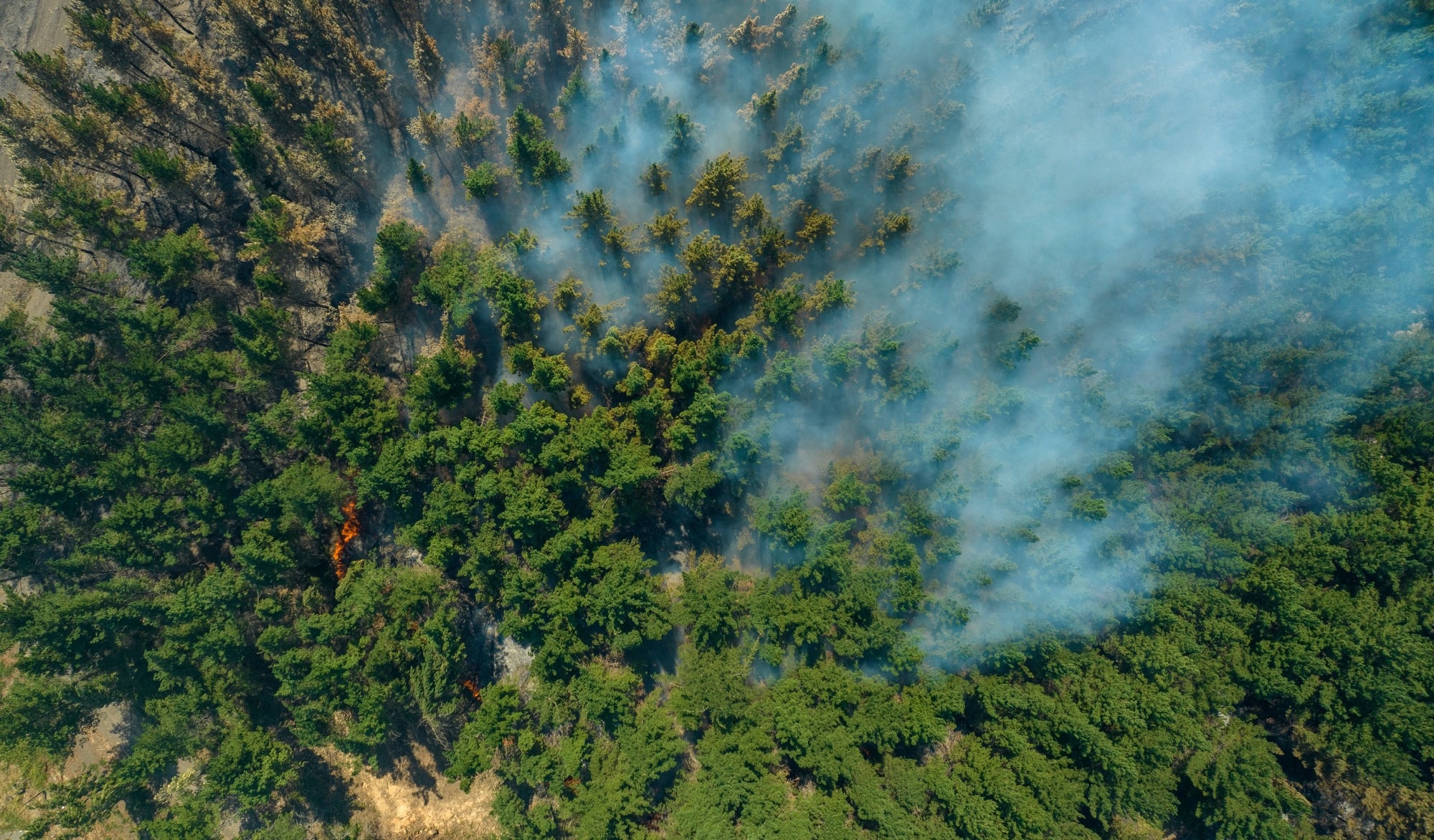
Study: Canada’s 2023 wildfire smoke caused a 2.8 percent drop in solar power generation, costing two billion dollars. Image Credit: Castro and Schnaidt/Shutterstock.com
Wildfires Add a New Climate Risk for Solar Power
Solar photovoltaic (PV) systems have become one of the fastest-growing sources of renewable electricity, driven by falling technology costs and global efforts to reduce greenhouse gas emissions.
As countries expand their solar capacity, ensuring reliable electricity generation under changing environmental conditions has become increasingly important. Recent research suggests that wildfire smoke can significantly reduce solar power output.
Wildfire smoke contains fine aerosol particles that scatter and absorb sunlight before it reaches the Earth's surface. Because PV modules rely on incoming solar radiation to generate electricity, lower irradiance directly reduces power generation.
During severe wildfire events, dense smoke can reduce solar output as much as, or even more than, persistent cloud cover. Previous studies have documented these effects during regional wildfires in Australia, Spain, and the western United States.
Although researchers have examined the effects of individual wildfire events on solar power, few studies have quantified the large-scale impacts of transboundary smoke transport. This study addresses that gap by evaluating how the 2023 Canadian wildfires affected photovoltaic electricity generation, carbon emissions, and economic losses across North America and Europe.
Click here to download a free PDF copy of this page
Simulating the Impact of Canada's 2023 Wildfires
The researchers used the EC-Earth3 Earth system model to simulate how smoke from the 2023 Canadian wildfires influenced photovoltaic electricity generation. By coupling atmospheric chemistry, aerosol transport, climate, and ocean processes, the model captured how wildfire emissions changed the amount of sunlight reaching solar installations across two continents.
The team compared two simulation scenarios covering May to December 2023. One included emissions from the Canadian wildfires, while the other represented conditions without wildfire smoke.
Each scenario consisted of 10 ensemble simulations with slightly different atmospheric and ocean initial conditions, allowing the researchers to distinguish the effects of wildfire aerosols from natural climate variability. Wildfire emissions were obtained from the Copernicus Atmosphere Monitoring Service Global Fire Assimilation System (GFAS).
The analysis quantified changes in surface solar radiation, air temperature, and photovoltaic electricity generation. The researchers also considered the cooling effect produced by wildfire aerosols.
This approach provided a more realistic estimate of the overall impact of smoke on solar power generation. Researchers interpreted changes in PV output into broader environmental and economic metrics. Together, these analyses provide a comprehensive assessment of how large wildfire events can affect renewable energy systems far beyond the regions where the fires occur.
Wildfire Smoke Reduced Solar Power Across North America and Europe
The simulations showed that smoke from the 2023 Canadian wildfires substantially reduced photovoltaic electricity generation across North America and Europe.
Between May and September 2023, wildfire aerosols lowered PV output by an estimated 6.38 ± 8.86 TWh, equivalent to a 2.8% decline in total solar generation across the two regions. This energy loss is comparable to Luxembourg's annual electricity demand or the daily electricity production of nearly all nuclear power plants worldwide.
North America experienced the largest reduction in electricity generation because it was closer to the wildfire source. However, smoke transported across the Atlantic also reduced solar production in Europe.
Germany lost an estimated 1.19 TWh of PV generation during the study period, while Ontario and California recorded the largest reductions in Canada and the United States. These results demonstrate that major wildfire events can influence renewable electricity generation thousands of kilometers from the source.
Smoke particles scattered and absorbed incoming sunlight, substantially lowering the amount of energy available to solar panels.
Although cooler air slightly improved PV conversion efficiency, this benefit offset only a small fraction of the radiation losses.
The cooling effect compensated for 20.5% of the lost generation in Europe, 16.3% in the United States, and an even smaller proportion in Canada.
Although North America experienced larger energy losses, Europe incurred higher financial costs because of its greater installed solar capacity and higher electricity prices. Overall, the results highlight how climate-driven wildfire events can affect both renewable energy production and the economics of clean electricity.
Implications for Climate-Resilient Renewable Energy Systems
The study concludes that wildfire smoke is a growing problem for renewable energy systems.
As wildfire seasons become longer and more intense, atmospheric aerosols are likely to reduce solar electricity generation more frequently, even in regions located far from active fires.
The study also highlights the importance of incorporating climate resilience into clean energy planning. Expanding energy storage, improving grid flexibility, diversifying renewable energy sources, and integrating wildfire smoke forecasts into power management systems could reduce the impact of future smoke events.
Overall, the study shows that climate change can influence renewable energy systems in ways that extend well beyond physical damage to infrastructure.
Large wildfires release greenhouse gases, degrade air quality, and reduce solar electricity generation across entire continents.
Integrating climate adaptation with renewable energy planning will therefore be essential for building more hardy and reliable clean energy systems.
Journal Reference
Ro?u, I.-A., Jones, M. W., et al. (2026). Canada’s 2023 wildfire smoke caused a 2.8 percent drop in solar power generation, costing two billion dollars. Communications Earth & Environment. DOI: 10.1038/S43247-026-03860-X, https://www.nature.com/articles/s43247-026-03860-x
Disclaimer: The views expressed here are those of the author expressed in their private capacity and do not necessarily represent the views of AZoM.com Limited T/A AZoNetwork the owner and operator of this website. This disclaimer forms part of the Terms and conditions of use of this website.