A hydrogen electrolyzer is a device used to split water (H2O) into hydrogen gas (H2) and oxygen gas (O2). Hydrogen generated via this electromechanical process has the potential for storage, transportation, or direct use as fuel.
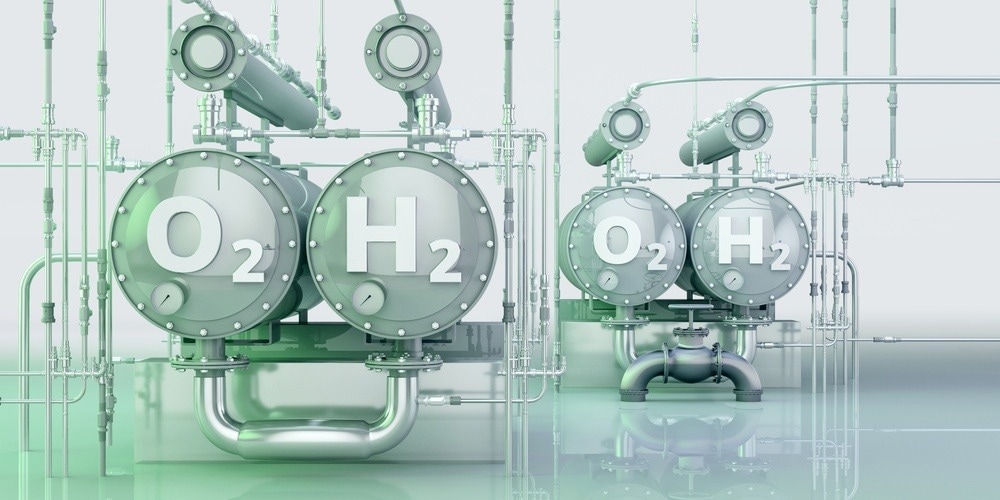
Image Credit: Corona Borealis Studio/Shutterstock.com
Power to Hydrogen supplies hybrid AEM electrolyzers designed to make hydrogen electrolysis easier to integrate into real projects and more cost-effective.
What is a Hydrogen Electrolyzer?
Hydrogen electrolysis is a relatively straightforward chemical reaction, but the system that underpins this process has been meticulously engineered. This emerging technology continues to see incremental improvements and is helping address global energy requirements while enabling the storage of energy generated from renewable sources (such as wind and solar).
Electrolyzers differ from most existing hydrogen production methods in that they can operate without releasing carbon dioxide. They deliver hydrogen with almost no emissions when powered with renewable electricity.
The electrolyzer passes an electric current through water, producing hydrogen gas at the cathode and oxygen gas at the anode. Components of electrolyzer systems include:
- The central cell/stack unit, where water splitting occurs
- The cathode (-) and anode (+) electrodes, where electricity is conducted to split water
- A membrane or diaphragm that separates the hydrogen and oxygen gases
- The power supply system, which manages the electricity input needed for the reaction
- Gas collection and purification systems designed to collect the product gases for pipeline injection or storage
- A balance of plant components to support safe and efficient operation
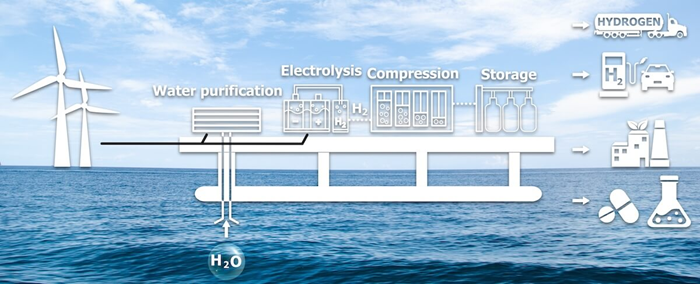
Image Credit: Power to Hydrogen
Primary Types of Hydrogen Electrolyzers
The type of diaphragm, membrane, and electrolyte employed can be used to classify hydrogen electrolyzers. The following are the most common types.
Proton Exchange Membrane (PEM) Electrolyzers
PEM electrolyzers are commonly used for their ability to respond quickly to fluctuations in the power supply and to generate high-purity hydrogen.
They use a solid polymer membrane as the electrolyte, offering efficient operation at high pressures. Their compact design and rapid startup and shutdown capabilities mean that PEM systems are especially well-suited for pairing with variable renewable energy sources such as wind and solar.
PEM electrolyzer systems require expensive platinum group metals for operation, however, resulting in higher capital expenditure and operating costs.
Alkaline Electrolyzers
Alkaline electrolyzers are widely recognized for their low cost, reliability, and long-standing industrial track record. These systems employ a liquid electrolyte such as sodium hydroxide (NaOH) or potassium hydroxide (KOH), and operate at temperatures between 60 °C and 80 °C.
Their simple and durable design makes them a widely used solution for large-scale hydrogen production, despite their larger size and slower response to power swings compared to PEMs.
Solid Oxide Electrolyzers (SOEL)
Solid oxide electrolyzers leverage the high temperatures of waste heat to efficiently create hydrogen. These electrolyzers operate between 600 °C and 1000 °C and use ceramic materials to power hydrogen electrolysis.
These electrolyzers can employ waste heat and integrate with existing industrial processes, meaning they see widespread use in energy-intensive industries, such as cement and steel production. High operating temperatures, however, necessitate the use of specialized materials and pose challenges for long-term durability.
Anion Exchange Membrane (AEM) Electrolyzers
Power to Hydrogen is a pioneer in the hydrogen production sector, advancing AEM electrolyzer technology to deliver efficient, reliable solutions that combine the best features of PEM and alkaline systems.
These AEM systems achieve highly efficient hydrogen electrolysis using solid-state membranes that operate in alkaline environments and use non-precious-metal catalysts, thereby reducing both operational and material costs.
The modular design of Power to Hydrogen's M-Class electrolyzers facilitates the implementation of scalable systems that can be deployed in stacks ranging from 500 kW to 25 MW.
Other Hydrogen Production Methods
Hydrogen electrolyzers are not the only hydrogen production methods available. However, they are the only commercially viable method that does not emit carbon, provided they are powered by renewable energy sources.
Steam Methane Reforming (SMR)
SMR is currently the most widely used hydrogen production method. It works by reacting methane with steam at high temperatures to extract hydrogen from natural gas.
This method delivers large volumes of hydrogen at relatively low cost, but it also releases considerable amounts of carbon dioxide. SMR is, therefore, unsustainable without the implementation of carbon capture and storage (CCS), which potentially adds cost and complexity. This method still does not achieve zero-carbon emissions, even with CCS.
Coal Gasification
Coal gasification is employed in regions that feature abundant coal and limited gas access. The coal gasification process generates a coal reaction when paired with oxygen and steam to produce a syngas mixture of carbon monoxide, carbon dioxide, and hydrogen.
This process is carbon-intensive, however, with higher emissions than SMR. Coal-based hydrogen faces major pressure due to evolving regulations and the push toward energy alternatives, though it is still used in some regions.
Biomass Gasification
Biomass gasification breaks down organic matter such as algae, wood, crop residues, or municipal waste to release hydrogen.
This method can be considered renewable when the feedstock is responsibly sourced. However, scaling can be challenging due to regional variations in availability and limited feedstock supply.
A number of experimental hydrogen production methods are currently being evaluated and tested, for example, high-temperature thermochemical reactions driven by solar or nuclear heat or photocatalytic water splitting using sunlight.
Why Electrolyzers Represent the Future of Hydrogen Production
Hydrogen electrolyzers are the most environmentally sustainable and adaptable method for producing hydrogen. Power to Hydrogen's AEM electrolyzers are the most ideal electrolysis option for a number of reasons:
- On-site production means that hydrogen can be produced precisely where it is needed, supporting stable power grids and balancing electricity demands.
- Renewable integration absorbs excess energy and chemically stores this as hydrogen, meaning that electrolyzers increase the viability of renewable energy sources.
- High-purity hydrogen that meets the strict purity requirements of fuel cells is produced by PEM and AEM systems.
- Their electrolyzers are easily scalable, accommodating both small businesses and large industrial complexes, making them highly versatile.
- Hydrogen electrolyzers significantly reduce carbon emissions by generating hydrogen without using fossil fuels, aiding sustainability measures.
Power to Hydrogen's Electrolyzer Solutions
Power to Hydrogen specializes in the development of next-generation electrolyzer solutions built for real-world performance.
Two electrolyzer models are available: the M-Class and the K-Class. The company’s patented AEM hydrogen electrolyzers blend the advantages of both PEM and alkaline systems, keeping costs manageable while maximizing output.
Power to Hydrogen collaborates with both private and public partners, including the Department of Energy, Shell, EDP, NASA, American Electric Power, and Asahi Kasei. The company is helping to drive progress in hydrogen electrolysis technology, from early-stage innovation to real-world pilot projects.

This information has been sourced, reviewed, and adapted from materials provided by Power to Hydrogen.
For more information on this source, please visit Power to Hydrogen.