The Battery Research Center of Green Energy (BRCGE) at Ming Chi University of Technology (MCUT) in Taiwan is a global leader in energy storage innovation. Led by Professor Chun-Chen Yang, the center is developing high-voltage, high-safety battery technologies through various dynamic approaches, including synthesizing 5 V LiNi0.5Mn1.5O4 (LNMO) from recycled Li2CO3, developing solvent-free, dual-salt solid polymer electrolytes (DS-SPEs) for solid-state batteries, and stabilizing cobalt-free Li-rich (LRNMO) cathodes via LaF3 nano-coatings.
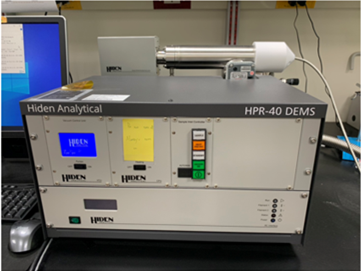
Figure 1. In situ DEMS analyses were conducted using the Hiden HPR-40 DEMS. Image Credit: Hiden Analytical
The center has expanded its research parameters to include thermally extruded composite solid electrolytes (TECSEs), dual-conductive additive NCM811 systems, Ta-modified Ni-rich NCM92 cathodes, bilayer hybrid solid electrolytes (Bi-HSEs) with modified Li anodes, and versatile separators for Li-SPAN batteries.
The Hiden HPR-40 DEMS is the system at the heart of these new approaches. DEMS, which stands for Differential Electrochemical Mass Spectrometry, is a sophisticated analytical method that brings together the power of in-situ electrochemical cell experiments and mass spectrometry. By using the Hiden HPR-40 DEMS assembly (as shown in the photograph), researchers can reveal key chemical processes in real time, such as the evolution of H2, CO2, CO, O2, and sulfur species (H2S, SO2). This allows the team to carefully monitor electrolyte decomposition and structural degradation.
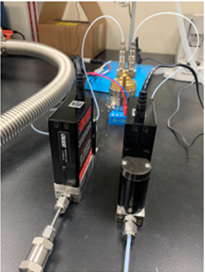
Figure 2. The Hiden HPR-40 DEMS integrated an electrochemical cell with mass flow meters. Image Credit: Hiden Analytical
Case Studies and Supporting Evidence
- Sustainable Cathode & Ta-Modification Stability: Recycled LNMO exhibited zero detectable O2 evolution at 5.4 V. Similarly, operando (or in situ) DEMS of Ta-modified Ni-rich NCM92 cathodes demonstrates a considerable reduction inCO2 and H2 outgassing, confirming that the Ta-enriched layer is effective at counteracting electrolyte decomposition and surface-side reactions.
Published Journals:
- Journal of Colloid and Interface Science 689 (2025) 137221.
- Journal of Colloid and Interface Science 661 (2024) 289.
- Solid-State & Hybrid Safety Validation: For the DS-SPE system, in situ DEMS verified the complete absence of CO2 and O2 evolution during cycling. With respect to thermally extruded TECSE, the HPR-40 confirmed good stability at the electrode–electrolyte interfaces, with no detectable amounts of H2, CO2, or O2 gases during cycling. In Bi-HSE systems with modified Li anodes, DEMS exposed much lower gas intensities (O2, CO, C2H4) compared to liquid electrolytes, verifying the how the g-C3N4/ZIF-8/PVDF coating on the Li anode acts as a protector for all-solid-state Li metal batteries.
Published Journals:
3. Journal of Energy Storage 110 (2025) 115335.
4. Journal of Energy Storage 136 (2025) 118457.
5. Journal of Energy Storage 76 (2024) 109757.
- Suppressing Gas in Li-Rich, Li-SPAN & NCM811 Cathodes: LaF3 coatings were able to suppress reactive oxygen release effectively in Co-free cathodes. Monitoring sulfur species (H2S, SO2) in real-time verified how multifunctional separators, vulnerable to moisture degradation, were able to suppress evolution effectively, which ensures interfacial safety. Moreover, for NCM811 cathodes equipped with Li-BTJ oligomer and PDA-VGCF, in-situ DEMS revealed zero O2 evolution at high voltage, thereby ensuring first-class structural stability and thermal safety in contrast to bare NCM811 cathodes.
Published Journals:
6. Journal of Colloid and Interface Science 707 (2026) 139743.
7. Small 22 (2026) e13303.
8. ACS Applied Materials & Interfaces 16 (2024) 21034.
MCUT considers the Hiden HPR-40 DEMS to be an essential validation engine as it offers high-resolution, real-time data on gas dynamics. This allows researchers to enhance the safety and performance of next-generation lithium batteries powering a sustainable future.
Project Summary by
Yi-De Tsai, Yi-Shiuan Wu, and Chun-Chen Yang, Battery Research Center of Green Energy, Ming Chi University of Technology, New Taipei City 243303, Taiwan, R.O.C.
References
- Tsai, Y.-D., et al. (2025). High performance of 5 V LiNi0.5Mn1.5O4 cathode materials synthesized from recycled Li2CO3 for sustainable Lithium-Ion batteries. Journal of Colloid and Interface Science, 689, pp.137221–137221. DOI: 10.1016/j.jcis.2025.03.010. https://www.sciencedirect.com/science/article/abs/pii/S0021979725005934?via%3Dihub.
- Hendri, Y.B., et al. (2024). Two birds with one stone: One-pot concurrent Ta-doping and -coating on Ni-rich LiNi0.92Co0.04Mn0.04O2 cathode materials with fiber-type microstructure and Li+-conducting layer formation. Journal of Colloid and Interface Science, 661, pp.289–306. DOI: 10.1016/j.jcis.2024.01.094. https://www.sciencedirect.com/science/article/abs/pii/S0021979724001024?via%3Dihub.
- Ghufira, Wu, et al. (2025). Solvent-free semi-interpenetrating composite polymer electrolyte based on dual Li-salt for solid-state lithium batteries. Journal of Energy Storage, 110, p.115335. DOI: 10.1016/j.est.2025.115335. https://www.sciencedirect.com/science/article/abs/pii/S2352152X25000489?via%3Dihub.
- Kibret, D.Y., et al. (2025). Stabilizing LATP/Li metal interface via artificial buffer layers on thermally-extruded composite electrolyte for solid-state Li metal batteries. Journal of Energy Storage, 136, p.118457. DOI: 10.1016/j.est.2025.118457. https://www.sciencedirect.com/science/article/abs/pii/S2352152X25031706.
- Walle, K.Z., et al. (2024). Preparation of g-C3N4/ZIF-8/PVDF–modified Li anode for all-solid-state Li metal batteries. Journal of Energy Storage, 76, p.109757. DOI: 10.1016/j.est.2023.109757. https://www.sciencedirect.com/science/article/abs/pii/S2352152X23031559?via%3Dihub.
- Xu, J.-J., et al. (2026). Stabilizing Co-free Li-rich cathodes with LaF3 coating and ionic liquid electrolytes: A pathway to high-performance lithium-ion batteries. Journal of Colloid and Interface Science, 707, p.139743. DOI: 10.1016/j.jcis.2025.139743. https://www.sciencedirect.com/science/article/abs/pii/S0021979725031352.
- Anbunathan, A., et al. (2026). Single-Crystal NCM-Enabled Multifunctional Separator Design for High-Performance Lithium-SPAN Batteries. Small, 22(24). DOI: 10.1002/smll.202513303. https://onlinelibrary.wiley.com/doi/10.1002/smll.202513303.
- Mengesha, T.H., et al. (2024). Concerted Effect of Ion- and Electron-Conductive Additives on the Electrochemical and Thermal Performances of the LiNi0.8Co0.1Mn0.1O2 Cathode Material Synthesized by a Taylor-Flow Reactor for Lithium-Ion Batteries. ACS Applied Materials & Interfaces. DOI: 10.1021/acsami.3c19386. https://pubs.acs.org/doi/10.1021/acsami.3c19386?__cf_chl_f_tk=RkicHhVHh.No0IzraX5UMD3t.mQBoBj8EPrzZurxQCo-1782968440-1.0.1.1-9Xo4m3wR0c6VZX5yIXhtFhHG_QPhPnJ678DIFcWQOCc.
Hiden Product: HPR-40 DEMS.

This information has been sourced, reviewed and adapted from materials provided by Hiden Analytical.
For more information on this source, please visit Hiden Analytical.