Health leaders from across Australia and the Pacific are warning that preparing hospitals and healthcare services for climate change will not be enough to protect people's health unless governments urgently phase outfossil fuels.
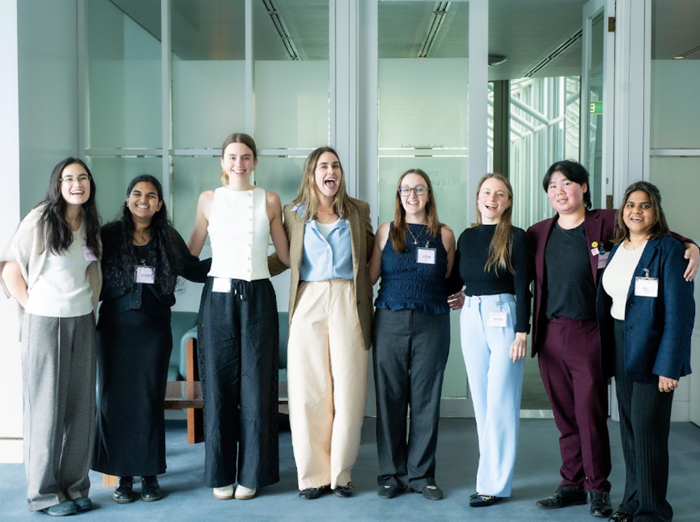 Youth Leaders from CAHA, Orygen, ECOMIND and AYFICE ran a think table for around 30 people to gather policy ideas for supporting youth mental health in the face of the climate crisis. Image Credit: Climate and Health Alliance (CAHA)
Representatives from 56 organizations spanning medicine, nursing, mental health, healthcare services, public health, First Nations and Pacific communities and other sectors endorsed a joint statement at the Climate and Health Alliance (CAHA) Leaders Summit at Parliament House in Canberra yesterday.
The statement builds on a Pacific-led process in Fiji last week, where 85 representatives gathered for the Pacific Climate and Health Talanoa. Grounded in a traditional Pacific approach to inclusive, open dialogue, the Talanoa centerd lived experience, traditional knowledge and collective decision-making to identify shared priorities for climate justice, health, rights and accountability.
These priorities were brought directly to Canberra, where health sector CEOs, youth and Indigenous leaders came together to listen, share and develop a collective response, ensuring Pacific priorities are reflected in the health sector's calls for Australian action.
Released ahead of COP31, the statement sets out 10 calls for action by the Australian Government, including an end to new coal, oil and gas project approvals and expansions, an end to fossil fuel subsidies, and action to achieve the 1.5 °C global warming limit.
The calls span three key areas:
- Tackling the causes of climate change: Achieving the 1.5 °C warming limit, urgently phasing out fossil fuels, including no further coal, oil and gas project approvals or expansions, ending fossil fuel subsidies and existing fossil fuel use, and rapidly transitioning to renewable energy
- Protecting people's health: Fully implementing Australia's National Health and Climate Strategy, strengthening climate-resilient healthcare systems, investing in mental health and psychosocial support, and embedding protections against gender-based violence, sexual exploitation, abuse and harassment in disaster, evacuation and displacement planning
- Upholding Pacific rights and leadership: Protecting First Nations peoples' rights to health, safety, culture and self-determination; giving frontline communities power in climate decision-making; recognizing Traditional Knowledge and Lived Experience; and delivering debt-free climate finance for Pacific-led solutions, including increased support for the Pacific Resilience Facility
The collective call comes a day after the Australian Centre for Disease Control (CDC) launched new national guidance at the Summit to help hospitals, aged care providers and other healthcare organizations identify and prepare for climate-related risks.
The guidance, launched by Assistant Minister for Health and Aged Care Rebecca White, is designed to help health services manage risks including extreme heat, floods and disruptions to essential healthcare.
CAHA CEO Michelle Isles welcomed the new guidance but said adaptation must be accompanied by action to address the causes of climate change.
"Climate change is already affecting Australians' health, from extreme heat and bushfire smoke to floods, infectious diseases and the mental health impacts of climate disasters.
"Preparing our hospitals, aged care facilities and health workers for these threats is essential, and we welcome the Government's new guidance. But we cannot keep adapting to an ever-worsening problem without addressing what's causing it.
"Every new or expanded fossil fuel project adds to the problem we're trying to protect people from. If we're serious about protecting health, we need to tackle the emissions driving climate change, not just prepare for their consequences.”
With Australia serving as Negotiations Lead at COP31, health leaders are calling on the Government to honor its commitment to center Pacific priorities, including through debt-free climate finance, investment in healthcare systems and recognition of Indigenous rights and traditional knowledge.
"Pacific peoples are leading the call for action to protect their health, rights and futures. Australia's responsibility is to listen, respect that leadership and deliver on the commitments it has made," Ms Isles said.
"The decisions made at COP31 will have profound consequences for the health and wellbeing of current and future generations. Protecting health must be central to those decisions."
The statement will inform a forthcoming COP31 Policy Brief, bringing together evidence and priorities developed through Pacific-led consultation and health sector engagement to guide ongoing advocacy and government decision-making.
The Leaders Summit Statement will be presented at a parliamentary press conference today (Wednesday), followed by an advocacy roundtable with the Parliamentary Friends of Climate Action.
Renu Borst, CEO of Australian Association for Gerontology said “Climate change is an urgent ageing issue. As heatwaves, floods and droughts become more frequent and intense, Australia must ensure older people are valued, heard and included in evidence-informed responses that build safer, more resilient communities – here, and across our Pacific region.”
Kristin Michaels, CEO of Advanced Pharmacy Australia: “Health professionals see the consequences of climate change and natural disaster first hand, in our hospitals, our general practices, our community pharmacies and our communities. Nowhere is that more evident than in the Pacific, where rising seas and extreme weather are already part of daily life.
“Climate resilience and health equity are deeply connected. The decisions made at COP31 will shape the health and wellbeing of Pacific communities for generations. Australia’s health sector stands alongside our Pacific neighbors at this critical moment.”
Georgia Monaghan, Co-Founder of ECOMIND, youth charity added: “At the CAHA Leaders Summit, young people weren’t just consulted on the future of climate and health. We got to lead, shape and present the future we hope for, and invite others to our Think Table rather than waiting for a seat at theirs.
“As Australia heads into COP31, the young people who will inherit the climate crisis deserve to be at the head of the table. The best thing we can do for youth mental health is ambitious climate action that young people help design.
“Young people’s distress about climate change is a rational response to a real threat. What helps most is seeing the adults and institutions around us take meaningful action. So being in Parliament today felt like a real moment of hope.”