A subsea abandoned pipeline may appear inert, but its plastic coatings can degrade underwater for decades. A recent study published in the Journal of Hazardous Materials provides direct physical and chemical evidence of this process, showing how prolonged subsea exposure can weaken polymer coatings and contribute to microplastic generation in marine environments.
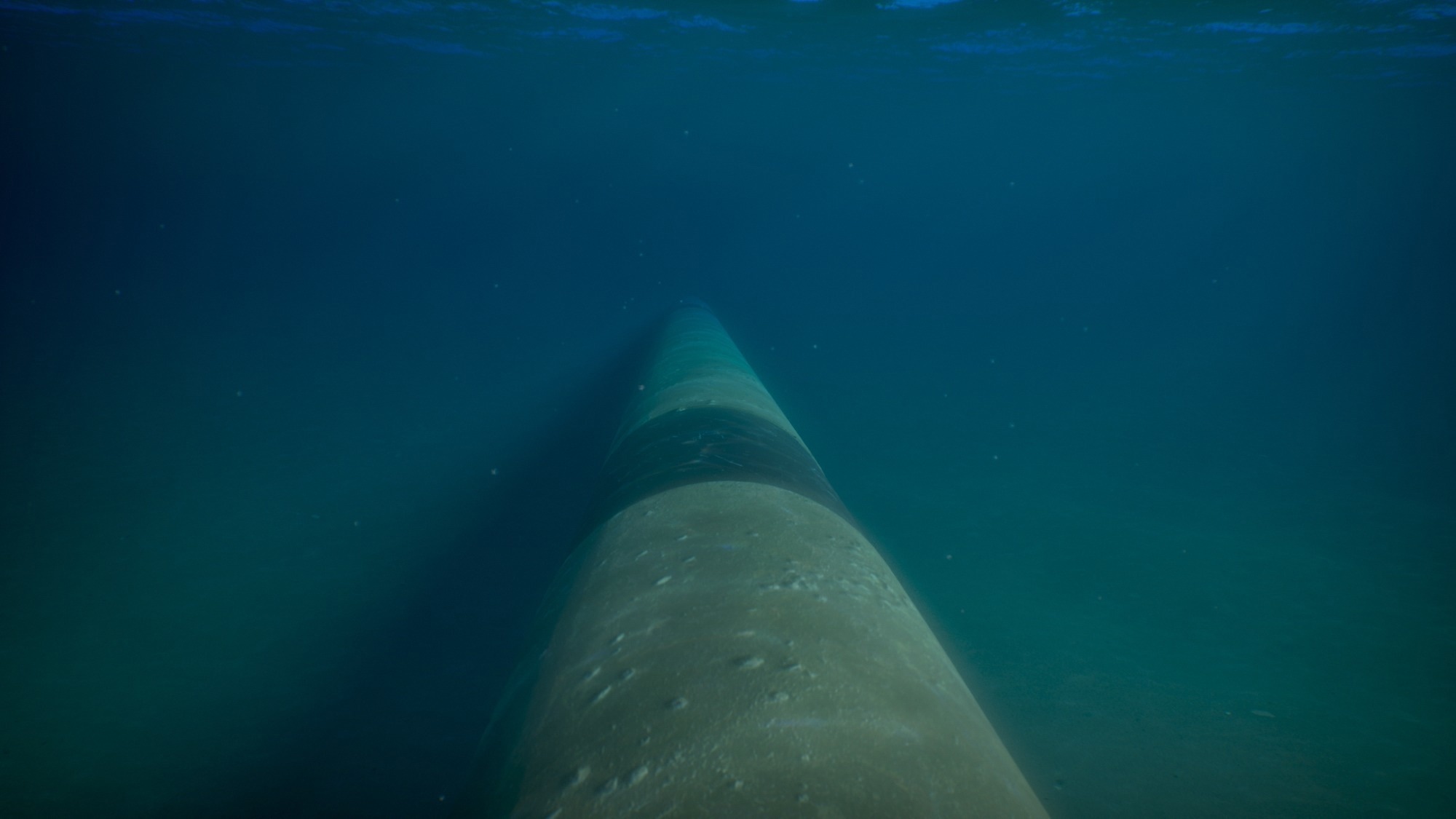
Image Credit: Alexyz3d/Shutterstock.com
Hidden Reservoir Beneath the Waves
Subsea oil and gas pipelines span an estimated 200,000 km across more than 50 countries, connecting offshore extraction and processing facilities at depths exceeding 3000 m. These pipelines use polymer coatings made from polyethylene, polyamide, and epoxy-based materials for corrosion protection, thermal insulation, and fluid containment.
Most of these pipelines are designed for approximately 20 years of service, and their decommissioning focuses mainly on steel and other contaminants, often overlooking polymer coatings. Consequently, many decommissioned pipelines remain on the seabed, leaving their plastic components in the marine environment.
Recently, researchers from the University of Plymouth assessed the plastic content of subsea infrastructure using data from the North Sea Transition Authority and industry expertise.
They estimated that 29,304 km of subsea infrastructure across the UK Continental Shelf contains approximately 218,905 tons of plastic, of which around 45% is expected to be removed during decommissioning, while the remaining 55%, approximately 120,555 tons, could remain on the seabed, primarily within large rigid pipelines that are more difficult and costly to extract. The scale of the issue is also evident in the United States, where more than 97% of pipelines decommissioned since the 1960s have remained on the seafloor.1,2
This raises concerns about the long-term persistence of plastic materials on the seabed and their potential environmental impacts.
Click here to download a free PDF copy of this page
What Happens to Plastic After Decades Underwater?
To determine how subsea plastics change over time, researchers analyzed high-density polyethylene (HDPE) and polyamide (PA11) coatings recovered from the Brent Field after 22 years of service in the North Sea.
Exposed HDPE developed surface cracking and roughening, with hardness decreasing by up to 6.4%, while Fourier-transform infrared analysis detected hydroxyl and carbonyl groups associated with oxidation and chemical degradation. Exposed PA11 was also thinner than sections protected by concrete mattresses, with a mean degradation rate of 13.5 μm per year, indicating material loss from prolonged exposure and sediment abrasion.1
From Pipeline Degradation to Microplastics Generation
Degradation of this kind does not stop at surface roughening. As polymers weaken and become brittle, mechanical forces can further fragment them into microplastics smaller than 5 mm. Once formed, these particles can detach from pipeline coatings and enter surrounding sediments or the water column, where they persist and are transported by currents.
Using existing degradation-rate models, researchers estimated that plastic release from large rigid pipelines left in situ across the UK Continental Shelf could range from 4.54 to 509 tons per year, equivalent to approximately 0.43 to 47.9 trillion particles annually. Complete fragmentation could take between 237 and 853 years, although these estimates refer to fragmentation rather than the complete degradation of the plastic itself.
The range reflects uncertainty in degradation rates and seabed conditions, not a precise prediction of future plastic release. This is because the researchers used models based on different degradation rates measured under Australian conditions, as UKCS-specific degradation data were unavailable. The models also account for differences in coating exposure and degradation conditions, allowing the researchers to estimate a range of possible release rates rather than a single value.1,3
Despite these limitations, the estimates highlight a potential long-term source of plastic pollution that cannot be overlooked.
What Could These Microplastics Mean for Marine Ecosystems?
The potential release of microplastics from decommissioned subsea infrastructure could create long-term exposure for marine organisms in both sediments and the water column.
Researchers assessed this risk by comparing predicted environmental concentrations with predicted no-effect concentrations (PNECs) derived from marine species sensitivity data.
Under the worst-case scenario, PNEC thresholds could be exceeded across up to 14.6 km³ of sediment and 1693 km³ of water, while even the best-case scenario could exceed thresholds across 0.47 km³ of sediment and 54 km³ of water after complete fragmentation.1
These estimates indicate that microplastics released from pipelines could affect areas extending beyond the immediate infrastructure.
Benthic or sub-surface organisms, including mollusks and crustaceans, are likely to experience greater exposure because microplastics can accumulate in seabed sediments. Studies have associated microplastic exposure with impaired feeding, reduced growth, altered behavior, impaired development, and reduced reproductive output.4,5
Long-term exposure has also been shown to reduce body mass and energy reserves in the commercially important Norway lobster (Nephrops norvegicus). Pelagic species, including cod, haddock, whiting, herring, and horse mackerel, can also ingest microplastics, potentially allowing their effects to extend through marine food webs and create broader implications for commercially important species and food security.6
A Gap in Decommissioning Policy
The findings raise an important policy question: should plastic content and degradation potential become standard considerations in subsea decommissioning decisions?
For example, in the UK, comparative assessment already considers technical, environmental, societal, financial, and safety factors, and explicitly assesses contaminants such as heavy metals and naturally occurring radioactive material. The researchers recommend extending this framework to plastics by considering polymer type, coating condition, and degradation potential alongside other environmental risks.
Incorporating plastics into the assessment would not necessarily mean removing all pipelines, since removal itself can create environmental, safety, and waste-management challenges. Instead, plastic-related risks could help determine whether removal or in-situ decommissioning presents the lower overall environmental burden.
A central inventory of polymer materials, coating conditions, and burial status could support these assessments, while future infrastructure could be designed to facilitate removal, recycling, and end-of-life management.1,7
Implications Beyond Oil and Gas Sector
The issue extends beyond the legacy of oil and gas infrastructure. Offshore wind farms, subsea power cables, floating energy systems, and other marine technologies also incorporate polymers for insulation, protection, buoyancy, and structural functions, raising similar questions about their long-term environmental fate.
As these systems reach the end of their service lives, their polymer components could present similar long-term degradation and microplastic concerns if removal and disposal are not adequately planned.
Incorporating polymer composition, degradation behavior, and potential microplastic generation into lifecycle assessments could therefore help ensure that the environmental consequences of offshore infrastructure are evaluated beyond its operational phase.1,8
Future Outlooks
The environmental footprint of subsea oil and gas pipelines does not end with decommissioning. Polymer coatings left in situ continue to degrade for decades, generating microplastics that threaten sediment and water-column organisms across areas far larger than the infrastructure itself.
Integrating plastic content and degradation potential into existing decommissioning assessment frameworks, alongside established contaminants such as heavy metals, would allow operators to weigh removal against in-situ retention on a stronger environmental basis.
As offshore wind, subsea cables, and floating energy systems mature, applying this same lifecycle scrutiny at the design stage will be essential to limiting a long-term source of marine plastic pollution.
References and Further Reading
- Mendrik, F., Gall, S. C., Chen, J., Northam, A. J., Andrady, A. L., & Thompson, R. C. (2026). Legacy subsea plastics from the oil and gas industry: Environmental risks of decommissioning in situ. Journal of Hazardous Materials, 516, 143055. https://doi.org/10.1016/j.jhazmat.2026.143055
- U.S. Government Accountability Office. (2021). Offshore Oil and Gas: Updated Regulations Needed to Improve Pipeline Oversight and Decommissioning. https://www.gao.gov/products/gao-21-293
- Oluwoye, I. (2022). An Investigation into the Degradation-of Non metallic Components of Oil and Gas Infrastructure in the Ocean Technical Report 2 (TR-RES-62365-2; p. 22). Curtin Corrosion Centre, Curtin University: WA. https://ndriaustralia.org/wp-content/uploads/2022/09/An-Investigation-into-the-Degradation-of-Non-metallic-Components-of-OG-Infrastructure-in-the-Ocean-Report-2.pdf
- Cole, M., Lindeque, P., Fileman, E., Halsband, C., & Galloway, T. S. (2015). The impact of polystyrene microplastics on feeding, function and fecundity in the marine copepod Calanus helgolandicus. Environmental science & technology, 49(2), 1130-1137. https://doi.org/10.1021/es504525u
- Foley, C. J., Feiner, Z. S., Malinich, T. D., & Höök, T. O. (2018). A meta-analysis of the effects of exposure to microplastics on fish and aquatic invertebrates. Science of The Total Environment, 631-632, 550-559. https://doi.org/10.1016/j.scitotenv.2018.03.046
- Everaert, G., Van Cauwenberghe, L., De Rijcke, M., Koelmans, A. A., Mees, J., Vandegehuchte, M., & Janssen, C. R. (2018). Risk assessment of microplastics in the ocean: Modelling approach and first conclusions. Environmental Pollution, 242, 1930-1938. https://doi.org/10.1016/j.envpol.2018.07.069
- OEUK. (2025). Guidelines for Comparative Assessment in Decommissioning. https://oeuk.org.uk/product/guidelines-for-comparative-assessment-in-decommissioning-programmes-issue-1/
- Oluwoye, I., Machuca, L. L., Higgins, S., Suh, S., Galloway, T. S., Halley, P., Tanaka, S., & Iannuzzi, M. (2023). Degradation and lifetime prediction of plastics in subsea and offshore infrastructures. Science of The Total Environment, 904, 166719. https://doi.org/10.1016/j.scitotenv.2023.166719
Disclaimer: The views expressed here are those of the author expressed in their private capacity and do not necessarily represent the views of AZoM.com Limited T/A AZoNetwork the owner and operator of this website. This disclaimer forms part of the Terms and conditions of use of this website.