While recycling has become a central focus in efforts to reduce the fashion industry's environmental impact, relying on recycling alone is not enough to achieve true circularity. The complexities of textile blends, insufficient recycling infrastructure, and the fast pace of fashion production mean that only a fraction of garments is actually recycled. As a result, researchers increasingly advocate a comprehensive approach that involves smart design, mindful consumption, and creative business models with advanced recycling practices to develop a genuinely circular fashion system.
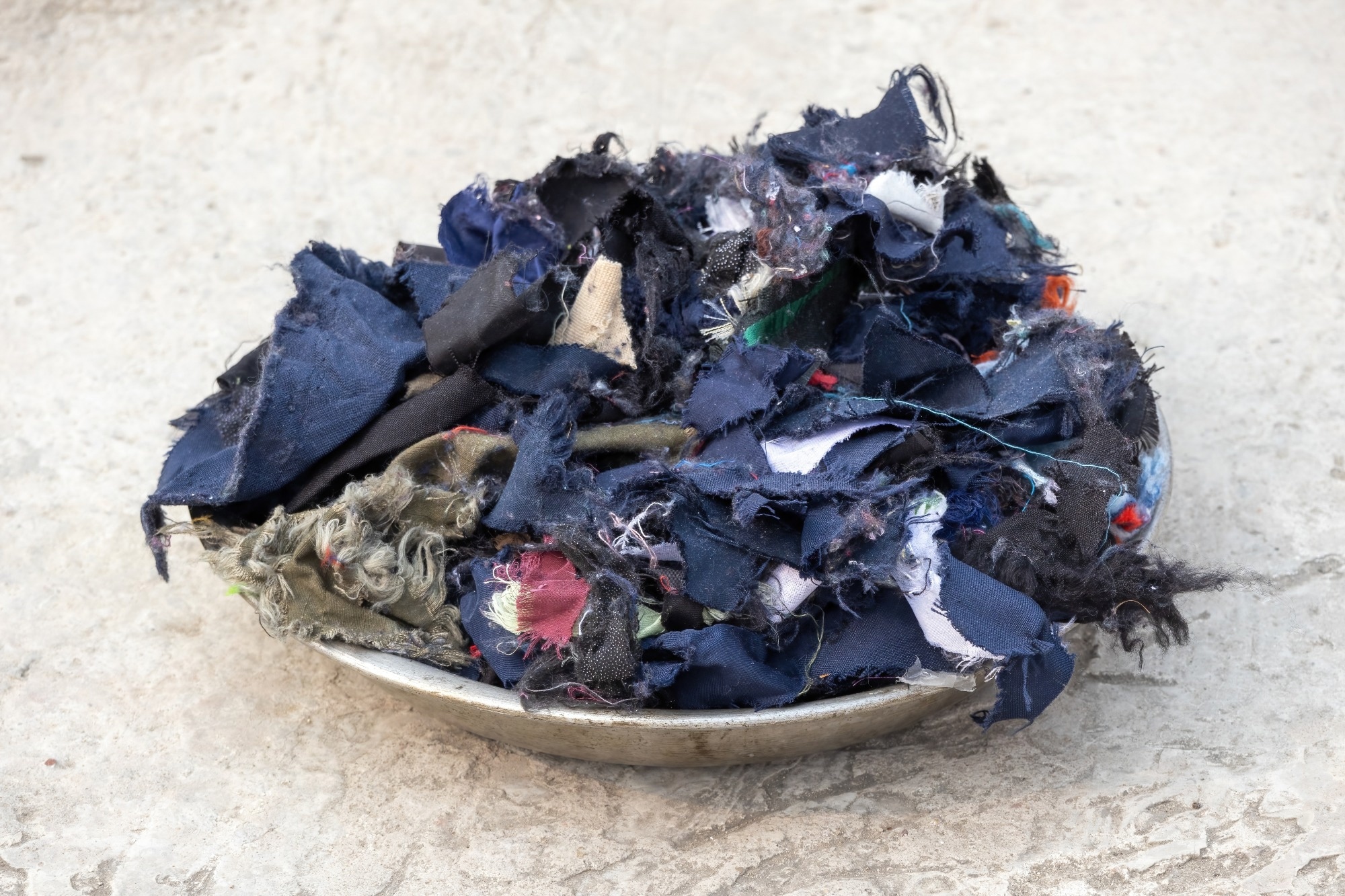
Image Credit: Sahadat.Hossain/Shutterstock.com
Why Is Textile Recycling Important?
Global demand for textiles and clothing is increasing as populations grow and living standards improve.1 Fast fashion, characterized by its rapid production, ever-changing trends, and low prices, has dramatically accelerated consumption and waste. In Europe, for example, approximately 7 million tons of textile waste are produced annually, a number projected to rise significantly by 2030.2
A large portion of discarded textiles ends up in landfills, causing significant environmental problems such as pollution, greenhouse gas emissions, and the loss of valuable resources. Recycling and reuse are key strategies for addressing these issues.3 Textile recycling converts waste into new products, minimizing environmental harm, conserving raw materials, and reducing landfill use.
Downcycling, which transforms textiles into lower-value products, also reduces the demand for virgin resources and supports industry sustainability. Around half of textile waste is downcycled into products such as cleaning cloths, insulation, or stuffing, while the rest is reused - often exported to developing countries with thriving secondhand markets.
Increasing textile reuse and recycling reflects the growing shift toward a circular economy, helping to eliminate waste by maximizing resource use and extending product lifecycles.4 In this model, products remain in use as long as possible through reuse, repair, refurbishment, and recycling.
Want to save this article for later? Click here.
Sorting and Collection Challenges in Textile Recycling
Specialized facilities are crucial in collecting and sorting textiles by material type, quality, and their potential for reuse or recycling. However, the vast diversity of textile waste, from everyday clothing to industrial scraps, makes effective sorting a significant challenge.
Accurate sorting is essential, as materials like cotton, polyester, nylon, and blends must be separated according to fiber characteristics. Unfortunately, garment labels rarely provide enough detail, further complicating sorting and reducing overall recycling efficiency.5
Diverse waste streams further complicate the textile recycling landscape. In Europe, post-industrial waste from garment manufacturing totals around 0.5 million tons annually, with only modest growth expected.
Post-consumer commercial waste from retail sources is projected to increase from 0.2 to 0.3 million tons, while waste from establishments such as hotels may rise from 0.4 to 0.5 million tons.5 Each of these streams faces distinct barriers, from limited collection systems and complex sorting requirements to recyclability challenges caused by material fragmentation and chemical treatments.
Collection rates for textiles differ widely across countries. Germany, for instance, collects around 70% of its disposed textiles, while Denmark collects around 50%.6 Germany’s high collection rate is supported by a robust network of collection bins, municipal programs, and non-profit organizations, all focused on reuse and recycling. These national differences highlight how policy support, public awareness, and infrastructure availability shape textile collection and recycling outcomes.
Technological Advances and Strategies to Improve Textile Waste Management
Recent breakthroughs in textile recycling technologies are creating scalable, sustainable alternatives to virgin fibers. Breakthroughs include chemical recycling, mechanical recycling, and upcycling, which offer powerful ways to reduce fashion's environmental impact.7
Advanced processes, including sustainable thermochemical recycling and closed-loop systems using bio-based chemical methods like hydrolysis, fermentation, and enzymatic or biological treatments, further increase the potential to turn waste textiles into valuable resources.
Despite advances such as near-infrared (NIR) technology and artificial intelligence (AI)-driven robots that can identify fibers with high accuracy, manual sorting remains common, leading to inefficiencies and errors. However, cutting-edge technologies, such as Fibersort and reflectance Fourier transform infrared (FTIR) spectroscopy, are improving sorting efficiency and material identification, yet full automation remains limited.8
Realizing the full benefits of these technologies requires collective action from industry stakeholders, policymakers, and researchers. Overcoming structural and technical challenges in collection, sorting, and preprocessing is crucial for scaling global textile recycling. Regulatory measures, such as restricting the export of unsorted textile waste, could help streamline sorting operations and foster a more sustainable textile recycling ecosystem.
Building a Truly Circular Fashion System
While recycling is essential to moving fashion toward circularity, it is not sufficient on its own.2
Most garments are discarded long before the end of their usable life, often due to changing trends, minor damage, or shifting consumer preferences rather than genuine wear. As a result, massive volumes of textiles are wasted despite being perfectly functional, highlighting the need for approaches that extend clothing's lifespan.
A genuinely circular fashion system requires systemic change that goes far beyond recycling technologies. Designing garments for durability, repairability, and timelessness can help ensure that clothing is used for as long as possible.
Business models such as clothing rental, resale, and repair services can incentivize consumers to see clothing as investments rather than disposable goods. Upcycling and redesign can add new value to existing textiles, turning potential waste into unique and desirable products. These models rely on the support of brands, policymakers, and infrastructure that make it easy and appealing for consumers to keep garments in circulation.
Consumer education is equally vital. Helping people understand the environmental impact of throwing clothes away too soon and giving them the skills to repair, care for, and creatively reuse what they already own can help shift attitudes toward making clothes last longer and using resources more responsibly. By combining these efforts with recycling, the fashion industry can move closer to closing the loop and creating a more circular and sustainable future.
References and Future Reading
- Chen X, et al. Circular Economy and Sustainability of the Clothing and Textile Industry. Mater Circ Econ. 2021;3(1):12. doi: 10.1007/s42824-021-00026-2.
- Management of used and waste textiles in Europe’s circular economy. European Environmental Ageny. 2024; Available at: https://www.eea.europa.eu/en/analysis/publications/management-of-used-and-waste-textiles-in-europes-circular-economy
- Celep G, et al. Limitations of Textile Recycling: The Reason behind the Development of Alternative Sustainable Fibers. In Next-Generation Textiles. IntechOpen. 2023; https://doi.org/10.5772/intechopen.105118
- Biyada S and Urbonavicius J. Circularity in textile waste: Challenges and pathways to sustainability. Clean Eng Technol. 2025; 24:100905. https://doi.org/10.1016/j.clet.2025.100905
- Saif M, et al. Navigating the Legislative Interventions, Challenges, and Opportunities in Revolutionizing Textile Upcycling/Recycling Processes for a Circular Economy. ACS Sustain Resour Manag. 2024;1(11):2338-2349. doi: 10.1021/acssusresmgt.4c00242.
- Sandin G and Peters GM. Environmental impact of textile reuse and recycling – A review. J Clea Prod. 2018;184, 353-365. https://doi.org/10.1016/j.jclepro.2018.02.266
- Chen X, et al. Circular Economy and Sustainability of the Clothing and Textile Industry. Mater Circ Econ. 2021;3(1):12. doi: 10.1007/s42824-021-00026-2.
- Heidari A, et al. From textile production to end-of-life recycling: A comprehensive systematic review of AI applications in the textile value chain for the circular economy. Resour Conserv Recycl Adv. 2026;31, 200382. https://doi.org/10.1016/j.rcradv.2026.200382
Disclaimer: The views expressed here are those of the author expressed in their private capacity and do not necessarily represent the views of AZoM.com Limited T/A AZoNetwork the owner and operator of this website. This disclaimer forms part of the Terms and conditions of use of this website.