Application Areas of the Nuclear Energy Market in 2026
Recent Developments Shaping the 2026 Nuclear Energy Market
The Nuclear Energy Market in 2026
What Does the Future Nuclear Energy Market Look Like?
Financing the Build-Out
Final Thoughts
References and Further Reading
Nuclear energy heading into 2026 is making a comeback. Government financing, corporate power-purchase deals tied to AI data centers, and the return of previously closed down reactors are pushing construction activity toward levels not seen in decades. This report answers the question of what the nuclear market looks like in 2026 by covering where the technology is applied, the year's biggest commercial and policy developments, the current state of play in the United States and Europe, and where the industry appears to be heading next.
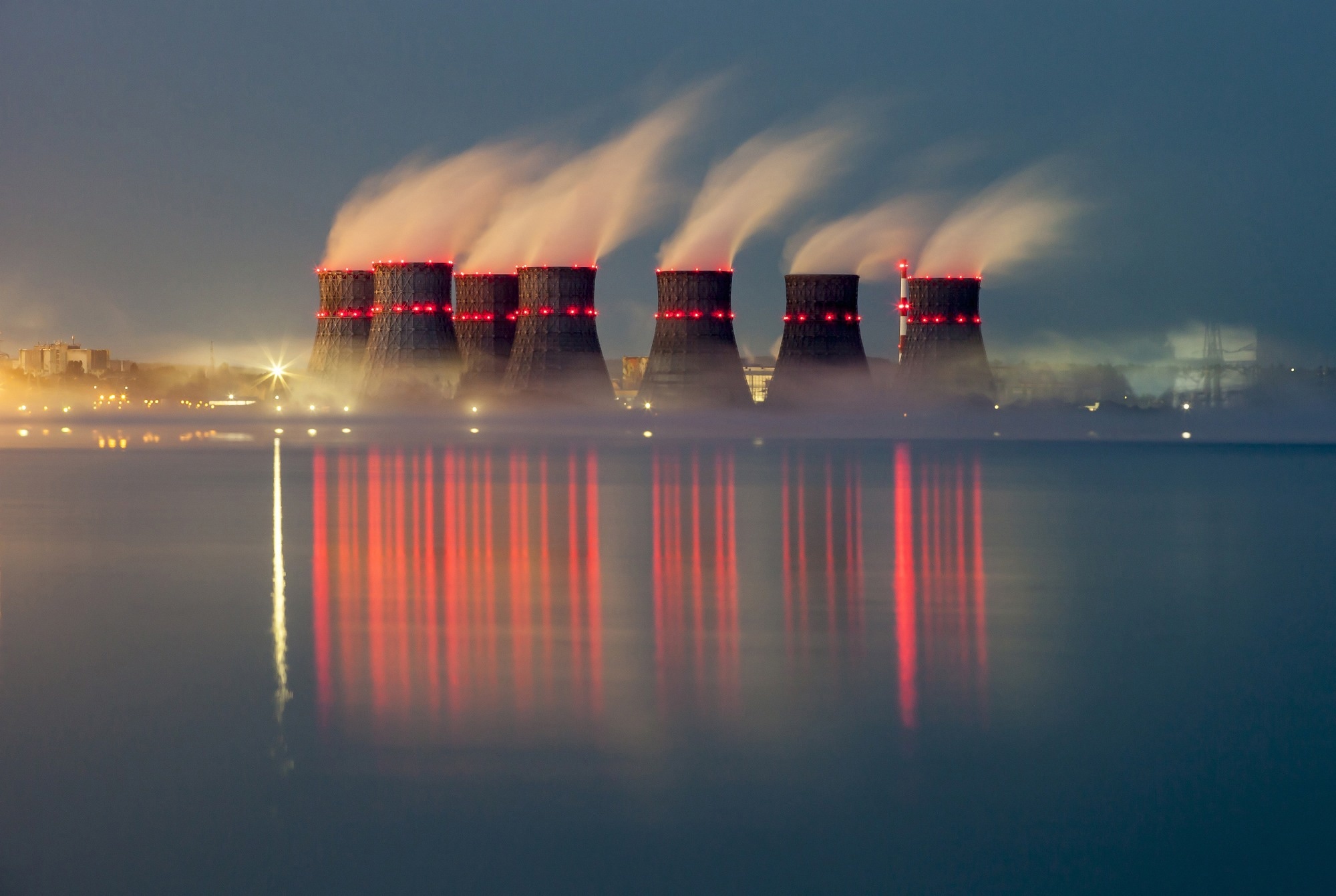
Image Credit: polu_tsvet/Shutterstock.com
Application Areas of the Nuclear Energy Market in 2026
In 2026, large reactors are supplying continuous, low-carbon power to national grids. Beyond this, the technology is increasingly being paired with industrial demand.
Amazon has taken an off-take stake in X-energy’s Xe-100 small modular reactor (SMR) project at Energy Northwest and is separately exploring SMR development with Dominion Energy at the North Anna site.1
Google has agreed to purchase electricity from Kairos Power’s molten-salt-cooled Hermes demonstration reactor, developed jointly with the Tennessee Valley Authority.1
Meta has separately signed a 20-year power purchase agreement with Constellation for 1121 megawatts from the Clinton Clean Energy Center in Illinois, while Amazon buys nuclear power from Talen Energy’s Susquehanna plant under a schedule expected to ramp up to full capacity by 2042.1
Recent analysis from the International Energy Agency’s Energy and AI program found that nuclear already supplies around 15% of data centers’ electricity needs worldwide in 2026, and that conditional offtake agreements between data-center operators and SMR projects nearly doubled from 25 gigawatts at the end of 2024 to 45 gigawatts today.2
Nuclear heat and steam are also used in industrial processes, with roughly 15% of the world’s reactors supplying district heating, and some high-temperature designs adapted to produce hydrogen.1 Desalination and marine propulsion remain smaller niches, illustrated by Rosatom’s Akademik Lomonosov floating plant.1
Want to save this article for later? Click here.
Recent Developments Shaping the 2026 Nuclear Energy Market
Small Modular Reactors
The clearest trend defining the market in 2026 is the return of small modular reactors from concept to construction.
Designs such as NuScale’s Power Module, GE Vernova Hitachi’s BWRX-300, Holtec’s SMR-300, Rolls-Royce SMR, and TerraPower’s Natrium are all moving through licensing or early build phases.1
In March 2026, the US Department of Commerce and Japan agreed a deal worth up to $40 billion to deploy GE Vernova Hitachi’s BWRX-300 reactors at sites in Tennessee and Alabama in the US, targeting roughly 3 gigawatts of new capacity.3
Restarting Retired Reactors
Constellation Energy is bringing Three Mile Island’s Unit 1 back online under a 20-year agreement with Microsoft, renaming the site the Crane Clean Energy Center.2 Constellation expects the restart to add 835 megawatts of power, create roughly 3,400 jobs, and contribute close to $16 billion to Pennsylvania’s economy.4
On the policy side, the US Department of Energy announced $17.5 billion in loans in June 2026 to support five projects building 10 Westinghouse AP1000 reactors.5
These conditional loans will play an important role in reviving the supply chain needed for America to once again build large-scale commercial reactors.
US Energy Secretary, Chris Wright
Chris Wright added that the financing should help “accelerate the timeline of building those large-scale reactors by up to three years, lowering construction costs”.6
The Nuclear Energy Market in 2026
At the start of 2026, the World Nuclear Association counted 438 operable reactors worldwide with roughly 397 GWe of capacity, while the IAEA’s Power Reactor Information System reported 413 operating units and about 420 GW of capacity at year-end, a gap that mainly reflects differences in how each body classifies suspended and long-term shutdown units.1,4
A further 78 GWe is under construction, with China alone accounting for 38 GWe of that total.1
In the United States, the market is anchored by Westinghouse, whose AP1000 design underpins the new DOE-backed loan program, alongside Constellation Energy’s restart work and NuScale Power, whose Power Module SMR technology is being advanced by its partner ENTRA1 Energy with the Tennessee Valley Authority.5
Europe’s largest state-owned operator, EDF, continues to run and build large reactors in France, while the UK is backing Rolls-Royce SMR and a Holtec-EDF-Tritax proposal to power new data centers at the former Cottam coal site.1
Smaller companies are also notable: X-energy, Kairos Power, Oklo (whose Aurora powerhouse recently broke ground at Idaho National Laboratory), and Radiant (developer of the Kaleidos microreactor) have all signed data-center-linked agreements with technology companies, including Amazon, Google, and Equinix, positioning them as credible near-term suppliers rather than purely experimental ventures.1
What Does the Future Nuclear Energy Market Look Like?
Scaling to 2050
The World Nuclear Association’s central projection has global nuclear capacity reaching 1446 GWe by 2050 if announced national targets are met, which would exceed the roughly 1200 GWe goal set under the COP28 pledge to triple nuclear capacity.1
Reaching that figure requires annual grid connections to rise from around 14.4 GWe a year in the late 2020s to over 65 GWe a year in the late 2040s, a pace the industry has not sustained since the 1980s.1
Financing the Build-Out
Achieving this pace depends heavily on financing. Government-backed lending, such as the DOE’s loan program, and long-term power purchase agreements from technology companies are increasingly filling the gap left by conventional project finance, which has historically struggled with nuclear’s long construction times and high upfront costs.1,5
Academic analysis of reusing retired coal-plant sites for SMRs finds that shared grid connections, land, and workforce can improve project economics versus greenfield builds, a route several newly announced US and UK projects may follow.8
Final Thoughts
In 2026, nuclear’s re-emergence is being driven by a specific commercial need for reliable, round-the-clock power for AI data centers, combined with governments’ willingness to underwrite the resulting construction risk.
Not everyone agrees on how much public support is warranted. The Commonwealth Foundation argues that the Three Mile Island restart shows private industry can finance nuclear projects without subsidy, and that policy should stay source-neutral rather than favor nuclear specifically.7
References and Further Reading
- World Nuclear Association (2026) World Nuclear Outlook. Available at: https://world-nuclear.org/images/articles/World-Nuclear-Outlook-Report_dfed5656.pdf (Accessed: 9 July 2026).
- International Energy Agency (2026) Energy and AI – Energy Supply for AI. Available at: https://www.iea.org/reports/energy-and-ai/energy-supply-for-ai (Accessed: 9 July 2026).
- U.S. Department of Commerce (2026) Fact Sheet: New Energy Projects from U.S.-Japan Trade Deal. Available at: https://www.commerce.gov/news/fact-sheets/2026/03/fact-sheet-new-energy-projects-us-japan-trade-deal (Accessed: 9 July 2026).
- Béliveau, A. (2024) Restarting Three Mile Island: Quick Facts. Commonwealth Foundation. Available at: https://www.commonwealthfoundation.org/research/restarting-three-mile-island-facts/ (Accessed: 9 July 2026).
- CNBC (2026) Trump administration to loan $17 billion to speed deployment of 10 big nuclear reactors in U.S. Available at: https://www.cnbc.com/2026/06/23/trump-administration-to-loan-17-billion-to-build-10-nuclear-reactors.html (Accessed: 9 July 2026).
- U.S. Department of Energy (2026) Department of Energy Announces American Nuclear Supply Chain Loans. Available at: https://www.energy.gov/articles/department-energy-announces-american-nuclear-supply-chain-loans (Accessed: 9 July 2026).
- International Atomic Energy Agency, Power Reactor Information System (2026) Nuclear Power Reactors in the World. Available at: https://www.iaea.org/publications/15943/nuclear-power-reactors-in-the-world (Accessed: 9 July 2026).
- Energy Policy (2025) ‘The economics of small modular reactors at coal sites: A program-level analysis within the state of Texas’, 202, 114572. DOI: 10.1016/j.enpol.2025.114572. Available at: https://www.sciencedirect.com/science/article/pii/S0301421525000795.
Disclaimer: The views expressed here are those of the author expressed in their private capacity and do not necessarily represent the views of AZoM.com Limited T/A AZoNetwork the owner and operator of this website. This disclaimer forms part of the Terms and conditions of use of this website.