The International Agency for Research on Cancer and the US Department of Health and Human Services have both recognized formaldehyde as a known human carcinogen.
Natural gas-fired turbine engines are a source of formaldehyde, the recognition of which has led to the introduction of regulations requiring that such engines be periodically monitored by emission testing firms.
The US Environmental Protection Agency (EPA) Stationary Combustion Turbine Regulation (40 CFR Part 63 Subpart YYYY) stipulates that this type of turbine must limit formaldehyde emissions to 91 parts per billion (ppb) by volume, dry basis (ppbvd) or less at 15 % O2.
Gas turbine manufacturers make considerable efforts to minimize formaldehyde emissions in their combustion ‘hot section’ design, meaning that the continuously emitted formaldehyde concentration levels from these sources are typically low at around 0.1 ppmv.
Yet the volume of exhaust gas from gas turbines is relatively large. These fumes have the potential to increase the total mass of the pollutant to a level high enough to pose a risk to human health.
Measurement Challenge
Source testing professionals require an analytical technology able to precisely measure < 91 ppbv formaldehyde from a natural gas-fired turbine in real time.
FTIR gas analyzers following EPA Method 320 in some configurations can reach this low level, but these analyzers rarely offer the precision required to accurately measure formaldehyde emissions.
EPA Method 0011 is also employed, necessitating the use of collection impingers and a derivatizing reagent [2,4-dinitrophenylhydrazine (DNPH)]. This is followed by the use of high-pressure liquid chromatography (HPLC) with UV-Vis detection.
This technique is not a real-time measurement, however, and it also lacks precision. A real-time analysis methodology with single-digit ppb detection limits is required to be sufficiently efficient.
Solution
The MAX-iR™ FTIR Gas Analyzer from Thermo Scientific™ features the optical StarBoost™ Technology enhancement, allowing it to meet this challenge.
Pioneering StarBoost technology considerably increases the FTIR gas analyzer’s sensitivity, detector linearity, and dynamic range, allowing for the real-time single-digit ppbv detection of hazardous air pollutants (HAPs), such as formaldehyde.
A MAX-iR analyzer with StarBoost technology employs a longpass optical filter enabling the measurement of compounds from 1900–3300 cm-1. This filter system can be used to measure hydrocarbons and other oxygenates simultaneously, including CO, CO2, CH4, and H2O.
A novel technique also exists for zeroing the analyzer using stack emissions. The MAX-OXT Thermal Oxidizer Module from Thermo Scientific can selectively remove the target analyte from the sample matrix, achieving this without reducing the concentration of atmospheric interference such as CH4, H2O, and CO2.
This collected interference spectrum can then be added to the regression in real time to improve the quality of IR residual and formaldehyde data. The MAX-OXT module is a powerful data validation tool, even in applications where the interference spectrum is not used in the regression.
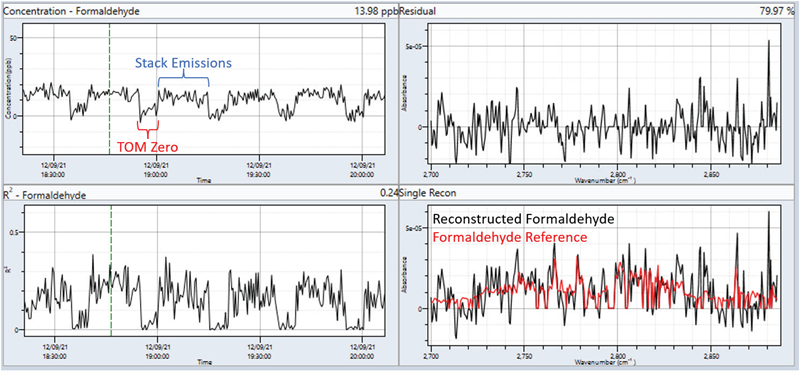
Figure 1. Formaldehyde measurements collected in the field from a natural-gas fire. Image Credit: Thermo Fisher Scientific – Environmental and Process Monitoring Instruments
Experimental
Data was collected from a natural gas-fired turbine in order to demonstrate the ability of the MAX-iR analyzer with StarBoost technology to measure formaldehyde emissions. The MAX-OXT module was used to periodically zero this data.
The response time is < 15 seconds at 5LPM sample flow when switching between MAX-OXT oxidation and sample gas, facilitating formaldehyde detection. Figure 1 shows the results from the field test.
The plot in the upper left panel of Figure 1 illustrates formaldehyde concentration (in ppb) during the data collection period. The formaldehyde concentration was 13.98 ppb for the selected sample spectrum, indicated by the green hashed line.
This application employed a MAX-OXT module in order to periodically remove the formaldehyde from the sample and collect interference spectra, as illustrated in the concentration plot.
Adding these spectra to the regression matrix enables easy validation of the formaldehyde concentration down to 10 ppb. This technique also helps to minimize spectral interference-related bias in the formaldehyde measurement, which is key to accurately measuring compounds on a 10-ppb scale.
The formaldehyde measurement’s standard deviation was 1.37 ppb, meaning that the test’s minimum detection limit was 4.11 ppb. At a concentration of 13.98 ppb, formaldehyde can be observed in the regression reconstruction.
Conclusion
This article highlights how the MAX-iR analyzer with optional StarBoost technology can measure low ppb levels of formaldehyde from gas-fired turbine engines.
The instrument’s ease of sampling and data flow deliver increased measurement efficiency versus EPA Method 0011. Results could previously take hours to achieve, but this setup allows measurements to be performed in minutes, saving time, labor, and money.
The enhanced analyzer’s heightened precision also assures both the tester and the client that the result will reflect the actual formaldehyde levels sampled during the test.

This information has been sourced, reviewed, and adapted from materials provided by Thermo Fisher Scientific – Environmental and Process Monitoring Instruments.
For more information on this source, please visit Thermo Fisher Scientific – Environmental and Process Monitoring Instruments.