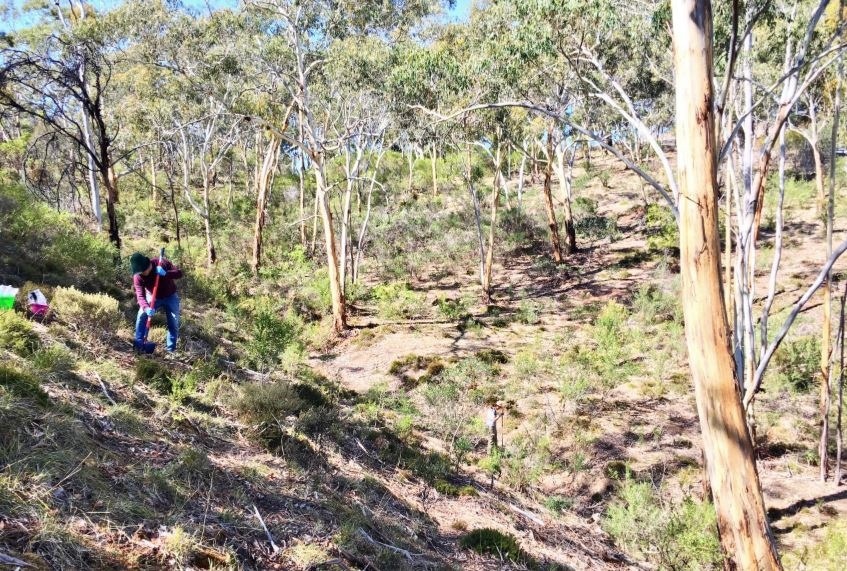
Image Credit: Flinders University
“This is a complex field as soil microbes are extremely diverse, but understanding this microscopic underground life is increasingly affordable and is vital to provide the ecological functions such as nutrient cycling that supports plant growth and broader ecosystem recovery.”
The study synthesised global studies that mapped changes in soil microbes after native plant revegetation. The 26 studies they compiled showed more rapid recovery in soil bacteria than fungi which is consistent with bacteria’s shorter generation times and better dispersal abilities
“Vast areas of the earth’s ecosystems are degraded which is leading to cascading losses of biodiversity, driving up extinction rates and even disease risks to us,” says lead author Carl Watson, a PhD candidate in restoration ecology at Flinders University.
“We must write into these important revegetation efforts the need for below-ground ecosystem recovery and monitoring as understanding how soil microbial communities return after revegetation will help rebuild critical habitats.”
The UN Decade on Ecosystem Restoration declared last year supports the Bonn Challenge to restore 350 million hectares of degraded ecosystems by 2030.
The quantitative review article, Global meta-analysis shows progress towards recovery of soil microbiota following revegetation (2022) by Carl D Watson, Michael G Gardner, Riley J Hodgson, Craig Liddicoat, Shawn D Peddle and Martin F Breed has been published in Biological Conversation (Elsevier) DOI: 10.1016/j.biocon.2022.109592.