AIMPLAS participates in this European project, which develops innovative products for agriculture, gardening and sports that fully biodegrade in soil and will be validated across five EU countries.
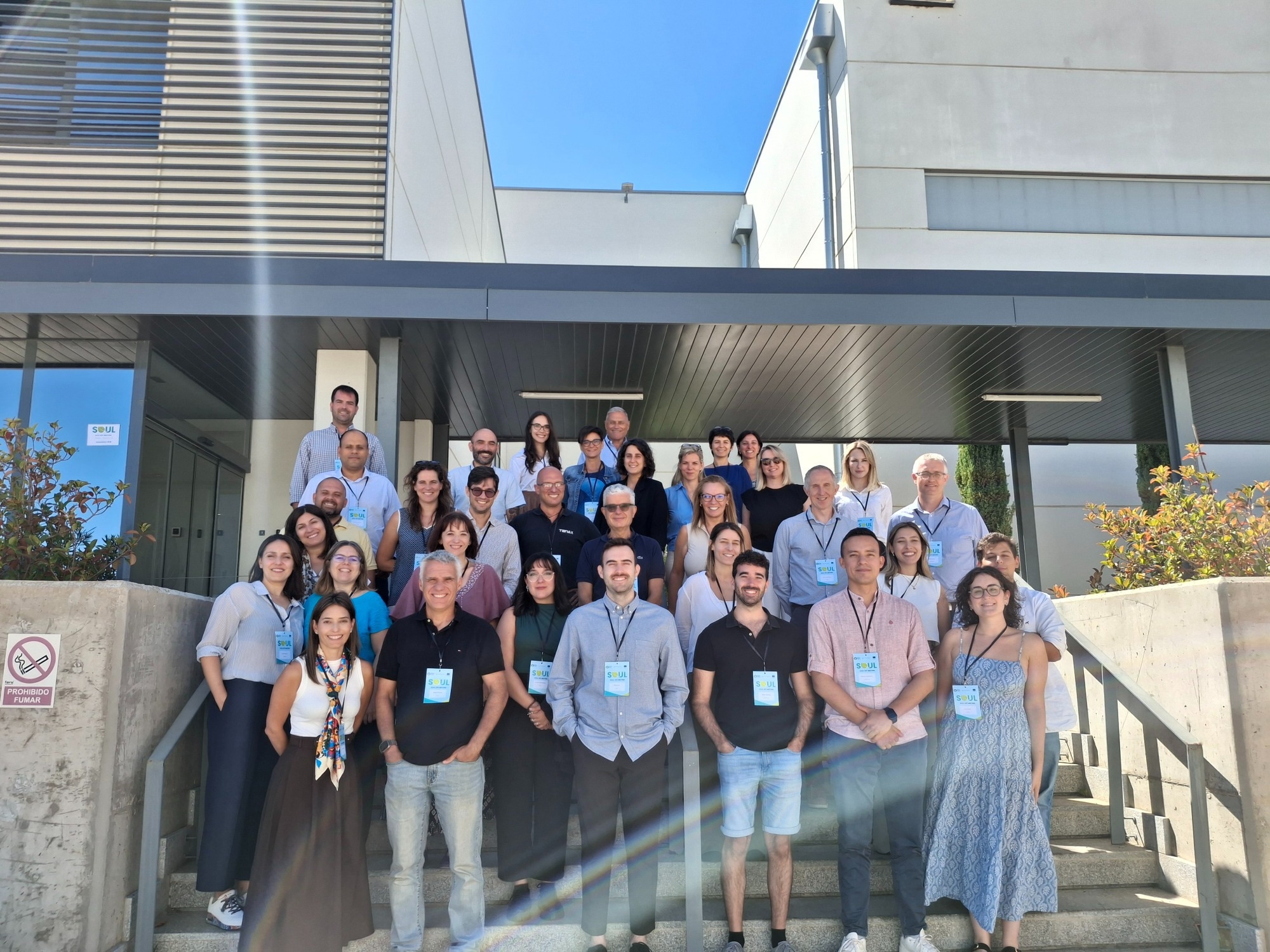 Image Credit: AIMPLAS
The European project SOUL (Sustainable, biO-based and biodegradable-in-soil soLutions), co-funded by Horizon Europe under the Circular Bio-based Europe Joint Undertaking (CBE JU) and involving AIMPLAS – the Plastics Technology Centre –, is developing 11 innovative bio-based and biodegradable-in-soil product solutions for applications in agriculture, gardening, landscaping, fisheries, leisure, and sports. With more than 95 % renewable raw material content, these solutions are designed to deliver high performance during use and fully biodegrade at the end of their life cycle, helping to minimise environmental impact and prevent soil pollution.
The consortium brings together 17 partners from five EU countries: Fundación AITIIP (coordinator), EVOenzyme, CSIC – Spanish National Research Council, Asetaga and AIMPLAS from Spain; MOSES, Novamont, Tenax S.p.A., Alma Mater Studiorum – University of Bologna and Re Soil Foundation from Italy; Amorim Cork Solutions, Sicor and Holoss from Portugal; Samco Agricultural Manufacturing from Ireland; Normec OWS and European Bioeconomy Bureau from Belgium; and IUNG – Institute of Soil Science and Plant Cultivation from Poland, along with associated partner Bedoukian (Switzerland).
Circular Innovation Based on Sustainable Resources
The consortium is developing products such as mulch films, clips, twines, pheromone dispensers, turf nets, tree shelters, controlled-release fertiliser coatings, and infill materials for artificial turf. These solutions are produced from sustainably sourced feedstocks, including agricultural residues, agri-food by-products, and crops grown on marginal lands, reinforcing the circular bioeconomy model. In addition, they are compatible with existing plastic manufacturing technologies, facilitating industrial scalability.
“The SOUL project represents a crucial step towards a truly circular bioeconomy for plastics that end up in our soils,” says Dr Carolina Peñalva, Project Coordinator. “Our goal is to create sustainable, high-performance materials that work in harmony with the environment, rather than against it. By preventing soil pollution and reducing our carbon footprint, we can protect ecosystems for future generations.”
Within the SOUL project, AIMPLAS will develop a tool that will predict the biodegradability of the plastic materials in soil conditions. Thus, this digital tool will help to understand better the biodegradation materials and to design in a safer and more sustainable way products and materials for a greener agriculture and healthy soils.
Real-World Validation and Measurable Environmental Impact
The 11 product solutions will be tested under real-world conditions in five European regions with diverse climatic profiles: Spain, Italy, Portugal, Poland, and Ireland. These trials will demonstrate their biodegradability in soil and their compatibility with different end-of-life scenarios, including composting, reuse, and recycling.
Furthermore, the project will carry out a comprehensive assessment of the safety, sustainability, and circularity of each solution throughout its entire life cycle, quantifying greenhouse gas emission reductions and delivering policy recommendations for the sector.