Benzene is naturally found as a trace-level component of petroleum, crude oil, and coal. This aromatic hydrocarbon is produced by the incomplete combustion of many materials and is used to manufacture detergents, plastics, pesticides, and other chemicals, such as cyclohexane, nitrobenzene, ethylbenzene, chlorobenzenes, and maleic anhydride.
However, benzene is a known leukemia-causing carcinogen. Research has shown that exposure to benzene for periods between five and 30 years has led to individuals developing, and dying from, leukemia. Those working with, or exposed to, benzene over long time periods have a high risk of developing benzene-related illnesses, from cancer to anemia.
Long-term (chronic) exposure can also adversely impact blood and bone marrow production. Benzene’s odor does not provide adequate warning of its risks, and there are no observable symptoms across the range of blood disorders associated with its exposure.
Short-term exposure to high levels of benzene can trigger dizziness, drowsiness, unconsciousness, and even death. Therefore, governments around the world mandate maximum allowable industrial exposure levels of benzene to help mitigate these risks.
The most widely employed short-term exposure limit for benzene is 5 ppm (16 mg per m3) for any 15-minute period. This permissible exposure limit (PEL) was developed by the US Occupational Safety and Health Administration (OSHA).
OSHA also states that “the employer shall assure that no employee is exposed to an airborne concentration of 1 ppm benzene in air as an eight-hour time-weighted average.”
‘Action levels’ are used to indicate the level of a toxic or harmful substance that requires increased industrial hygiene monitoring, medical surveillance, or biological monitoring.
Though the action level for benzene is 0.5 ppm as an eight-hour time-weighted average (TWA), the US National Institute for Occupational Safety and Health (NIOSH) specifies lower recommended exposure limits (RELs) of just 1 ppm over a 15-minute period and 0.1 ppm over eight hours.1
Table 1 presents the commonly used short-term and TWA limits for the aromatic compounds grouped as ‘BTEX’: benzene, toluene, ethylbenzene, and xylene.
The Thermo Scientific™ Sentinel™ PRO 710 Mass Spectrometer's detection limits are shown in Table 1 for comparison. These limits are considerably lower than the legal requirements, meaning it is possible to identify and correct leaks long before the specified action limits are reached.
Table 1. Typical exposure limits and Sentinel PRO detection limits for BTEX. Source: Thermo Fisher Scientific – Environmental and Process Monitoring Instruments
| Compound |
MW |
OSHA PEL
STEL ppm |
OSHA PEL 8-hour
TWA ppm |
NIOSH REL
STEL ppm |
NIOSH REL 8-hour
TWA ppm |
Sentinel PRO
detection limit |
| Benzene |
78 |
5 |
1 |
1 |
0.1 |
<5 ppb |
| Toluene |
92 |
300 |
200 |
150 |
100 |
<5 ppb |
| Ethyl benzene |
106 |
|
100 |
125 |
100 |
<5 ppb |
| Xylene |
106 |
|
100 |
150 |
100 |
<5 ppb |
Conventional Benzene Monitoring Methods
Employers are required to implement a monitoring method that meets the accuracy and precision requirements stipulated by the prevailing standard, while also taking into account the distinct local field conditions of the application in question.
For example, the OSHA standard requires the monitoring method to achieve a 95% confidence level of accuracy, with a tolerance of no less than ±25% for benzene concentrations of 0.5 ppm or greater.
The conventional method of achieving this degree of accuracy was to use field-deployed ‘Summa’ canisters, named thus because their internal surfaces are passivated using a Summa process. These six-liter, stainless steel vacuum cylinders were collected once per shift before being analyzed via gas chromatography/mass spectrometry in a laboratory.2,3
This method complies with the law in cases where the maximum exposure remains below the action level (0.5 ppm), but it cannot be relied on where there is a risk of this level being exceeded.
Workers’ ‘breathing zones’ must be monitored in these scenarios to protect them from short-term exposure limits (STELs), which are generally set at 5 ppm.
Adsorbent tubes are one common means of measuring personal exposure, with these tubes worn for several days and then returned to the laboratory for analysis. However, results can take several days to come back, meaning they cannot provide workers with immediate warning of an accidental release.
Online gas chromatography has been used in the past, but the combined sampling and analysis times of this approach can be 15 minutes or more. This notable limitation led to the need for analyzers capable of serving as an effective area-monitoring system for a large industrial complex.
It is also important to note that benzene may not be the only volatile organic compound (VOC) in the air around a petrochemical complex or oil refinery. For example, there will undoubtedly be the other BTEX aromatics.
These aromatics are not as dangerous as benzene (Table 1), but must still be monitored. It is vital that a gas chromatograph (GC) can separate them from benzene to avoid spurious false alarms, but this separation requirement will increase the cycle time of GC analysis.
Area Monitoring via Mass Spectrometry
Online mass spectrometry provides rapid, multi-component gas analysis, making it an effective alternative to a GC. A single mass spectrometer (MS) can deliver total plant coverage. For example, the Sentinel PRO 710 Mass Spectrometer can monitor a single BTEX sample point in just 12 seconds, including stream-settling time.
This rapid monitoring capability means that a total of 60 sample points can be monitored in just 12 minutes, assuming that all points are assigned equal priority.
In settings where some sample points are more important than others, for example, due to a higher level of personnel activity or an increased risk of leaks, it is possible to assign these sample points higher priority to ensure they are monitored more often.
Benefits of Magnetic Sector Mass Spectrometry
An MS can be used to monitor a wide range of volatile organic compounds in air, but it is essential that the data be accurate and reliable if it is to be used as part of a site monitoring strategy.
The MS uses electron ionization to ionize and fragment the molecules, with each molecule generating a distinct ‘fragmentation pattern’ that can be used to both identify and quantify the different gas components found in the atmosphere of a typical chemical plant.
The sheer range of fragmentation and isotope possibilities that exist for the volatile organics present in a typical plant environment results in a complex composite spectrum.
Figure 1 features the National Institute of Standards and Technology (NIST) library’s mass spectra fragmentation patterns for benzene, toluene, ethylbenzene and o-xylene.4
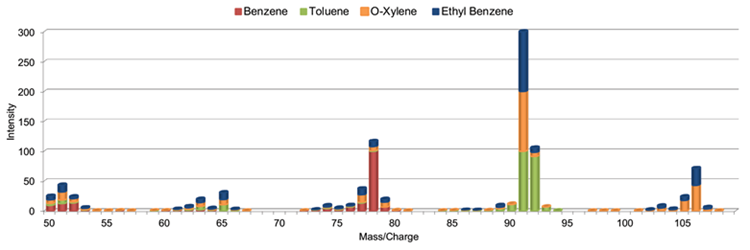
Figure 1. Composite mass spectrum of benzene, toluene, ethylbenzene, and o-xylene (NIST). Image Credit: Thermo Fisher Scientific – Environmental and Process Monitoring Instruments
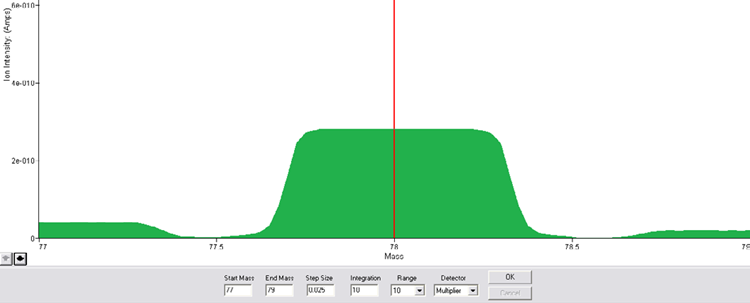
Figure 2. Analog scan of benzene’s mass 78 peak with Sentinel PRO’s magnetic sector analyzer showing characteristic flat-top peak. Image Credit: Thermo Fisher Scientific – Environmental and Process Monitoring Instruments
The MS must be able to accurately measure these fragmentation patterns to differentiate between high levels of a comparatively harmless VOC and low levels of a carcinogenic or toxic VOC.
If the MS is also to offer high availability, it is important that these fragmentation patterns remain stable over time; otherwise, the MS will require regular recalibrations.
Two types of MS have historically been employed for environmental monitoring: quadrupole and magnetic sector. Thermo Fisher Scientific™ manufactures both of these MS types, with more than 30 years of industrial experience highlighting that the magnetic-sector-based analyzer offers optimal performance for both process and environmental industrial gas analysis.
Key benefits of magnetic sector analyzers include resistance to contamination, enhanced accuracy and precision, and long intervals between calibrations. Analytical precision is generally between two and 10 times better than a quadrupole analyzer, depending on the complexity of the mixture and the specific gases analyzed.
One distinct feature of the Sentinel PRO 710 Mass Spectrometer is its laminated magnet. This analyzer can also scan at speeds comparable to quadrupole analyzers, offering both high stability and rapid analysis. This powerful and unique combination facilitates extremely stable, rapid analysis of an unlimited number of user-defined gases.
A precise magnetic flux measuring device is used to control the scanning magnetic sector, resulting in extremely stable mass alignment. Figure 2 displays the molecular ion peak for benzene at an atomic mass unit (AMU) of 78, as measured with the Sentinel PRO 710 Mass Spectrometer. This image particularly highlights the magnetic sector analyzer’s characteristic flat-top peak.
The peak’s height is directly proportional to the molecule’s concentration, meaning it is possible to measure the peak height anywhere across the peak top to acquire the correct result. This characteristic also means that the magnetic sector analyzer is inherently fault-tolerant.
Multi-Stream Sampling
The MS should feature a rugged multi-stream sampling system to provide total plant coverage. This system should offer rapid and reliable stream switching while ensuring no cross-contamination between streams.
To this end, Thermo Fisher Scientific developed the original Rapid Multistream Sampler (RMS) 35 years ago. This extremely reliable and virtually maintenance-free device is now on its third generation.
Figure 3 shows a cross-section of the RMS, highlighting the stepper-motor-driven device that diverts sample streams to the mass spectrometer one at a time, recording each stream’s flow in turn.
The RMS can be supplied with either 32 or 64 sample points. Two RMS units can be used in series where more sample points are needed, providing a total of 127 sample points.
Hundreds of these stream selectors are in use around the world, serving a diverse array of process and environmental applications. To date, the RMS is the only multi-stream sampling system offering a standard three-year warranty.
The sample being analyzed is diverted from the RMS past a membrane inlet. This inlet allows sample gas to enter the mass spectrometer ion source, where the sample is ionized by collisions with a high-energy electron beam.
Organic compounds have much higher permeation rates than the primary inorganic gases in air (O2, N2, Ar, and CO2), meaning that the membrane inlet allows these gases to be detected with much higher sensitivity.
Next, these positively charged ions are accelerated into the scanning magnetic sector where they are sequentially separated, and the intensity of the signal generated at the detector is measured.
This setup provides measurements that remain stable over time and linear across several orders of magnitude. When the Sentinel PRO 710 Mass Spectrometer is configured for fugitive emissions monitoring, detection limits in the parts-per-billion (ppb) range are regularly achieved.
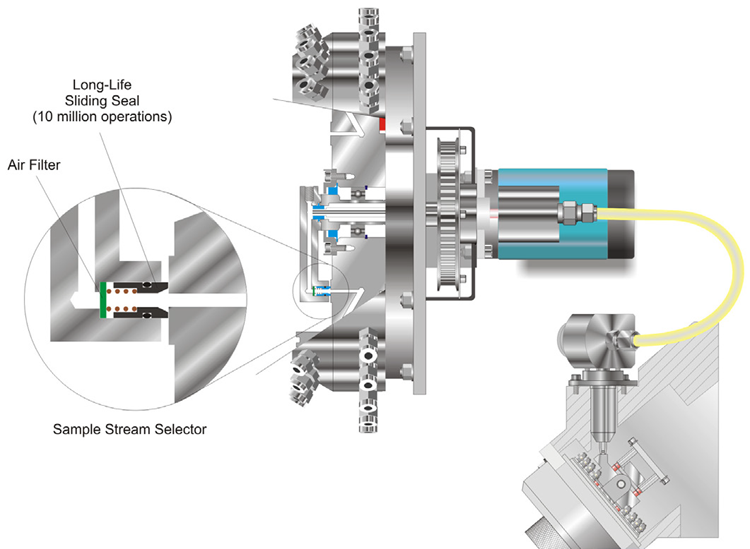
Figure 3. Rapid multistream sampler (RMS) cross section. Image Credit: Thermo Fisher Scientific – Environmental and Process Monitoring Instruments
Total Plant Monitoring
The Sentinel PRO 710 Mass Spectrometer can be used to monitor a wide range of VOCs at ppb and ppm levels. Some compounds are not well-suited to MS analysis, however, or may be present at concentrations higher than the MS can accommodate.
For instance, a flame ionization detector (FID) is needed to measure total hydrocarbons (THC) for explosion risk monitoring. The RMS features an optional remote analyzer connection that allows the selected stream to be fed from the RMS to another analyzer (Figure 4).
The THC output can be combined with the MS data to monitor both trace levels of carcinogenic and toxic compounds, as well as higher levels of flammable organics. This capability is key to rapidly locating emissions, resulting in a more leak-tight plant.
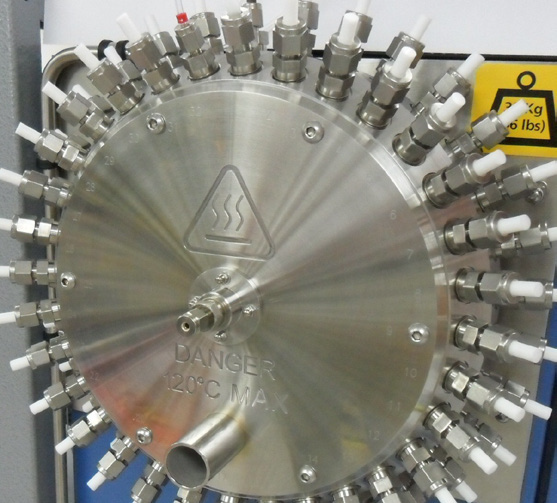
Figure 4. Rapid multistream sampler (RMS) with remote analyzer connection. Image Credit: Thermo Fisher Scientific – Environmental and Process Monitoring Instruments
System Linearity
It is imperative that the system’s response is linear as the benzene level rises from zero to an early-warning level, and on to a high-alarm level if appropriate corrective action is not taken.
A benzene linearity test can be designed to prove this performance for a customer. In the example presented in Figure 5, the system was required to analyze a calibration cylinder containing 3 ppm benzene within ±0.15 ppm.
Next, the sample was diluted to the high-alarm level of 1.5 ppm, then further diluted to the early warning-alarm level of 0.5 ppm. The benzene reading had to be within ±0.08 ppm and ±0.03 ppm for the high alarm and for the early warning alarm level, respectively.
Methyl cyclopentadiene, styrene, and vinyl toluene were also present in the plant atmosphere, so the system was also set up to monitor these. Readings of zero were obtained for all three interfering compounds, and the system met the specification for benzene linearity with confidence.
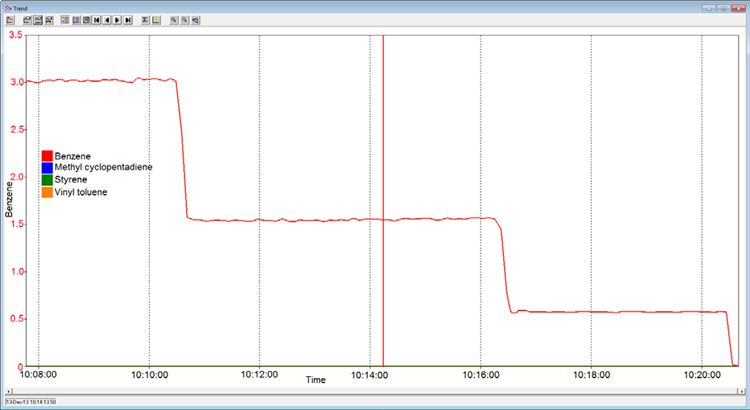
Figure 5. Benzene linearity check. Image Credit: Thermo Fisher Scientific – Environmental and Process Monitoring Instruments
Stability and Selectivity
A 56-hour stability check on a cylinder nominally containing 3 ppm benzene in air was performed (Figure 6). The acquired readings demonstrate extreme stability with a standard deviation of just 20 ppb (0.75% relative) over more than two days.
The system was also set up to simultaneously detect vinyl toluene and styrene, with both VOCs measured at zero concentration, further demonstrating the system’s inherent selectivity.
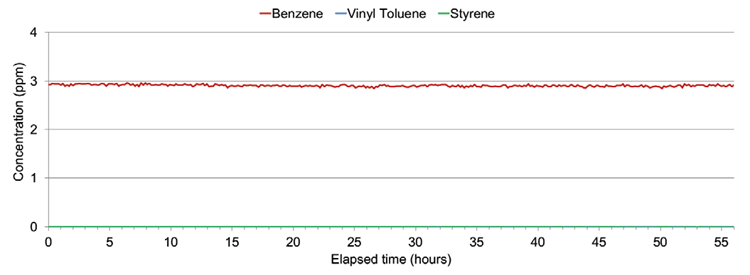
Figure 6. 56-hour stability run on 3 ppm benzene. Image Credit: Thermo Fisher Scientific – Environmental and Process Monitoring Instruments
Data from a customer experiment is shown in Figure 7. This experiment tested the system under high toluene levels, with benzene maintained at 100 ppm and xylene and ethylbenzene at 0 ppm.
No measurable interference was detected from these high toluene levels, even in cases where toluene levels were higher than 1600 ppm.
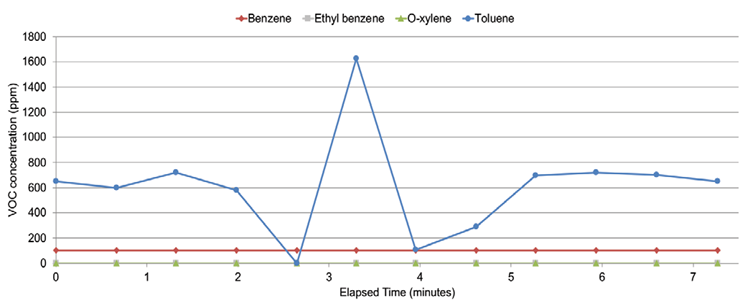
Figure 7. Benzene selectivity test. Image Credit: Thermo Fisher Scientific – Environmental and Process Monitoring Instruments
Summary
The Sentinel PRO 710 Mass Spectrometer delivers rapid response and broad coverage when configured to monitor point-source and fugitive emissions.
Though there is a high incidence of alarms when the equipment is initially installed, correcting accumulated leaks and enhancing standard operating procedures result in a major reduction in toxic emissions at the facility.
Its flexible configuration options and reliable nature ensure the technology’s cost of ownership remains low. The capacity to measure aromatics like benzene with ppb repeatability ensures that the installation will not be compromised by the introduction of future environmental regulations for benzene.
The Sentinel PRO 710 Mass Spectrometer offers a range of additional benefits, including:
- The ability to monitor up to 127 sample points, thanks to the RMS inlet
- High sensitivity via a membrane inlet with detection limits much lower than legal exposure limits
- Identification of even trace components even in high-complexity mixtures, thanks to the magnetic sector MS
- Maximum availability, with infrequent calibration needed
- Monitoring multiple compounds via a single system: Other VOCs can be added with no additional hardware, and a remote analyzer connection option is available
- A standard three-year warranty
References and Further Reading
- CDC (2020). Pocket Guide to Chemical Hazards | NIOSH | CDC. Available at: http://www.cdc.gov/niosh/npg/.
- EPA Standard Operating Procedure, Cleaning and Certification of Specially Prepared Canisters For Air Sampling
- EPA (2019). Method TO-15A: Determination of Volatile Organic Compounds (VOCs) in Air Collected in Specially | Science Inventory | US EPA. EPA. Available at: https://cfpub.epa.gov/si/si_public_record_report.cfm?Lab=NERL&dirEntryId=348850.
- National Institute of Standards and Technology (2023). 1-Butanol. NIST Chemistry Webbook, 69. DOI:10.18434/T4D303. https://webbook.nist.gov/chemistry/.
Acknowledgments
Produced from materials originally authored by Graham Lewis from Thermo Scientific.

This information has been sourced, reviewed, and adapted from materials provided by Thermo Fisher Scientific – Environmental and Process Monitoring Instruments.
For more information on this source, please visit Thermo Fisher Scientific – Environmental and Process Monitoring Instruments.