Ethylene oxide (EtO) is an odorless, colorless compound typically employed in the sterilization of medical products or as a reaction intermediate in ethylene glycol production.
EtO is central to the production of a range of medical devices, from catheters to artificial heart valves. However, studies have shown that it also has mutagenic and carcinogenic properties with the potential to pose long-term health risks to both those working in sterilization facilities and in surrounding communities.
The Environmental Protection Agency (EPA) has proposed new, more stringent regulations designed to reduce exposure to EtO. These regulations followed the publication of the agency’s ‘Evaluation of the Inhalation Carcinogenicity of Ethylene Oxide’ IRIS assessment and recent investigations of current sterilization procedures.
These policies will require commercial sterilizers to implement real-time continuous emissions monitoring methods if they are finalized, requiring sterilizers to confirm that their pollution controls are functioning as required.
Proposed Air Emissions Standards
The proposed emissions standards will impact the 86 commercial sterilizers currently operating in the USA, as well as any new start-up companies that rely on EtO.
The standards require the installation of new technologies and pollution controls, potentially decreasing EtO release from these facilities by around 80 % and reducing exposure risks for nearby communities to levels below the Clean Air Act benchmark for elevated cancer risk.
Sterilization companies will also be required to perform real-time EtO monitoring, necessitating the use of advanced technologies able to accurately measure concentrations at or below 10 parts per billion (ppb).
The EPA requires that data be collected and reported twice per year, allowing the agency to routinely assess the effectiveness of the proposed mitigation measures.
Additional safety measures must be implemented in facilities with EtO levels surpassing 10 ppb in order to improve staff safety levels, for example, enforcing the use of personal protective equipment (PPE).
The public comment period closed recently, with further steps required before the proposed standards are finalized. Once the new requirements are established, commercial sterilization facilities will only have 18 months to comply.
Companies must understand how to adhere to these regulations to ensure they are fully prepared for any potential required changes.
Challenges of Monitoring Ultra-Low EtO Levels
Emissions monitoring is not a new concept, but there has been a great deal of attention placed on EtO source measurements after the EPA published results of a 2014 National Air Toxics Assessment (NATA) in 2018.
The examination of EtO levels historically necessitates collecting a sample in the field, followed by off-line analysis in a laboratory. EtO detection has proven challenging for several reasons, including:
- The difficulties associated with detecting low levels of EtO using techniques like mass spectrometry and gas chromatography are that interfering species with identical molecular weights may appear in the sample matrix, for example, CO2, acetaldehyde, and propane
- Interferences from residual acid mists left by scrubber systems using aqueous acids to convert EtO to ethylene glycol, a less volatile compound
- Difficulty in trapping and concentrating EtO due to its low boiling point
- EtO’s highly reactive nature presents a challenge for sample collection and transport
Meeting the new requirements for real-time EtO monitoring requires an analytical technology optimized for real-time, direct EtO measurements.
Meeting the Challenge of Compliance with OE-FTIR
The analytical techniques employed in hazardous air pollutant detection continue to evolve, becoming increasingly sensitive, user-friendly, and cost-effective.
New technologies based on optically enhanced Fourier transform infrared (OE-FTIR) spectroscopy facilitate precise EtO detection at very low concentrations, confidently meeting the detection limits set out in the EPA’s proposed rules.
The EMS-10™ Continuous Emissions Monitoring System (CEMS) and the MAX-iAQ™ Ambient Air Monitoring System from Thermo Scientific can be used to identify and quantify low-level EtO leaks with a detection limit of 1 ppb, exceeding US EPA standards.
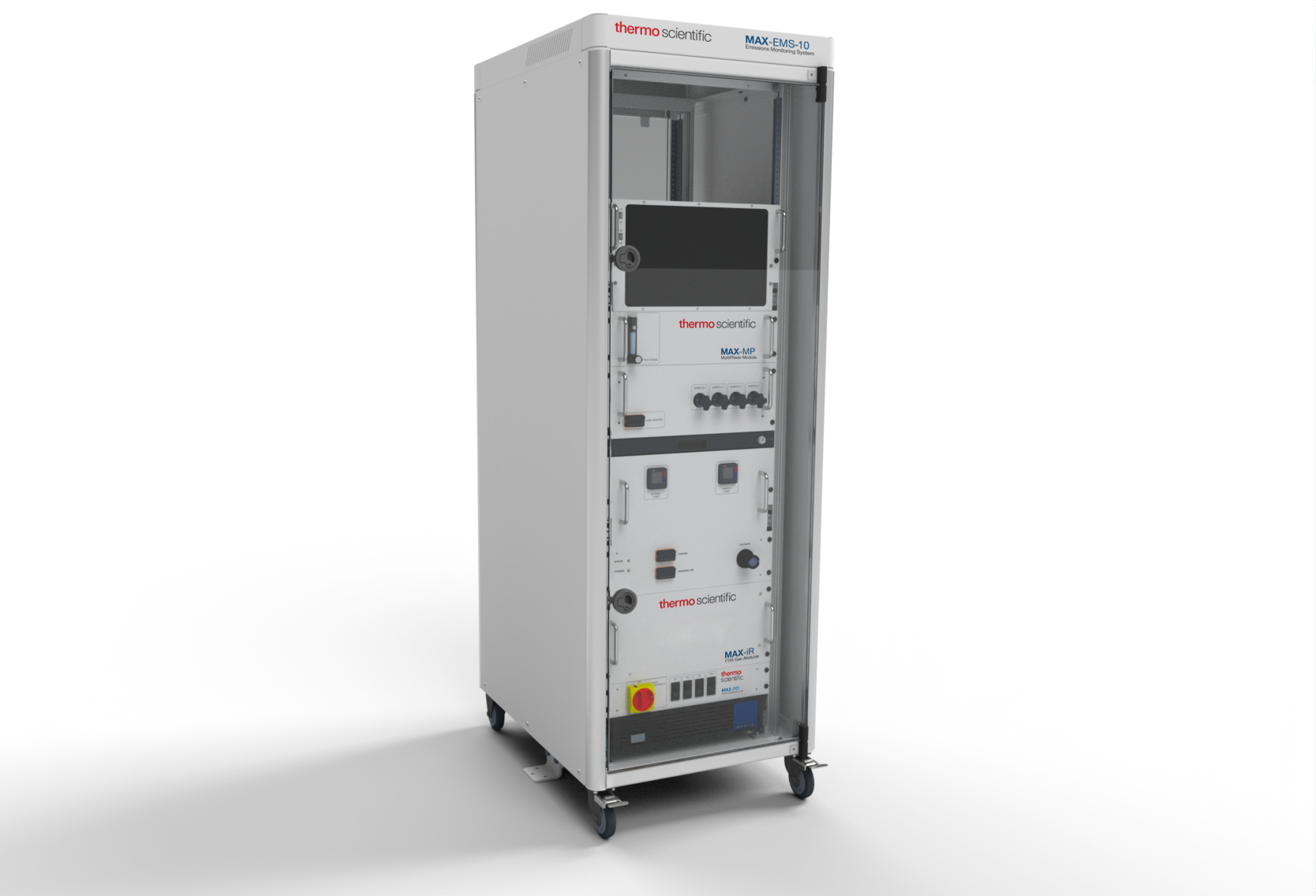
Image Credit: Thermo Fisher Scientific – Environmental and Process Monitoring Instruments
The company has partnered with the Montrose Environmental Group to combine rapid, robust, sensitive, and reliable emissions analysis with the technical expertise needed for smooth installation, calibration, and ongoing support.
The EMS-10 System and MAX-iAQ System can now be used to continually monitor EtO emissions with minimal downtime, supporting companies in their transition to compliance.
Summary
It may seem daunting to meet changing EtO regulations, but employing the right tools and leveraging appropriate support makes the transition to compliance much more manageable.
State-of-the-art solutions from Thermo Fisher Scientific have the ability to precisely detect gaseous EtO, supporting sterilization companies to navigate the complex compliance landscape. Implementing these technologies can help ensure continued efficient and smooth operations for the medical sterilization industry, while also offering vital long-term protection for communities and workers alike.

This information has been sourced, reviewed, and adapted from materials provided by Thermo Fisher Scientific – Environmental and Process Monitoring Instruments.
For more information on this source, please visit Thermo Fisher Scientific – Environmental and Process Monitoring Instruments.