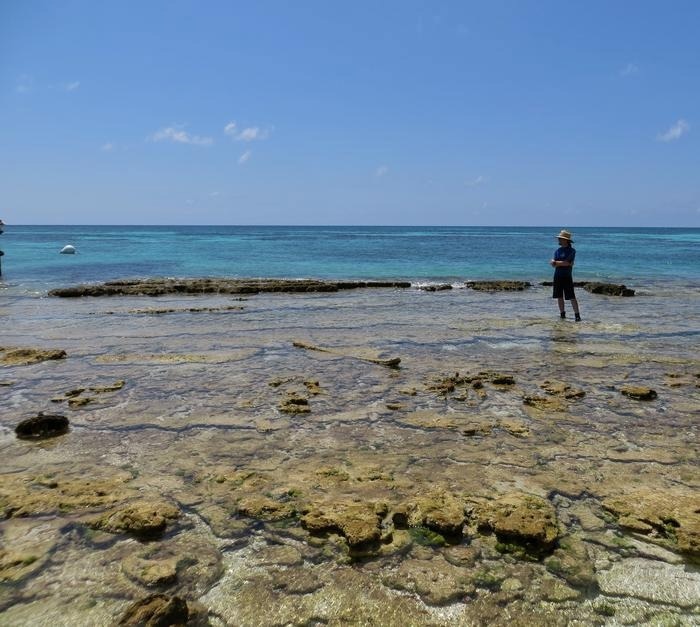
UNF professor Dr. Cliff Ross is standing in the ocean contemplating the salinity study. Image Credit: University of North Florida
The study team investigated how climate change-related variations in rainfall, and also local man-made effects, can cause extreme flood and drought events, impacting freshwater availability and salinity in sensitive ecosystems. As sea levels rise, saltwater inflows into coastal and low-lying areas can have disastrous consequences. Microorganisms, plankton, coral, mangroves, tidal marshes, macroalgae, and seagrass are the most vulnerable and could lead to ecosystem collapse.
The researchers have indicated that salinity changes are expected to worsen as the ocean warms, emphasizing the importance of addressing these salinity issues as soon as possible in order to protect marine and coastal ecosystems and biodiversity.
Journal Reference
Röthig, T., et al. (2023). Human‐induced salinity changes impact marine organisms and ecosystems. Global Change Biology. doi.org/10.1111/gcb.16859.