Co-processing is an attractive pathway to producing sustainable aviation fuel (SAF) because it can leverage existing refinery infrastructure with minimal modifications, keeping CAPEX low and enabling a faster start-up than grassroots solutions.
With high-performance catalysts such as Topsoe’s TK-930 D-wax™, which has been engineered for market-leading selectivity, refiners can improve yields and efficiency while accelerating their SAF ramp-up.
The Refineries' Fast-Track to Sustainable Aviation Fuels
Embracing the renewable future for a refinery doesn't need to be an expensive list of extensive overhauls, financial investment, or prolonged implementation periods.
A straightforward way forward involves substituting just 5 % of the conventional feedstock in the current kerosene hydrotreater with a renewable alternative, enabling the production of Sustainable Aviation Fuel (SAF).

Image Credit: Galina-Photo/Shutterstock.com
Need a bit more info? Start here
Benefits of Choosing Renewable Co-Processing in the Kerosene Hydrotreater for SAF Production
- Initiate SAF production with unparalleled ease, as the transition requires no major modifications to the existing refinery infrastructure.
- Minimal capital expenditure (CAPEX).
- Achieve rapid deployment, enabling the user to commence operations and realize benefits without delay.
- Gain flexibility in co-processing strategy, allowing for renewable feed integration up to 5 % as the chosen starting point.

Image Credit: Topsoe A/S
The Catalyst That Makes it Work
Optimize the sustainable aviation fuel (SAF) production with TK-930 D-wax™, the high-performance catalyst. Engineered for seamless integration into kerosene hydrotreaters co-processing renewable feedstocks, this catalyst ensures the preservation of maximum biogenic carbon within the jet fuel, while simultaneously guaranteeing adherence to critical freeze point specifications.
This superior performance is a direct result of the catalyst's market-leading isomerization selectivity, enabling the renewable product fraction to meet the most rigorous sustainable aviation fuel standards.

Image Credit: Topsoe A/S
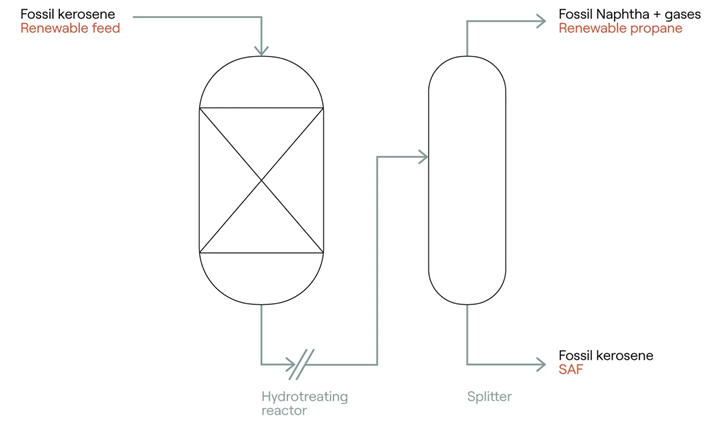
Image Credit: Topsoe A/S
Get in touch now