‘Fugitive dust’ refers to particulate matter that is released into the atmosphere as a result of man-made or natural activity in large open areas. Fugitive dust is often caused by activities such as soil movement, vehicle traffic on unpaved terrain, heavy equipment operation, blasting, and wind.
Aerosolized dirt from road building sites and agricultural machinery traveling on unpaved roads or parched soils are major contributors. The storage and movement of aggregate piles generates fugitive dust, sometimes known as dust bowl conditions.
Particulate generated by combustion (motor cars and other internal combustion engines) and transformation procedures such as soldering, brazing, or welding are often excluded from the broad definition of fugitive dust.
The release of such particles into the atmosphere is not controlled, nor does it always originate from a known source location.
While numerous environmental regulatory groups define the source of dust and maximum exposure levels, it is difficult to determine whether a dust control plan is effective. Maintaining compliance requires a rapid way to determine whether a facility is over the exposure restrictions.
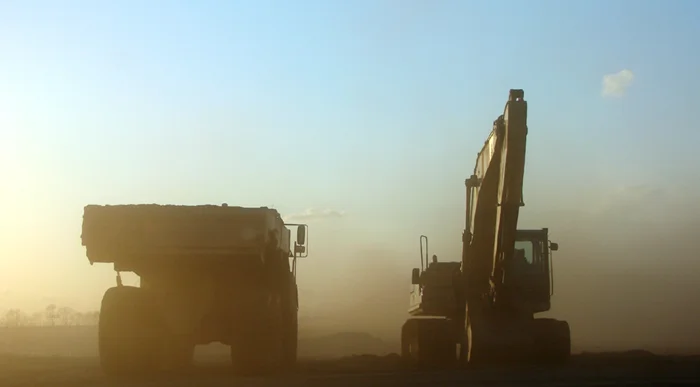
Image Credit: Thermo Fisher Scientific – Environmental and Process Monitoring Instruments
History
The Clean Air Act (CAA) of 1970 created the National Ambient Air Quality Standard (NAAQS) for a variety of dangerous contaminants. Particulate matter (PM) was one of the harmful contaminants identified in this overarching document.
The first rule for PM was established in April 1971, calling for the measurement of total suspended particulate (TSP) in the range of 25–45 microns. Exposure limits were established using mass concentration (weight) for both a 24-hour average (260 μg/m3) and an annual geometric mean (75 μg/m3).
Over the following four decades, these exposure limits were evaluated and reduced, both in terms of total allowable exposure and particulate size. PM2.5, or particulate matter with a size of up to 2.5 μm, is considered the ‘standard’ due to its negative influence on health. For the majority of fugitive dust applications, PM10 measurements are still used due to other detrimental impacts.
To maintain NAAQS compliance, the EPA's Office of Air and Radiation (OAR) Aerometric Information Retrieval System (AIRS) database receives data from a number of state and local air monitoring systems (SLAMS).
While fugitive dust is not a direct component of the NAAQS, its emissions have a significant impact on overall particle measurements and exposure limits. Emissions are often managed by a local regulatory authority such as the state EPA or DEQE, air quality management districts, air resource boards, or special program agencies.
The permissible amounts of exposure and enforcement vary greatly. Most regions have specified exposure limits for projects that typically generate a high amount of particulate matter, and these limitations are stated in the operating permit.
The operating licenses vary depending on the type of project, such as construction, remediation, or demolition, and dust exposure is frequently permitted at a greater level than the NAAQS due to the nature of the job. As the limit is approached, dust emissions can be controlled by a variety of local containment methods.
Temporary remedies include water sprays and cover materials to prevent airborne dust while active construction is underway. As the project nears completion, permanent solutions like planting and/or paving can be implemented to lower emissions to typical ambient levels.
One example of a special agency and program is the New York State Department of Environment Conservation (DEC) technical guideline paper DER-10 for site assessment and remediation.
This document is not meant for worker safety (respiratory problems), but rather to safeguard regions outside of the active work zone. It provides suggestions on monitoring techniques to prevent exposure outside of the workplace.
A second appendix (1B) offers information on fugitive dust and particulate monitoring, as well as dust control measures. Critical requirements include the need for real-time readings, broad measurement ranges, data logging, and visual alarms.
Real-time monitoring is necessary because circumstances on an active work site can change quickly as new sections are uncovered and dirt movement operations are underway (see Reference A).
While the DER-10 only applies to New York State work sites, it provides general direction on effective monitoring procedures and is consistent with the regulations and guidelines used throughout the United States. Similar tactics are commonly used outside of the United States as well.
The impact of fugitive dust outcomes is not limited to the nuisance issues mentioned earlier. High concentrations limit visibility, which can cause traffic accidents, and winds can carry valuable farm topsoil, resulting in poor crop yield. Personnel and residents who come into contact with fugitive dust conditions can suffer serious health consequences.
The vast majority of PM10 particles in the environment are created by fugitive dust. Inhaling ‘clean’ dust particles can cause asthma and other breathing difficulties. However, if the particles contain chemicals (rubber from tires), heavy metals (lead from sandblasting operations), or other harmful compounds (asbestos from demolition or silica from mining operations), the lungs might suffer lifelong damage.
Thermo Scientific Solution
Monitoring for fugitive dust exposure necessitates instrumentation that responds quickly, is reliable, can be easily installed or relocated, and meets the performance requirements specified in the regulatory guidelines or site permit.
A light scattering device (nephelometer) gives the real-time measurements required to take fast corrective action when the excursion exceeds the exposure limit. When choosing this technology, users should make sure it also includes the extra capabilities commonly associated with the recommendations.
Concentrations are likely to change based on the activities being performed, so a wide measurement range is typically required to capture high concentrations.
In addition, constant high concentrations might induce excessive dust loading on filter-based nephelometers, causing particulate sizing controls (cyclones or impactors) to fail due to reduced flow.
Finally, work locations of this nature are typically quite fluid in terms of the specific regions being monitored, so an instrument with quick setup and the capacity to resist standard monitoring conditions (heat, rain, wind, etc.) should be chosen.
The Thermo Scientific™ ADR-1500 Area Dust Monitor is a self-contained device with an IP65 weatherproof casing, ideal for monitoring fugitive dust. This monitor is lightweight and portable, with the option of mounting it on walls, posts, or an industrial tripod.
It can be powered by either AC or DC power, and an internal 12-volt lead acid battery allows up to 100 hours of use. The unit uses sensors for pressure, flow temperature, and humidity, allowing it to give real volumetric flow control.
The benefit of this feature is that the instrument maintains the correct flow rate, ensuring that the cyclones' cut points remain consistent. To help with excessive particulate loading, the machine incorporates a huge HEPA filter that can take high concentrations, allowing for extended periods of unattended monitoring.
It has the broadest measurement range of any deployable particulate monitor, and the included heater ensures that you are detecting dust rather than condensing moisture.
An optional filter cassette container collects the material for post-monitoring gravimetric measurement, allowing the nephelometer to better reflect mass readings. A bright beacon will enable prompt detection of alarms, and internal data logging will give enough memory for several months of monitoring findings.
Thermo Scientific also provides similar features in a wearable portable device that can help identify high concentration locations and protect workers on the job site.
The Thermo Scientific™ pDR1500 Personal Data Ram uses commercially available batteries for long-lasting operation. It shares many of the same characteristics as the ADR-1500 monitor (volumetric flow control, a large concentration range, and a 37 mm filter for post-monitoring analysis).
The unit can also be used in any NIOSH method 0500 or 0600 monitoring application. The compact size allows workers to wear it while providing rapid feedback on exposure levels. Workers can immediately respond to increased levels by relocating themselves out of harm's way and taking measures to alleviate the situation.
The Thermo Scientific™ SHARP 5030iQ monitor combines a beta gauge and nephelometer to provide precise and accurate information on light scattering speed.
This is an installed monitor that can provide more precision and accuracy for long-term operations. The long-life filter tape advances automatically based on time or particulate loading, requiring minimal maintenance.
The integrated Intelligent Moisture System controls the sample's temperature to keep it slightly above the dew point. The SHARP 5030iQ monitor is also a US EPA PM2.5 Equivalent Monitoring device, allowing for compliance monitoring.
For essential applications, combining a SHARP 5030iQ monitor with several ADR-1500 units would enable effective perimeter monitoring as well as determining the source of heavy particulate matter.
The triangulated ADR1500 units would offer data on the source of the dust (place and timing of high readings) at a reasonable cost, while the SHARP provides low-end sensitivity to ensure regulatory compliance.
Table 1. Summary of National Ambient Air Quality Standard Promulgated for Particulate Matter 1971-2006. Source: Thermo Fisher Scientific – Environmental and Process Monitoring Instruments
Final
rule |
Indicator |
Average time |
Level |
Form |
1971
(36 FR 8186) |
TSP - Total suspended Particulate
(≤25 - 45 μm) |
24 hour |
260 μg/m3 (primary) |
Not to be exceeded more than one year |
| 150 μg/m3 (secondary) |
| Annual |
150 μg/m3 (secondary) |
Annual average |
1987
(52 FR 24634) |
PM10 |
24 hour |
150 μg/m3 (primary) |
Not to be exceeded more than one year on an average over a three-year period |
| Annual |
50 μg/m3 (secondary) |
Annual arithemtic mean, average over three-years |
1997
(62 FR 38652) |
PM2.5 |
24 hour |
65 μg/m3 |
98th percentile, averaged over three-years |
| Annual |
15 μg/m3 |
Annual arithemtic mean, average over three-years |
| PM10 |
24 hour |
150 μg/m3 |
Initially promulgated 99th percentile averaged over three years; when 1997 standards were vacated, the form of 1987 standards remained in place (not to be exceeded more than once per year on average over a three-year period) |
| Annual |
50 μg/m3 |
Annual arithemtic mean, average over three years |
2006
(71 FR 61144) |
PM2.5 |
24 hour |
35 μg/m3 (primary) |
98th percentile, averaged over three years |
| 15 μg/m3 (secondary) |
Annual arithemtic mean, average over three years |
| PM10 |
Annual |
150 μg/m3 (secondary) |
Not to be exceeded more than once per year on average over a three-year period |
Summary
Fugitive dust will continue to be hazardous to both personal health and the environment as a result of the processes that produce it.
Different sites require different solutions, but the ability to immediately assess the concentration and potential sources of dust is vital to achieving compliance. Thermo Fisher Scientific provides a comprehensive selection of monitoring solutions, technical expertise, and support to assist in the resolving of these difficulties.
Acknowledgments
Produced using materials originally authored by Bob Gallagher from Thermo Fisher.

This information has been sourced, reviewed and adapted from materials provided by Thermo Fisher Scientific – Environmental and Process Monitoring Instruments.
For more information on this source, please visit Thermo Fisher Scientific – Environmental and Process Monitoring Instruments.