Fugitive emissions are a type of unplanned gas or vapor discharge into the environment that is predominantly caused by industrial activity. These emissions are not emitted through a stack or vent and are often difficult to quantify due to their irregular and dispersed character.
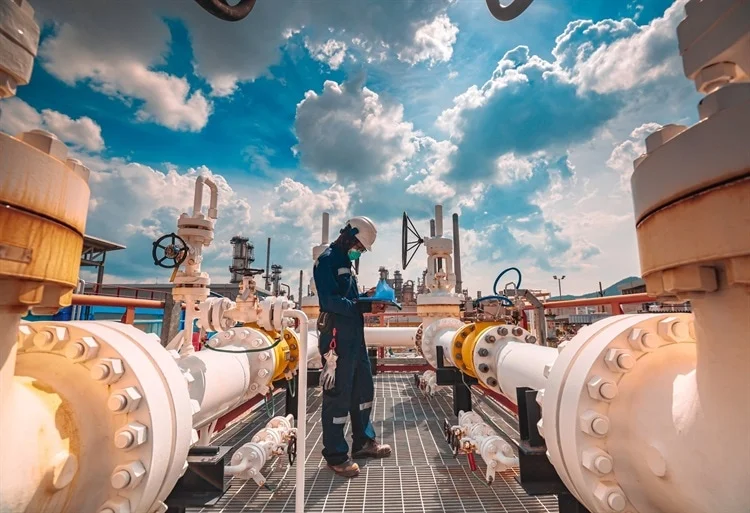
Image Credit: noomcpk/Shutterstock.com
They differ from point source emissions, which are normally controlled and monitored using fixed equipment such as exhaust stacks.
Understanding Fugitive Emissions
Fugitive emissions are mostly composed of greenhouse gases (GHGs), volatile organic compounds (VOCs), and other harmful air pollutants.
They can escape during a variety of industrial activities, such as fossil fuel extraction, processing, and transportation. Leaks from valves, pipes, tanks, and other industrial equipment are major contributors.
The composition of these pollutants varies according to the techniques used and the industry involved. In the petroleum industry, methane and VOCs are common fugitives. In chemical manufacturing, emissions may include a broader range of VOCs, as well as other chemical dangers and toxic chemicals such as hydrogen sulfide.
The Environmental Impact of Fugitive Emissions
Fugitive emissions have a wide range of environmental consequences. Methane, the major component, is a potent greenhouse gas. Over the course of a century, it has a global warming potential that is more than 20 times that of carbon dioxide. This increases its impact on climate change.
VOCs, on the other hand, contribute to the development of ground-level ozone, which causes smog and harmful health impacts.
Fugitive emissions should be monitored since they can degrade air quality, endangering human health and potentially harming ecosystems. These contaminants can lead to lung problems, heart disease, and other health issues. They can also harm wildlife and vegetation, contributing to larger environmental imbalances.
Regulatory and Industry Perspectives
Globally, regulations are increasingly focused on hazard control and fugitive emissions reduction. Policies strive to reduce the release of harmful chemicals and greenhouse gas emissions. This will drive industries to adopt cleaner and more sustainable methods.
The Paris Agreement, for example, emphasizes the need to lower methane emissions as part of overall climate change mitigation measures.
Controlling fugitive emissions is an industry challenge that is both environmental and economic in nature. The escape of precious raw materials, such as natural gas, results in a direct financial loss.
In addition, regulatory compliance is increasingly linked to corporate sustainability goals and public perception, making it an important component of business strategy.
Additional issues may arise in work situations that produce fugitive gasses. Despite wearing personal protective equipment, workers may still be exposed to hazardous gases. One such example is benzene.
Physical risks can also emerge as a result of some types of gas, particularly if they are combustible or there is a breach in a pressure containment vessel.
Technologies and Strategies for Mitigating Fugitive Emissions
Technological developments are critical for identifying and controlling fugitive emissions. Leak detection and repair (LDAR) programs use instruments such as infrared cameras to visually discover leaks that would otherwise be invisible.
Emerging technologies, such as sensor-equipped drones, provide new opportunities for effective surveillance of huge areas. Environmental mass spectrometers are designed to help plants monitor fugitive emissions of harmful organic vapors, thereby protecting workers and the surrounding environment from harm.
With the latest technologies, one may easily identify fugitive emissions of organic and inorganic compounds for Method 21 compliance, LDAR applications, and site cleanup using lightweight, intrinsically safe portable gas leak detectors.
Operational adjustments can greatly reduce these emissions. Effective measures include regular maintenance and inspection, equipment upgrades, and the implementation of optimal handling and storage standards. The transition to renewable energy sources and less emission-intensive technology also helps to provide long-term solutions.
The Positive Impacts of Monitoring Fugitive Emissions
Fugitive emissions provide a serious environmental threat, contributing significantly to climate change and air pollution. Effective management of these emissions is critical for environmental sustainability, public health, and industry viability.
With technology improvements and tight regulatory frameworks, great progress is being made in finding, quantifying, and mitigating these emissions.
As the world moves toward a more sustainable future, managing fugitive emissions remains a critical concern for sectors around the world. For those searching for a method to contribute to such sustainability efforts, it is recommended to start with industrial hygiene programs.
References and Resources
- United States Environmental Protection Agency (2025). Overview of Greenhouse Gases. Available at: https://www.epa.gov/ghgemissions/overview-greenhouse-gases.
- IEA (2020). Methane Tracker 2020 – Analysis. Available at: https://www.iea.org/reports/methane-tracker-2020.
- UNFCCC (2015). The Paris Agreement. Available at: https://unfccc.int/process-and-meetings/the-paris-agreement.
- IPCC (2021). Climate Change 2021: The Physical Science Basis. Available at: https://www.ipcc.ch/report/ar6/wg1/.
- Thermofisher. (2025). eBook - A Guide to Monitoring Fugitive Emissions and Developing a Leak Detection and Repair (LDAR) Program | Thermo Fisher Scientific - US. Available at: https://www.thermofisher.com/in/en/home/global/forms/industrial/epm-monitoring-fugitive-emissions-ldar-program-ebook-registration-form.html?icid=CAD_blog_safety_2024March.
- Thermofisher. (2025). Industrial Hygiene Solutions | Thermo Fisher Scientific - US. Available at: https://www.thermofisher.com/in/en/home/industrial/environmental/air-quality-analysis/industrial-hygiene.html?icid=CAD_blog_safety_2024March.
Acknowledgments
Produced using materials originally authored by Bob Gallagher.

This information has been sourced, reviewed and adapted from materials provided by Thermo Fisher Scientific – Environmental and Process Monitoring Instruments.
For more information on this source, please visit Thermo Fisher Scientific – Environmental and Process Monitoring Instruments.