Polyethylene and polypropylene are polyolefins, high-performance polymers made from ethylene and propylene. These materials, known for their high chemical resistance, durability, and flexibility, are used across a wide range of industries. They are commonly used in packaging solutions such as films, containers, and bags to provide both protection and convenience.
Polyolefins are important in the construction industry because of their robustness and long service life in goods such as roofing membranes, insulation materials, and piping systems.
They are also valued in the automobile sector due to their light weight, impact resistance, and ability to withstand harsh environmental conditions. This makes them well suited for components that need both strength and efficiency.
As sustainability becomes more important, advances in polymer manufacturing and the development of biodegradable and recycled-content polyolefins are propelling the next generation of material solutions.
These advancements assist manufacturers and customers in meeting both performance and environmental objectives.
In 2024, the polyolefin market volume was valued at USD 231 billion and is predicted to expand at a rate of approximately 5.29 % to USD 372 million by 2034. The Asia Pacific area dominates this market volume with a share of more than 50 %, while Europe and North America account for the majority of the remaining output.
Polyolefin Catalysis
To efficiently produce certain polyolefins, appropriate catalysts must be developed and selected. Many chemical corporations are investing considerably in catalysis screening research facilities as part of their ongoing catalyst development efforts.
Catalysis screening is performed on a laboratory scale, leveraging batch reactors with short polymerization runs of around one hour. Typically, many batch reactors would be installed in a single laboratory to ensure that experimental data is collected at the highest possible rate.
One distinctive feature of using batch reactions for polyolefins - rather than the continuous processes employed in plant production - is the inability to reach steady-state conditions (in terms of key constituent ratios) without on-line process gas analysis.
An example is polyethylene (PE). Hydrogen is employed to end the polymer chains, when the reaction is initiated with a specified H2/C2H4 concentration ratio: if no further H2 is introduced to the system, the H2/C2H4 ratio is soon depleted.
As a result, the polymers formed at the start of the run will have significantly lower molecular weights than those produced at the end. This problem is shown in Figure 1.
This makes it impossible to create catalysts that can run under static conditions to produce a specific polymer product. The solution combines online analysis with system-controlled metering of H2 using a mass flow controller.
This solution has been used in experimental conditions to maintain constant H2/C2H4 ratios. The end result is a limited and symmetrical distribution of polymer molecular weights.
This method of catalyst screening simulates actual steady-state plant settings, resulting in statistically accurate data for catalyst performance.
A similar result is seen when using α-olefins like 1-butene and 1-hexene to produce the desired polymer grades in PE polymerization experiments. These critical components are depleted throughout manufacturing, but can be controlled at a consistent ratio relative to C2H4 through on-line analysis.
Polypropylene (PP) experiments make use of analogous regulation strategies based on H2/C3H6 (hydrogen/propylene) and 1-butene/C3H6 ratios. Similarly, C2H4/C3H6 (ethylene/propylene) can be controlled to produce ethylene-propylene co-polymers.
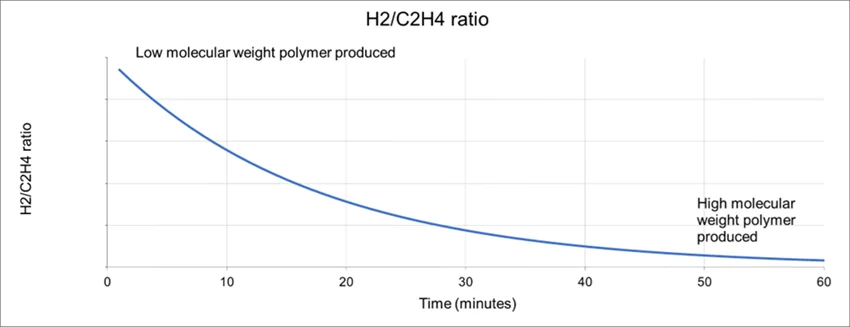
Figure 1. Hydrogen depletion and the effect on polymer molecular weight. Image Credit: Thermo Fisher Scientific – Environmental and Process Monitoring Instruments
HDPE Process Data
The ultimate goal of the aforementioned research is the creation of a polymer with a very tight (heavy) molecular weight distribution that consumes the least amount of hydrogen possible. To achieve this, various catalysts are tested in the trials.
In this case, research reactors use 10 times less hydrogen than a full-scale facility. Replicating the usage of this innovative catalyst in production reactors will result in much lower hydrogen consumption while producing significantly denser polymer products.
This can be validated using mass spectrometry (MS). Figure 2 demonstrates MS's capacity to measure gas species at catalyst concentrations as low as ~500 ppm for H2 and ~100 ppm for hexene-1 and hexene-2.
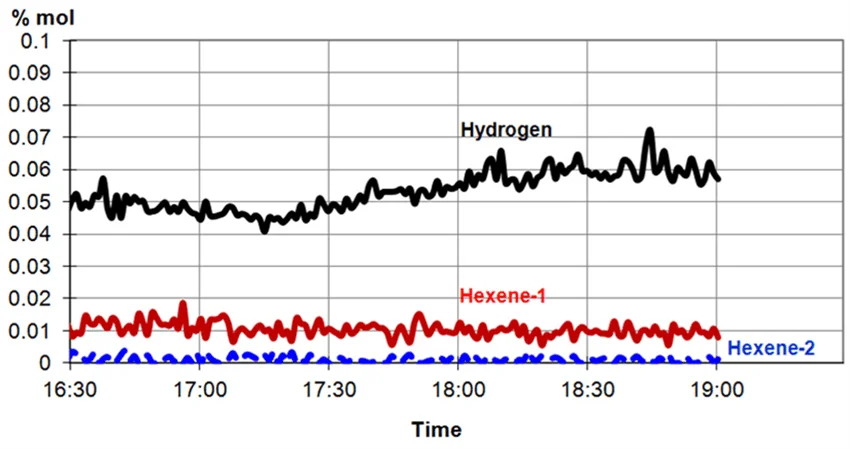
Figure 2. MS analysis of very low concentrations of H2, hexene-1, and hexene-2. Image Credit: Thermo Fisher Scientific – Environmental and Process Monitoring Instruments
Analyzer Selection
A prominent polyolefin manufacturer employed gas chromatography (GC) for online process gas analysis. The need for several reactors and the shortest achievable cycle periods necessitated specialized GC units for each reactor.
Even in this scenario, the fastest achievable cycle time was five minutes for analysis up to C-4 (or eight minutes for C-6), and regulation was judged to be inadequate. As a result, MS was considered because it is known to be a very quick technology, giving up to 20 times faster analysis than GC.
The Thermo Scientific™ Prima™ series Process Mass Spectrometer was selected after a thorough study of two options.
The Prima spectrometer is a very precise, robust, and dependable process gas analyser, with over 1500 units installed worldwide in chemical plants, pharmaceutical operations, iron and steel works, and research laboratories.
Before the Prima series spectrometer was chosen for this application, it was tested in a comparative trial alongside a quadrupole process MS, a process GC, and a laboratory GC to examine a series of samples.
The laboratory GC had been shown to be highly accurate when tested with a variety of certified gas mixture mixes. The results in Figure 3 show that the Prima™ spectrometer is in close agreement to the laboratory GC and gives more accurate results than the process GC.
It is evident that not all types of mass spectrometers are suitable for this type of analysis. The quadrupole MS (QMS) was shown to give poor accuracy for this application, due to the poor and unstable response for H2 exhibited by quadrupole systems. This is a result of the low energy of the ion beam, typically 10 eV or less.
The Prima series method MS, conversely, employs a very high ion energy (1000 eV), resulting in exceptional reproducibility and precision.
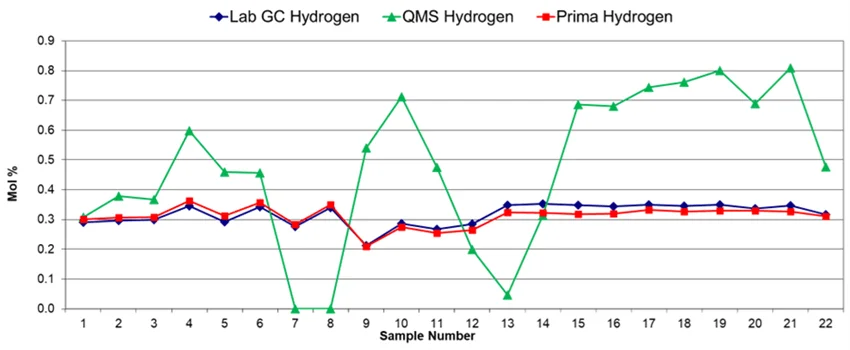
Figure 3. Hydrogen data from lab GC, quadrupole MS and Prima series process MS systems. Image Credit: Thermo Fisher Scientific – Environmental and Process Monitoring Instruments
A comparison can also be made between the Prima series process MS and process GC, when the subject chemical is ethylene. Figure 4 shows a data set containing 55 analysis points from the lab GC, MS, and process GC.
For consistency, the MS only samples at the same rate as the GCs, but it can provide data considerably faster if necessary.
It is demonstrated that there is generally good agreement among all three analyzers, with the lab GC and MS having the closest alignment. The process GC is an outlier, with multiple instances of data that conflict with both of the other analyzers.
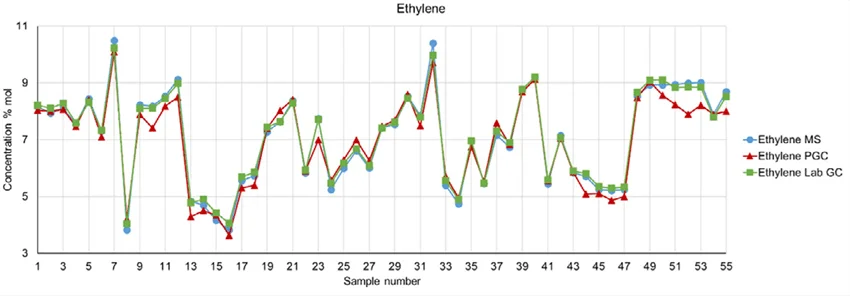
Figure 4. Ethylene data from MS, lab GC and process GC. Image Credit: Thermo Fisher Scientific – Environmental and Process Monitoring Instruments
Magnetic Sector MS Technology
The selection of MS technology is important because there are different types of mass spectrometers, each with its own distinct features. The data presented in this research reveals that not all have the same degree of performance.
The scanning magnetic sector MS has been demonstrated over many decades to provide greater analytical performance, as well as the ability to go longer periods between calibration and maintenance. It separates positively charged ions produced by the sample gas molecules in a changing magnetic field before measuring the current created by ions of different masses at a Faraday detector.
The spectral peaks created by the magnetic field have a very symmetrical shape with a flat top. The height of a peak is directly related to component concentration, and its flat top enables consistent height measurement while being extremely tolerant of minor fluctuations in peak location. Figure 5 shows the design of a scanning magnetic sector MS.
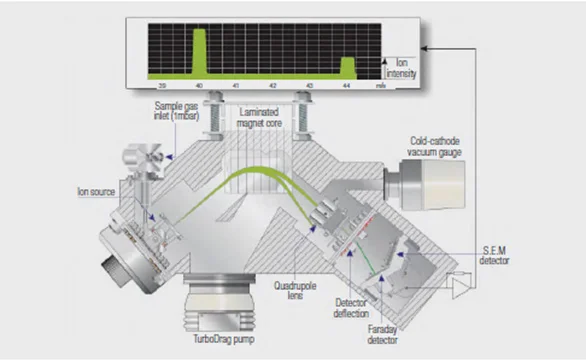
Figure 5. Scanning magnetic sector MS. Image Credit: Thermo Fisher Scientific – Environmental and Process Monitoring Instruments
Prima PRO Process Mass Spectrometer Performance Specifications
The Thermo Scientific™ Prima PRO 710 Process Mass Spectrometer is Thermo Scientific’s latest model. Magnetic sector MS is fast and able to demonstrate excellent precision over a wide range of concentrations.
Table 1 demonstrates the Prima PRO 710 MS's performance specifications while measuring a complicated mixture of gases often used in the polyethylene manufacture process.
The analysis cycle time is 10 seconds. Adding time for stream switching and purging, the overall cycle time for a multistream application is around 20 seconds per point.
Table 1. Prima PRO 710 MS performance specification for polyethylene process gases. Source: Thermo Fisher Scientific – Environmental and Process Monitoring Instruments
|
Polyethylene process stream |
|
Concentration mol % |
Standard deviation mol % |
| Hydrogen |
1 |
≤ 0.01 |
| Ethylene |
7 |
≤ 0.05 |
| Ethane |
1 |
≤ 0.01 |
| Nitrogen |
3 |
≤ 0.05 |
| n-butane |
1 |
≤ 0.05 |
| 1-butene |
0.75 |
≤ 0.01 |
| Isobutane |
Balance |
≤ 0.05 |
| 1-hexane |
0.5 |
≤ 0.005 |
| n-hexane |
0.2 |
≤ 0.005 |
Summary
The Prima series process mass spectrometer is an ideal piece of equipment for monitoring process gases while developing catalysts for polyolefin synthesis. When scaled up, this strategy remains equally effective.
The Prima series MS generates data in just a few seconds per sample stream with great precision. With the addition of a rapid multi-stream sampler (RMS), a single analyzer may be used on several reactors, making this a cost-effective system with low maintenance and operating costs.
The latest Prima PRO 710 mass spectrometer, as well as its predecessors, have been used in polyolefin development and manufacture for some years. Users who had previously leveraged GC for these measurements claim that MS analysis provides the following benefits:
- Improved control over comonomers leads to more consistent characteristics
- Polymer molecular weight dispersion is narrower and more symmetrical
- Reduces maintenance and simplifies analytical operations
- Reduced occurrence of unreliable trials
- Trials have excellent repeatability
- Faster experimental data production
Reference
- Towards Chem and Materials (2025) Polyolefin Market Volume to Reach 371.54 Million Tons by 2034. (online) Available at: https://www.towardschemandmaterials.com/insights/polyolefin-market.
Acknowledgments
Produced using materials originally authored by Daniel Merriman and Dr Robert Wright from Thermo Fisher Scientific.

This information has been sourced, reviewed and adapted from materials provided by Thermo Fisher Scientific – Environmental and Process Monitoring Instruments.
For more information on this source, please visit Thermo Fisher Scientific – Environmental and Process Monitoring Instruments.