AZoCleantech speaks with Brian Asparro, Henry Sokol, and Anna Pavlova of CarbonQuest, and Trevor Tilmann of Thermo Fisher Scientific, about capturing and purifying CO2 from natural gas boiler exhausts, creating a reliable source of CO2 for reuse, and the importance of real-time CO2 purity monitoring throughout the process.
Can you please introduce yourselves and your roles at CarbonQuest and Thermo Fisher Scientific?
Brian Asparro: I’m Chief Operating Officer at CarbonQuest. I focus on growing the company and developing its commercial business. CarbonQuest is working to reduce emissions through distributed carbon capture, while also creating a useful CO2 product.
Henry Sokol: I’m a Process Quality Engineer at CarbonQuest. I focus primarily on ensuring and maintaining the purity of our captured CO2. I use the Thermo Scientific MAX-Bev CO2 Purity Monitoring System to monitor CO2 purity, identify contaminants, and adjust the process to achieve the purity we need.
Anna Pavlova: I'm the Senior Vice President of Strategy, Market Development, & Sustainability at CarbonQuest. I focus on market development and project planning. One goal is to show that captured CO2 can meet the quality expectations customers already have for merchant CO2.
Trevor Tilmann: I’m an Applications Engineer at Thermo Fisher Scientific. I develop clean energy applications for the MAX-Bev system, support installations and work on analytical methods, including for carbon capture, utilization and storage (CCUS).
CarbonQuest Customer Story: Turning Building CO2 Emissions into a Valuable Local Resource
Brian, what problem is CarbonQuest trying to solve, and where does captured CO2 reuse fit into the solution?
Brian Asparro: At the highest level, we are solving an emissions problem. There is a need to decarbonize buildings, industry, and other sectors that continue to use combustion. Carbon capture gives us a way to address those emissions directly.
But there is another side to it. CO2 is already a commercial product. There is an established merchant CO2 market supplying food and beverage, welding, medical, and other industrial applications. So, rather than viewing captured CO2 only as something to be disposed of, we can see it as a potential product.
For food and beverage customers in particular, that creates an interesting opportunity, as they can reduce emissions while also creating a local source of CO2. That gives customers more control over supply and pricing and contributes to a more circular approach. That control matters: merchant CO2 prices have more than doubled since 2015, and producers have been put on quotas during shortages. We are taking carbon that would otherwise be emitted and creating something that can potentially be reused.
How does CO2 captured from a natural gas boiler compare with conventional merchant sources?
Brian Asparro: Most people do not spend much time thinking about where their CO2 comes from. The merchant market is well established, and CO2 commonly comes from sources such as ethanol and ammonia production, as well as natural gas processing. Those are industrial byproduct streams, but the CO2 is purified to a level where it is safe and suitable for applications such as food and beverage.
What we are doing is simply adding another source: the boiler. We are also capturing CO2 from biogas-to-RNG facilities, engines, and fuel cells, all applications where we can provide significant economic value to the end customer.
A natural gas boiler is actually a relatively straightforward CO2 source. It is combustion used to produce steam or heat. We capture that stream, clean it, and purify the CO2 to the required grade. The capture step is different, because boiler exhaust is a more dilute stream. But once the CO2 is captured, the purification and verification principles are the same ones the merchant market already relies on.
The important thing is being able to prove the quality of the final product. Customers may initially see boiler-derived CO2 as something new, so we have to demonstrate that the output meets the same specifications they already expect from established sources. That is where reliable CO2 purity monitoring becomes essential.

Image Credit: Dogora Sun/Shutterstock.com
How does the capture and purification process work, and how does monitoring help optimize it?
Henry Sokol: Boiler exhaust is an attractive source because boilers are everywhere, and they can provide a relatively consistent and high-volume flow. At the same time, because we are dealing with a combustion product, there are impurities that must be considered. You have combustion byproducts as well as components originating from the air, including nitrogen and oxygen. The exact composition can also vary with boiler operation and the fuel-to-air ratio.
Our New York City system, installed in the basement of an apartment building, serves as our site for testing and process optimization. Today we have seven systems operating, all with beverage-grade capability, including one at a beverage producer in Washington State where captured CO2 is used in their supply chain. The MAX-Bev system helps us see what is happening throughout purification. We can identify contaminants and use those measurements to adjust the process, investigate different adsorbents and fine-tune operating conditions. That lets us evaluate how process changes affect the final CO2, rather than relying only on a pass-or-fail result at the end.
Why is CO2 quality important for food, beverage, or other reuse applications?
Anna Pavlova: From the customer's perspective, the fundamental requirement is confidence. We want to demonstrate that our CO2 is of the same quality as the merchant CO2 they are accustomed to purchasing and is suitable for the intended application.
Reaching beverage-grade status, as defined by the International Society of Beverage Technologists (ISBT), is particularly important because it establishes a clear credibility threshold. Customers already understand the specifications and protocols associated with that market. We therefore need to show that using a boiler as the original source does not change the quality of the product they receive.
For us, real-time verification is critical. We have the sanitation protocols and the broader processes required for compliance, but the monitoring system allows us to continuously demonstrate that the CO2 meets the required quality. That helps customers feel secure that this is not simply a new carbon capture concept. Rather, it is a product measured against established standards using technology already familiar in the CO2 market.
Why measure trace impurities as well as overall purity?
Trevor Tilmann: Every captured CO2 stream can contain a slightly different mixture of impurities at different concentrations. That is why you need an instrument with enough flexibility to identify and quantify those impurities, rather than looking only at the overall CO2 concentration.
With the MAX-Bev system, we can validate CO2 purity and simultaneously monitor impurities. In the CarbonQuest application, there are multiple measurement points, which means we can observe what happens to critical impurities as the gas moves through the abatement and purification process.
Some trace impurities are particularly important because they can affect health, safety, or the final product. Total aromatic hydrocarbons are one example, with compounds such as benzene being a concern from a health and safety perspective. Total sulfur is another because sulfur compounds can affect taste.
Consistency is also important. If the impurity profile changes significantly from one batch of CO2 to another, you can potentially change the characteristics of the end product. CO2 purity monitoring therefore gives you both verification and process insight. You can identify particular impurities and then adjust the process to remove them and produce CO2 of the required quality.
How does real-time analysis affect operations and process validation?
Brian Asparro: It gives us a level of confidence that would be very difficult to achieve otherwise. For a customer evaluating a new source of CO2, saying that we have designed the process to reach beverage grade is not enough. We need to be able to demonstrate it.
Operationally, it lets us balance purity against production rate. We can observe quality for each batch in order to keep strict oversight over quality. Because the data is continuous, the customer also has a documented quality record they can see.
It also supports the broader idea that boiler-derived CO2 should not be treated differently simply because the source is new to the customer. We are using established purification principles and established analytical technology to verify the output. At the end of that process, what matters to the customer is that they are receiving CO2 of the right and consistent quality.
Henry Sokol: From the process side, the benefit is that we can also use those measurements to make decisions. If we see an impurity carrying through the process, we can investigate it and make adjustments. That makes the analyzer both an optimization tool and a final quality check.

Image Credit: Trebor Eckscher/Shutterstock.com
Why did CarbonQuest select Thermo Fisher Scientific's MAX-Bev system for this application?
Brian Asparro: One of the biggest factors is credibility. Customers in established CO2 markets already have expectations about how quality should be measured and demonstrated. Using the Thermo Scientific MAX-Bev system gives us a recognized way to show that our CO2 meets those expectations.
That third-party element is very important to us. We are introducing a different source of CO2, so customers need confidence that we are not creating our own definition of quality. We are measuring and validating the product using a system that is already used within the market.
There is also the real-time capability. It is not simply a case of periodically taking a sample and waiting to find out whether the process is working. We can continuously demonstrate that the CO2 meets the required quality, which is important as we scale the technology and work with larger customers.
Trevor Tilmann: The MAX-Bev is also fully automated. It can schedule analysis cycles across multiple available channels and measure different points in a process. At CarbonQuest, the system is installed directly on the CO2 process so it can provide insight as impurities are removed, while also monitoring the storage tank. That supports quality verification at custody transfer, the point where the CO2 is handed off to the next part of the value chain and its quality must be documented.
How do Thermo Fisher Scientific's service and technical support contribute?
Trevor Tilmann: The partnership extends beyond the technical capabilities of the instrument. Thermo Fisher Scientific has a worldwide service structure and remote support, which are important when these systems are used as part of an operating carbon capture process.
As a technical advisor, for example, I can remotely log into a system and investigate unusual readings. We can provide validation capabilities and make adjustments to the analytical method when required. The goal is to give CarbonQuest confidence not only that the instrument is operating correctly, but that the data coming from it is meaningful for their particular process.
The CarbonQuest project is valuable from our perspective as well because it demonstrates the MAX-Bev technology in post-combustion carbon capture. It shows how an analytical platform developed around CO2 quality can contribute to a broader carbon capture, utilization, and storage value chain.
Ultimately, the combination of monitoring, process knowledge, and ongoing technical support helps turn captured CO2 from an emissions stream into a product that can be confidently evaluated for reuse.
About the Speakers
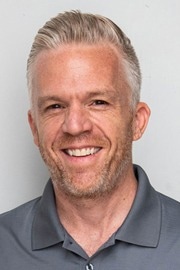
Brian Asparro is passionate about growing companies at the intersection of clean energy, finance, and technology. As Chief Operating Officer of CarbonQuest, he leads strategy, sales, marketing, and finance to drive growth. Previously, he held leadership roles at Enel X, developing large-scale energy storage projects, including what was then New York City’s largest storage project. As Chief Commercial Officer of Demand Energy, he helped guide the company through its acquisition by Enel. Brian also co-founded Green Charge Networks, serving as CFO and securing a $56 million investment while developing an innovative Power Efficiency Agreement structure. Earlier, he helped expand Moody’s Analytics Professional Services in Asia. Brian holds an MBA from Northwestern University’s Kellogg School of Management and a degree in Finance and Marketing from Fairfield University.

As a Process Quality Engineer at CarbonQuest, Henry Sokol focuses on process performance, quality, and technical operations to support the company’s carbon capture technology. He holds a PhD in Chemical Engineering, with expertise in materials science, surface chemistry, and porous materials. His doctoral research focused on developing zeolites and activated carbon sorbents for sulfur removal from liquid fuels, combining experimental characterization and computational modeling to study adsorption behavior and structure-property relationships.
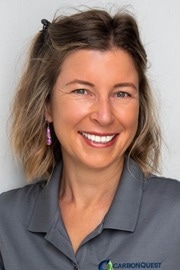
Anna Pavlova brings over 20 years of experience connecting climate and energy policy with market development and sustainability strategies for global corporations. As Senior Vice President of Strategy, Market Development & Sustainability at CarbonQuest, she leads growth initiatives, market development, and sustainability efforts. Previously, she held executive roles at global companies, including Schneider Electric and Johnson Controls, focusing on decarbonization strategy, policy, and sustainability.

Trevor Tilmann is an Applications Engineer with Thermo Fisher Scientific, Environmental and Process Monitoring. He has a BS in Chemistry from Central Michigan University, with a concentration in Analytical Chemistry. He joined Thermo Fisher Scientific in 2023. With a background in source testing, Trevor is an expert in FTIR gas analysis, continuous emissions monitoring, and method development

This information has been sourced, reviewed, and adapted from materials provided by Thermo Fisher Scientific – Environmental and Process Monitoring Instruments.
For more information, please visit the Thermo Fisher Scientific – MAX-iR FTIR Gas Analyzers website.
Disclaimer: The views expressed here are those of the interviewee and do not necessarily represent the views of AZoM.com Limited (T/A) AZoNetwork, the owner and operator of this website. This disclaimer forms part of the Terms and Conditions of use of this website.