The Science of Active Separation
Where Does Active Membranes Come in?
Technical Specifications and Performance
Industry Importance and Environmental Impact
Market Strategy and Adoption
Conclusions
References and Further Reading
Global water scarcity has evolved into a systemic threat to economic stability and public health. According to UN-Water data, approximately four billion people, representing nearly half of the world’s population, experience severe water scarcity for at least one month out of every year.1 Although the desalination of seawater and brackish groundwater offers a technically viable solution to bridge this supply gap, the industry has long struggled with high operational costs, energy intensity, and the environmental burden of chemical waste.
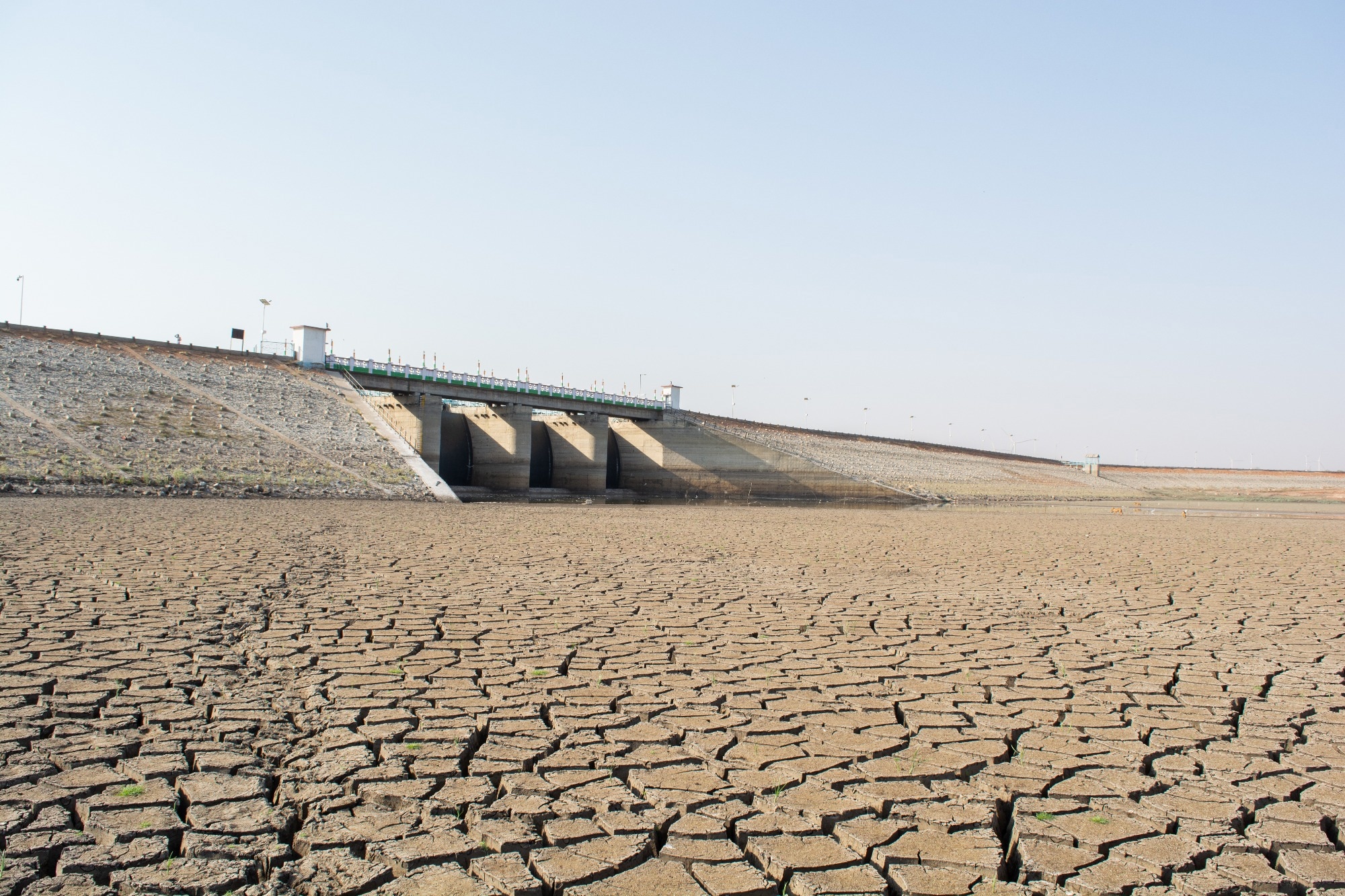
Image Credit: WESTOCK PRODUCTIONS/Shutterstock.com
For decades, reverse osmosis (RO) has served as the gold standard for desalination. However, these systems rely on "passive" membranes that act as stationary filters. These filters inevitably succumb to fouling (accumulation of organic matter) and scaling (buildup of mineral deposits), which degrade performance and require expensive chemical pretreatment and frequent maintenance downtime.
Active Membranes, a California-based startup founded in 2022, is challenging this paradigm by introducing the world’s first "smart" membrane system. The company aims to reduce the lifecycle cost of water production by up to 60 % by shifting from passive filtration to active repulsion.2
The Science of Active Separation
The fundamental challenge in membrane-based water treatment is the "boundary layer" at the membrane surface. During reverse osmosis, salts and contaminants concentrate in this layer, leading to the formation of mineral scale and biofilm growth. In conventional plant designs, the only way to mitigate this is through extensive upstream pretreatment, utilizing sand filters, ultrafiltration, and a suite of antiscalant chemicals to "clean" the water before it ever reaches the RO stage.
Where Does Active Membranes Come in?
Active Membranes addresses this problem through a patented electrochemical approach. Rather than relying on a passive barrier, the company utilizes electrically conducting reverse osmosis membranes.3 These membranes are integrated with a proprietary, low-cost power unit known as the "Active Box." The system can actively repel scaling ions and organic foulants in real-time by applying a specific, tunable electrical potential to the membrane surface. This prevents particles from attaching that would otherwise clog the membrane's pores.
This technology originated from research conducted at the UCLA Samueli School of Engineering by co-founders Dr. Eric Hoek and Arian Edalat.4 They created a surface capable of physical repulsion and local pH alteration by incorporating conductive materials directly into the polymer matrix of the membrane. This eliminates the need for the bulky, chemical-heavy pretreatment infrastructure that currently accounts for a significant portion of a desalination plant's capital and operating expenditures.
How Active Membranes Are Transforming Desalination – A Game Changer for Water Technology!
Video Credit: Active Membranes, Inc./YouTube.com
Active Membranes is currently at Technology Readiness Level (TRL) 6–7, having validated the technology in relevant environments and advancing toward full-scale commercial implementation.2 Data from pilot programs suggests that the system offers fundamental improvements across several key performance indicators compared to industry-standard Thin-Film Composite (TFC) membranes.
The following table summarizes the projected benefits of the Active Membranes system against a conventional reverse osmosis installation based on reported performance data:
Table 1: Comparative performance: Conventional RO systems vs. Active Membranes Electro-Active Systems
| Performance Metric |
Conventional RO System |
Active Membranes System |
|
Membrane Mechanism
|
Passive Filtration
|
Electro-Active Repulsion
|
|
Lifecycle Cost (LCC)
|
Baseline (100 %)
|
30 % – 60 % Reduction [2]
|
|
Physical Footprint
|
Large (Heavy Pretreatment)
|
30 % – 50 % Smaller
|
|
Carbon Emissions
|
Baseline (High Energy/Chem)
|
~25 % Lower
|
|
Maintenance Need
|
Frequent Chemical Cleaning
|
Significantly Reduced
|
|
Primary Advantage
|
Established Market Share
|
Real-time Fouling Control
|
Industry Importance and Environmental Impact
The ability to reduce a desalination plant's physical footprint by up to 50 % makes the technology "geographically agnostic." Historically, large-scale desalination has been restricted to high-income regions with ample land. By simplifying the plant architecture, Active Membranes enables the deployment of smaller, decentralized units closer to the point of use. This is particularly valuable for resource-constrained communities and industrial sites where space is at a premium.2
The environmental benefits extend beyond simple energy savings. Conventional plants generate a significant amount of chemical waste from their cleaning cycles (Clean-in-Place or CIP). Active Membranes produces a cleaner brine byproduct by utilizing physical repulsion rather than chemical additives, making it easier for operators to comply with increasingly strict environmental regulations. This factor is critical in water-stressed regions with sensitive coastal ecosystems, such as the Mediterranean, Australia, Texas, and Florida.2
Read More: Absorbing Water from the Air with Hydropanels - The Next Step in Tackling Water Scarcity?
The global potential of this innovation has been recognized by the XPRIZE Foundation. Active Membranes was recently named a "Qualified Team" in the $119 million XPRIZE Water Scarcity competition.5 This global challenge is designed to reward technologies that can sustainably and reliably provide water from non-traditional sources, highlighting Active Membranes as a prominent innovator in the sector.
Market Strategy and Adoption
The company is currently focused on scaling its manufacturing capabilities to meet international demand for both municipal and industrial applications. Its strategy encompasses two primary avenues for adoption:
- System Retrofits: Because the "smart" membranes are designed to be compatible with standard RO pressure vessels, existing plants can be upgraded. By installing the electro-active membranes and the "Active Box" control unit, operators can increase capacity and reduce chemical consumption without building new facilities. 3
- Industrial Water Reuse: In sectors such as mining, power generation, and textile manufacturing, wastewater streams are often highly contaminated with complex minerals. The electro-active surface's resilience makes it uniquely suited to these harsh conditions, enabling industrial users to recycle their process water more effectively.
Want to save for later? Click here to download now.
Conclusions
Active Membranes represents a fundamental shift in the approach to water purification. For nearly four decades, innovation in the desalination sector has focused on incremental improvements to the permeability of passive polymer filters. This technology addresses the root causes of system inefficiency, fouling, and scaling by introducing active control and "intelligence" to the membrane surface itself.
As the company moves from TRL 7 toward broad commercialization, the impact on the water sector could be transformative. By reducing lifecycle costs by up to 60 % and lowering carbon emissions by 25 %, the technology provides a viable path for water-stressed regions to achieve security without the prohibitive financial and environmental costs of the past.2 In a world of increasing climate volatility, such innovations are essential for building long-term global resilience.
References and Further Reading
- UN-Water, "Water Scarcity," 2024. [Online]. Available: https://www.unwater.org/water-facts/water-scarcity
- Cleantech Group, "2025 Cleantech 50 to Watch," October 2025, pp. 25–28. [Online]. Available: https://cleantech.com/50-to-watch/
- Active Membranes, "Our Technology: Active Scaling and Fouling Control," 2024. [Online]. Available: https://www.activemembrane.com/
- UCLA Samueli School of Engineering, "Faculty Profile: Eric M.V. Hoek," 2024. [Online]. Available: https://samueli.ucla.edu/people/eric-hoek/
- XPRIZE Foundation, "XPRIZE Water Scarcity - Qualified Teams," 2025. [Online]. Available: https://www.xprize.org/news/xprize-water-scarcity-awards-143-qualified-teams-in-119m-competition-to-drive-global-access-to-clean-water.
Disclaimer: The views expressed here are those of the author expressed in their private capacity and do not necessarily represent the views of AZoM.com Limited T/A AZoNetwork the owner and operator of this website. This disclaimer forms part of the Terms and conditions of use of this website.