Further Defining Remanufacturing and Its Utility
Environmental Impact: Embodied Energy and CO2 Emissions
Advanced Materials and Their Strategic Importance
Industrial Resilience and Supply Chain Security
Key Technologies Enabling Enhanced Remanufacturing
What's Stopping Enhanced Remanufacturing?
Toward Industry 5.0
Conclusion
References and Further Reading
Manufacturing is responsible for roughly a fifth of global greenhouse gas emissions. Yet, its physical infrastructure, factories, tooling, and supply chains are deeply embedded, making them capital-intensive and slow to change.
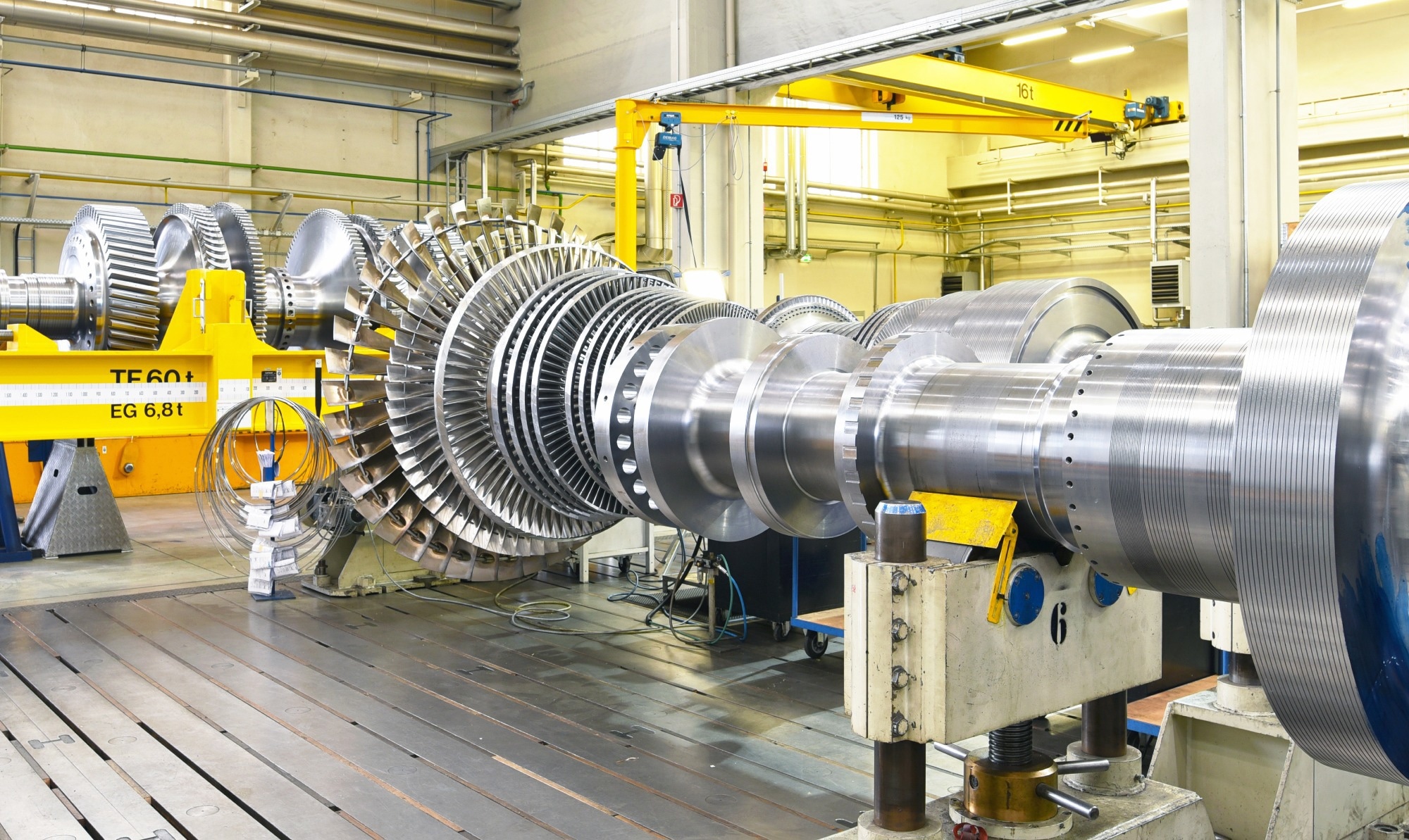 Image Credit: industryviews/Shutterstock.com
Remanufacturing is one option that could implement change more practically, with an immediately deployable response. The term is formally defined as the industrial process by which an item is returned to a like-new condition, from both a quality and performance perspective.1 This process retains a component's full functional architecture, rather than scrapping it.
Enhanced remanufacturing extends this baseline by integrating advanced materials processing, digital technologies, and circular-economy strategies. As a result, it is especially relevant for high-value sectors such as aerospace, energy, and advanced industrial equipment.
Saving this article for later? Download a PDF here.
Further Defining Remanufacturing and Its Utility
Remanufacturing is uniquely defined. It is distinct from refurbishment, which restores a product to a satisfactory working state but not necessarily to new-product performance. It can't be compared to recycling either, which recovers raw materials but discards embodied energy and fabrication value.
Remanufacturing alone restores to like-new or better-than-new condition with an equivalent warranty - a requirement in safety-critical industries.2
Published in the Journal of Industrial Ecology, a comparative life-cycle analysis of a remanufactured engine and a newly manufactured equivalent found that remanufacture required 68 % to 83 % less energy, producing 73 % to 87 % fewer CO2 emissions.2
Economically, by retaining embodied value, the cumulative labor, energy, and processing already invested in a component, remanufacturers avoid the full cost of starting from raw material, a differential that grows sharply for high-alloy components.
Environmental Impact: Embodied Energy and CO2 Emissions
Every kilogram of manufactured material carries an embodied energy - the total energy consumed in extracting, refining, and processing it. For carbon steel and cast iron, this figure is relatively modest.
For advanced aerospace alloys, energy consumption is substantially higher: the embodied energy of Inconel 625, a nickel-chromium superalloy widely used in aerospace and energy applications, is approximately 10 times that of carbon steel or cast iron.3 This relationship remains even when a realistic mix of virgin and recycled feedstock is used rather than 100 % virgin material.
The practical consequence is significant. Reusing one tonne of high-strength aluminum alloy 7075 in a remanufacturing process avoids approximately ten tonnes of CO2-equivalent emissions in the materials phase alone.3
For nickel-based superalloys, the savings are larger still. No incremental improvement in manufacturing efficiency can easily replicate this leverage. The higher a material's embodied energy, the stronger the environmental case for keeping it in service.
Advanced Materials and Their Strategic Importance
 Image Credit: Starcast/Shutterstock.com
Superalloys, titanium alloys, and rare controlled materials underpin the aerospace, defense, and energy sectors. Their production is energy-intensive, supply chains are geographically concentrated, and unit costs are high.
Turbine discs, blades, and casings operate under extreme thermal and mechanical loads, making both the cost and the environmental consequence of replacement substantial.
Aerospace traceability requirements, full documentation of provenance, processing history, and service record, are not an argument against remanufacturing. They're an argument for the digital data infrastructure that enables certified component reuse.
Industrial Resilience and Supply Chain Security
Supply chain security has become an increasingly important concern in high-value manufacturing in recent years, due to geopolitical instability, export controls, and the geographic concentration of critical mineral production, nickel, cobalt, titanium, and rare earths.
Enhanced remanufacturing directly reduces exposure to these risks by keeping existing high-value components in circulation rather than requiring continuous new raw material input.
There are further benefits to this process:
- A stronger position in industries where delivery reliability and cost stability are commercially required
- Greater resilience to supply disruptions
- More predictable input costs
These benefits align with the ISO 59000 circular economy standards series (2024), which formally positions remanufacturing as a measurable circular strategy on equal standing with recycling,4 and with Industry 5.0's emphasis on resilient, human-centric production.
Key Technologies Enabling Enhanced Remanufacturing
There are six technical considerations that enable enhanced remanufacturing in today's industries.
Welding and Directed Energy Deposition (DED): Wire arc and laser-based DED processes rebuild worn or damaged surfaces by depositing material precisely where needed. In doing so, they can restore geometry and structural integrity in turbine components, aerospace frames, and industrial tooling.
Thermal Spray Technologies: High-velocity oxygen fuel (HVOF) and plasma spray apply wear-resistant and thermally protective coatings to restored surfaces, in some cases extending service life beyond their original specifications.
Powder Bed Fusion (PBF): Laser PBF enables high-precision additive repair of complex geometries, particularly small, intricate aerospace components, where conventional deposition would lack sufficient resolution.
Non-Destructive Evaluation (NDE): Computed tomography, phased-array ultrasound, and eddy-current inspection verify subsurface integrity before and after remanufacturing, providing the technical basis for life-extension decisions and regulatory compliance.
Smart Automation (AI, Robotics, IoT): Robotic systems handle disassembly and surface preparation. AI-driven inspection platforms identify defect patterns and predict remaining service life. IoT monitoring feeds operational data back into process decisions, improving triage accuracy and workflow efficiency.
Supply Chain and Workforce: Reverse logistics, organized collection, sorting, and routing of used components, is the operational prerequisite for scaled remanufacturing. Alongside this, work-integrated learning programs are building the skilled engineering workforce that advanced repair and inspection processes require.
What's Stopping Enhanced Remanufacturing?
Certification and traceability remain the principal barriers in regulated industries. Gaps in a component's documented history can disqualify it from remanufacturing regardless of physical condition.
Variability in used components, aged in different service environments and with different damage modes, complicates process planning when compared to new manufacture.
Standardization of enhanced remanufacturing processes is still developing, and the upfront capital required for DED, PBF, and automated inspection equipment limits adoption among smaller manufacturers.
Learn more sustainable manufacturing processes here.
Toward Industry 5.0
Dedicated remanufacturing research centers, including programs at University West in Sweden, such as DEDICATE, RE-PAIR, and RAMP, are developing and validating process combinations for certified repair of advanced materials.3
Digital tools, including digital twins and AI-driven process optimization, are extending both the scope and reliability of what enhanced remanufacturing can achieve.
Once certification frameworks mature and reverse logistics infrastructure develops, enhanced remanufacturing will be positioned to scale from a specialist capability to a mainstream industrial practice.
Conclusion
Enhanced remanufacturing is both an environmental and an economic strategy. For high-value materials, superalloys, titanium alloys, and advanced composites, embodied energy savings from component reuse contribute meaningfully to industrial decarbonization.
For manufacturers in geopolitically sensitive supply chains, it may offer reduced reliance on raw materials and more stable costs. The technologies are available and improving - the principal remaining work is in certification frameworks, supply chain data infrastructure, and workforce capability.
References and Further Reading
- International Organization for Standardization. (2024). ISO 59004:2024. Circular economy - Vocabulary, principles and guidance for implementation. https://www.iso.org/standard/75989.html
- Whitebell, C. (2020, April 30). What is remanufacturing? Golisano Institute for Sustainability, Rochester Institute of Technology. https://www.rit.edu/sustainabilityinstitute/blog/what-remanufacturing
- Andersson, J., Fredriksson, C., & Volpp, J. (2025). Enhanced remanufacturing – A sustainable and resilient alternative to traditional manufacturing. Open Access Government. https://www.openaccessgovernment.org/ebook/enhanced-remanufacturing-a-sustainable-and-resilient-alternative-to-traditional-manufacturing/193821/
- Remanufacturing Industries Council. (2024, May 22). ISO circular economy standards published today. https://remancouncil.org/press-releases/iso-circular-economy-standards-published-today/
- Smith, V.M & G.A. Keoleian. The Value of Remanufactured Engines: Life-Cycle Environmental and Economic Perspectives. Journal of Industrial Ecology. DOI:10.1162/1088198041269463, https://onlinelibrary.wiley.com/doi/abs/10.1162/1088198041269463
Disclaimer: The views expressed here are those of the author expressed in their private capacity and do not necessarily represent the views of AZoM.com Limited T/A AZoNetwork the owner and operator of this website. This disclaimer forms part of the Terms and conditions of use of this website.