The Paper: Method, Findings, and Uncertainty
The Costs in Broader Context
Where AI Directly Reduces the Costs It Creates
Conclusion
References and Further Reading
In December 2025, Alex de Vries-Gao published a study in Patterns to quantify the carbon and water footprints of global AI workloads.1 Its headline estimates are striking: AI systems may be responsible for between 32.6 and 79.7 million tons of CO2 emissions in 2025, and between 312.5 and 764.6 billion liters of water consumption. But the study's more important contribution is its diagnosis of why those ranges are so wide.
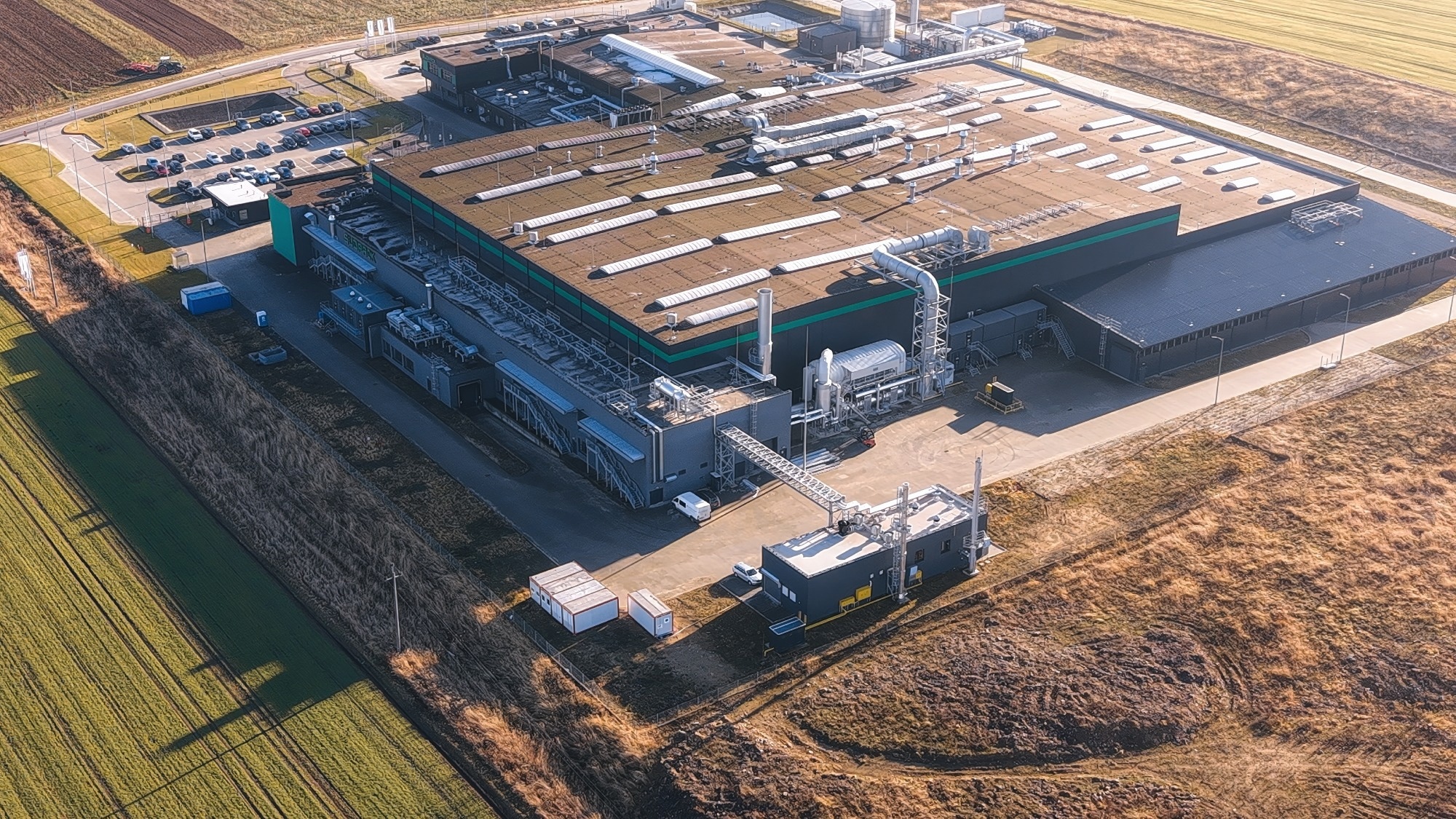
Data center from above. Image Credit: alexgo.photography/Shutterstock.com
The major operators of AI infrastructure do not publicly disclose the data required to process the figures. The paper's central argument is that the environmental impact of AI cannot be responsibly managed until that changes.
This article works outward from that finding. The costs de Vries-Gao identifies are real and growing. AI's contributions to energy systems, grid optimization, and renewables integration are also real and directly bear on the same carbon arithmetic. But the timescale mismatch between quarterly AI demand growth and multi-year grid decarbonization means the net balance cannot yet be resolved.
The industry most capable of resolving it currently declines to provide the data.
The Paper: Method, Findings, and Uncertainty
The study builds on a bottom-up modeling framework developed by Masanet et al. for estimating data center energy and water use from disclosed operational metrics, such as power usage effectiveness (PUE) and water usage effectiveness (WUE).
Applied to AI specifically, the study uses the IEA's estimate that AI systems accounted for roughly 15 % of global data center electricity demand in 2024, a power draw approaching that of the United Kingdom continuously, as its baseline.1
Converting power demand into a carbon footprint requires knowing where AI hardware operates and what those grids emit. Here, the analysis runs into a structural problem. The IEA's spatial breakdown of data center capacity relies largely on proprietary data from IDC, Omdia, and SemiAnalysis that cannot be independently validated.1
Alex de Vries-Gao applies regional carbon intensity averages: US grids at roughly 321 gCO2/kWh, European grids at approximately 174 gCO2/kWh, yielding a weighted average near 395.65 gCO2/kWh, given the US dominance of global AI capacity.
Continue Reading: What are the Environmental Consequences of Data Centers?
A recent US-focused preprint by Guidi et al. estimated a higher figure of 548 gCO2/kWh for 2023–2024 data centers, a difference that, applied to AI’s power demand, shifts the carbon estimate by tens of millions of tons. However, the divergence was unexplained, and the paper had not been peer-reviewed at publication.1 This is not a marginal discrepancy. It illustrates precisely why the transparency gap is the central issue: without facility-level reporting, estimates will continue to span a factor of nearly 2.5.
On water, the opacity is comparable. The IEA estimated total data center water consumption at 560 billion liters in 2023. De Vries-Gao notes that Microsoft disclosed a 2025 data center design using zero water for AI cooling, a genuine improvement that also reveals the extent of variation across facilities and how dependent any aggregate estimate is on design choices that operators are not required to report.1
The Costs in Broader Context
The range from de Vries-Gao becomes more consequential when placed alongside growth projections.
A 2025 study in Nature Sustainability modeling US AI server deployment estimated additional annual carbon emissions of up to 44 Mt CO2-equivalent and a water footprint of up to 1,125 million cubic meters by 2030.2
The same study found that net-zero commitments for 2030 are unlikely to be met without a heavy reliance on unverified carbon offsets.
De Vries-Gao appropriately limits its scope to operational emissions, but a 2022 lifecycle assessment in Sustainability found that most AI environmental claims omit embodied carbon from chip fabrication, mineral extraction, and e-waste. This means the operational figures are a lower bound on total impact.3
Where AI Directly Reduces the Costs It Creates
The strongest case for AI's positive environmental impact is when the technology acts on the very variables de Vries-Gao uses to estimate its footprint: the carbon intensity of electricity generation.
The IEA's 2025 energy and AI analysis estimates that widespread AI deployment in power plant operations and grid management could yield up to USD 110 billion annually in fuel savings by 2035, while also enabling greater integration of intermittent renewables through improved generation forecasting and demand-side load balancing. 4
If grid decarbonization accelerates as a result, the carbon-intensity multipliers de Vries-Gao applies to AI’s power demand decline, improving the footprint estimate without any reduction in AI activity.
A 2025 review in Energy Strategy Reviews documented deployed AI applications across the energy transition: photovoltaic array optimization, wind generation dispatch, and vehicle-to-grid management.5
A microgrid modeling study found AI optimization achieves electricity costs of 0.037 USD/kWh, a 67 % reduction versus reference tariffs, by maximizing renewable utilization and minimizing storage waste.6 These are measurable outcomes, not projections. The causal link to the de Vries-Gao framing is direct: a lower-carbon grid means a lower carbon cost per unit of AI compute.
The caveat is timing. AI power demand is growing quarter by quarter; grid decarbonization operates on a multi-year to decadal timescale. The net effect depends on which trajectory moves faster, and that is an empirical question, one that cannot be answered without the disclosure of data that the industry does not currently provide.
Conclusion
De Vries-Gao does not conclude that AI is an environmental disaster. He concludes that we cannot determine whether it is, because the major operators do not disclose what would be needed to find out. That is a more uncomfortable finding than either a clean indictment or a clean endorsement, and it forecloses both the reassurance AI companies prefer to offer and the alarm critics prefer to sound.
The practical implication is not to curtail development but to mandate the reporting that would make costs legible: AI-specific electricity consumption, PUE, and WUE at the facility level, grid carbon intensity by location, and independent verification of offset claims.
Narrowing de Vries-Gao’s current factor-of-2.5 uncertainty range to something actionable requires those disclosures. Without them, the question in this article’s title has one honest answer: unknown.
Click here to download a free PDF copy of this page
References and Further Reading
- de Vries-Gao, A. (2025/2026). The carbon and water footprints of data centers and what this could mean for artificial intelligence. Patterns, 7(1), 101430. https://www.ncbi.nlm.nih.gov/pmc/articles/PMC12827721/
- Rao, P. et al. (2025). Environmental impact and net-zero pathways for sustainable artificial intelligence servers in the USA. Nature Sustainability. https://www.nature.com/articles/s41893-025-01681-y
- Lannelongue, L. et al. (2022). Unraveling the Hidden Environmental Impacts of AI Solutions for Environment: Life Cycle Assessment of AI Solutions. Sustainability, 14(9), 5172. https://www.mdpi.com/2071-1050/14/9/5172
- International Energy Agency. (2025). AI for Energy Optimisation and Innovation. IEA. https://www.iea.org/reports/energy-and-ai/ai-for-energy-optimisation-and-innovation
- Wang, Q., Li, Y., & Li, R. (2025). Integrating artificial intelligence in energy transition: A comprehensive review. Energy Strategy Reviews, 57, 101600. https://www.sciencedirect.com/science/article/pii/S2211467X24003092
- Mohammadi, M. & Mohammadi, A. (2025). Advanced AI approaches for the modeling and optimization of microgrid energy systems. PMC/Frontiers. https://www.ncbi.nlm.nih.gov/pmc/articles/PMC11993650/
- Hassan, A. & Ibrahim, R.L. (2025). Driving Toward Carbon Neutrality in United States: Do Artificial Intelligence Shocks, Energy Policy Uncertainty, Green Growth, and Regulatory Quality Matter? SAGE Open. https://journals.sagepub.com/doi/10.1177/21582440251359735
Disclaimer: The views expressed here are those of the author expressed in their private capacity and do not necessarily represent the views of AZoM.com Limited T/A AZoNetwork the owner and operator of this website. This disclaimer forms part of the Terms and conditions of use of this website.