*Important notice: This news reports on an unedited version of an accepted paper and is awaiting final editing. Therefore, the paper should not be regarded as conclusive or treated as established information.
Agricultural straw residues are promising bioenergy feedstocks that could be key to reducing dependence on fossil fuels in Mediterranean farming systems. Researchers have published their findings in Scientific Reports.
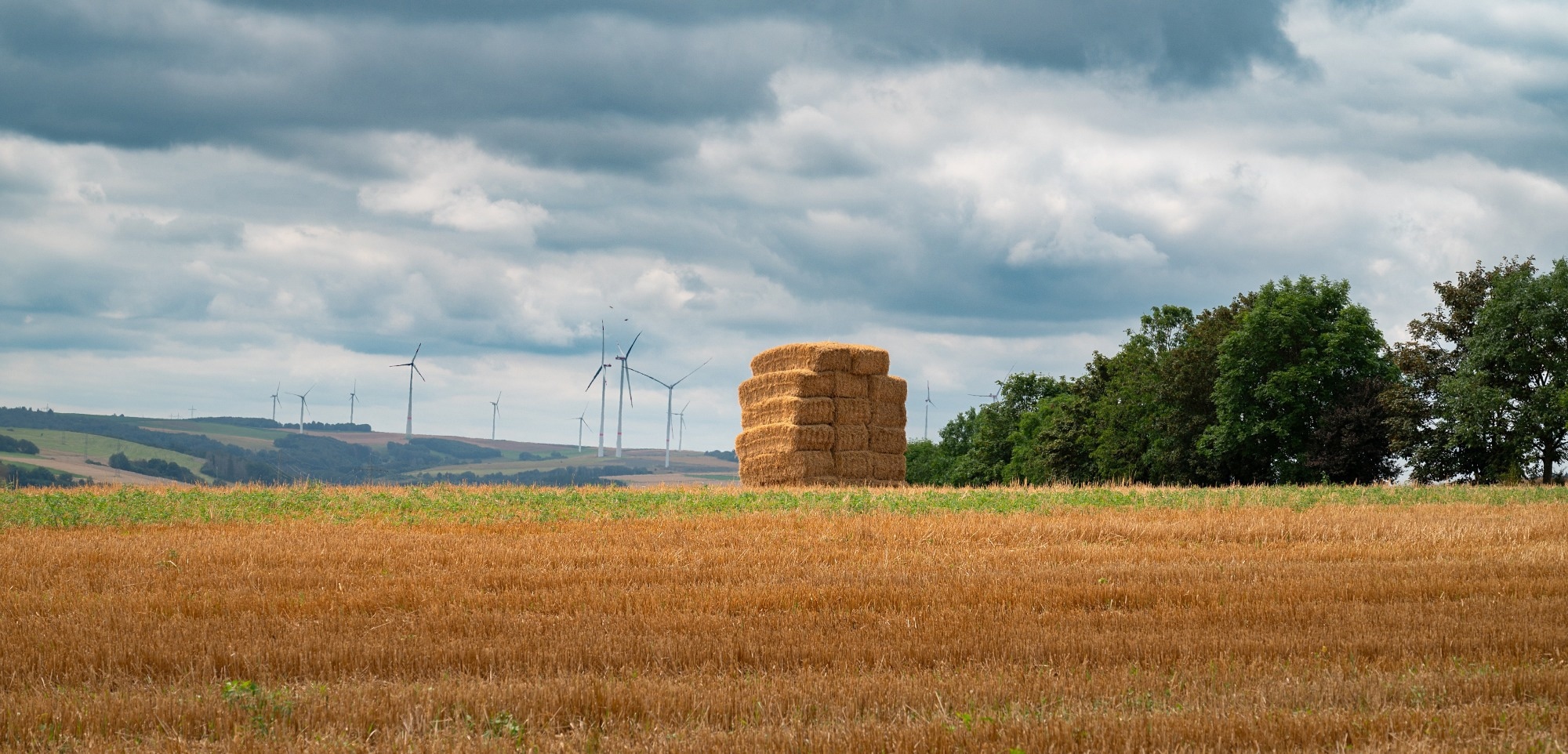
Study: Bioenergy potential of agricultural straw residues from Southern Spain. Image Credit: Berit Kessler/Shutterstock.com
Understanding Straw Biomass as a Renewable Energy Resource
Agricultural biomass, such as straw, is often overlooked as a renewable alternative to fossil fuels. This underutilized resource, produced at large-scale in regions like Southern Spain, can significantly lower net greenhouse gas emissions, but is often left unused or discarded despite its benefits.
The Scientific Reports study evaluated eight types of straw, including barley, corn, oats, rapeseed, rice, sunflower, triticale, and wheat, as potential solid biofuels. All samples were collected from Andalusia and analyzed using standardized European Committee for Standardization and International Organization for Standardization (CEN/ISO) methods. This ensured consistent and reliable results.
Key findings included:
- Most straw types have favorable energy properties, including moderate ash content and strong calorific values.
- Predictive models that link composition to energy performance enable faster screening of biomass resources and help reduce both time and costs in designing bioenergy systems.
Standardized Evaluation of Biomass Properties: Background
Researchers collected 75 samples from various agricultural sources across Andalusia. Preparation included drying, milling, and stabilization to achieve uniform particle size and controlled moisture conditions.
Standardized protocols were used to measure moisture, ash content, volatile matter, and calorific value. Elemental composition of the samples, mainly the carbon, hydrogen, nitrogen, sulfur, and chlorine content, was determined using combustion-based analytical techniques.
Ash behavior was examined through fusibility tests that evaluated melting characteristics at high temperatures. This step is essential for assessing combustion performance, as low ash melting points can lead to operational problems such as slagging.
Statistical analysis was used to strengthen the reliability and interpretability of the experimental findings. Analysis of variance (ANOVA) was used to identify differences among straw types, while principal component analysis (PCA) explored relationships between variables. Regression models were developed to predict net calorific value (NCV) based on measurable properties.
Click here to download a free PDF copy of this page
Performance Insights: Energy Potential and Fuel Quality
The results confirm that agricultural straws are promising bioenergy feedstocks, although their performance varies across species.
Most straws exhibit ash contents between 5 % to 7 %, meeting international fuel quality standards. Rice straw is a clear outlier, with ash content around 15 %, which can reduce combustion efficiency and may require blending with lower-ash materials.
Calorific values range from 15 to 19 MJ/kg. Sunflower straw shows the highest energy content, approaching 19 MJ/kg and comparable to some woody biomasses. Other straws, including barley and wheat, deliver moderate yet practical energy outputs of around 17 MJ/kg. These results position agricultural residues as competitive alternatives to conventional biomass fuels.
Most samples fall within the optimal volatile matter range of 75–80 %. This supports efficient ignition and stable combustion. Rice straw, again, deviates from this pattern, with lower volatile content that may limit its suitability for certain applications.
Elemental composition further explains these differences. Carbon content ranges from 40 % to 50 %, directly influencing energy output. Nitrogen levels remain below regulatory thresholds, indicating manageable NOx emissions. However, sulfur and chlorine contents vary across samples. Elevated sulfur in rapeseed and corn straw may increase SO2 emissions, while higher chlorine levels in some residues raise concerns about corrosion and the formation of harmful byproducts if not properly managed.
Bulk density varies widely among straw types, directly influencing storage and transport efficiency. Corn straw exhibits the highest density, making it easier to handle and store, whereas rice straw has a much lower density and therefore requires larger storage volumes.
The predictive models developed in this study further strengthen their practical relevance. Most models achieve high accuracy, with R² values above 0.90. By linking calorific value to key compositional parameters, these models provide rapid and cost-effective assessment of biomass quality without the need for extensive laboratory testing.
Implications for Clean Energy Systems
Agricultural straw residues are a significant resource within the renewable energy landscape. Their widespread availability, combined with compatibility with existing combustion systems, makes them particularly suited for regional energy production.
That said, variability in composition, particularly in ash, sulfur, and chlorine content, requires careful fuel management. Strategies such as blending, pretreatment, and improved harvesting practices can help enhance fuel quality while reducing potential environmental impacts.
More broadly, the use of agricultural residues supports circular economy principles, transforming waste into valuable energy, lowering emissions, and strengthening the resilience of rural economies.
Journal Reference
Pinna-Hernández, M. G., et al. (2026). Bioenergy potential of agricultural straw residues from Southern Spain. Scientific Reports. DOI: 10.1038/S41598-026-46840-Z, https://www.nature.com/articles/s41598-026-46840-z
Disclaimer: The views expressed here are those of the author expressed in their private capacity and do not necessarily represent the views of AZoM.com Limited T/A AZoNetwork the owner and operator of this website. This disclaimer forms part of the Terms and conditions of use of this website.