Data from ABAX-connected vehicle fleets across Europe in 2025 reveals clear differences in driving patterns between countries – from higher average speeds in the Netherlands to longer journey distances in the UK. At the same time, the downward trend in carbon emissions continues. Estimated CO2 emissions per connected vehicle fell by 3 percent compared to 2024.
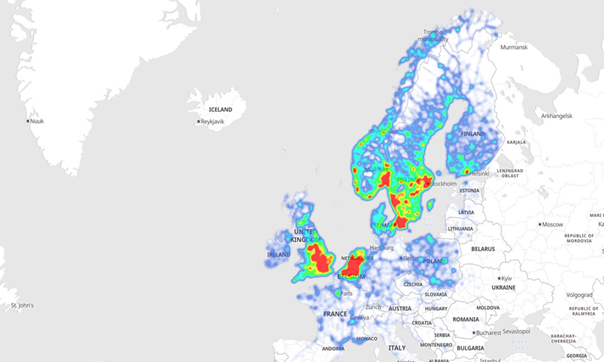 Image Credit: ABAX
This is highlighted in ABAX’s annual Mobility Data, published today. ABAX is one of Europe’s leading providers of connected mobility and smart operations solutions. The report is based on data from approximately 300,000 connected vehicles operating on European roads throughout 2025.
The analysis shows significant variation between countries. The Netherlands recorded the highest average speed at 24 mph, while the UK had the lowest at 17 mph. The UK also had the longest average journey distance, at 12 miles per trip. Sweden recorded the shortest average trip length at 9 miles. Swedish drivers were also the fastest in the Nordics, with an average speed of 22 mph.
These differences highlight how driving patterns and traffic conditions vary significantly across Europe. Each country and region requires its own approach to planning, route optimisation, and fuel efficiency. With the right data-driven insights, businesses can increase productivity, reduce costs, and lower emissions.
The 2025 data also shows that total CO2 emissions from vehicles connected to the ABAX platform decreased by 3 percent compared to the previous year. Data-driven insights help businesses reduce emissions through more efficient vehicle use – without compromising mobility or productivity.
“This year’s Mobility Data shows a clear trend across all our markets,” says Emma Dyga, CEO of ABAX. “Businesses that work in a data-driven way are reducing emissions, lowering costs, and gaining better control over their fleets. That delivers both environmental benefits and stronger profitability.”
Vehicles connected to the ABAX platform travelled more than 2.6 billion miles in 2025, completing 275 million trips. Drivers spent more than 90 million hours on the road. At this scale, even small improvements make a significant impact – a 1 percent efficiency improvement would equal 26 million fewer miles driven. That would mean lower fuel costs, reduced emissions, and thousands of working hours saved.