In northern China’s semi-arid landscapes, where drifting dunes once signaled severe land degradation, decades of tree planting are quietly transforming the soil beneath the surface. Scientists now report that the key to this recovery lies in an unexpected place: the microscopic remains of soil microbes.
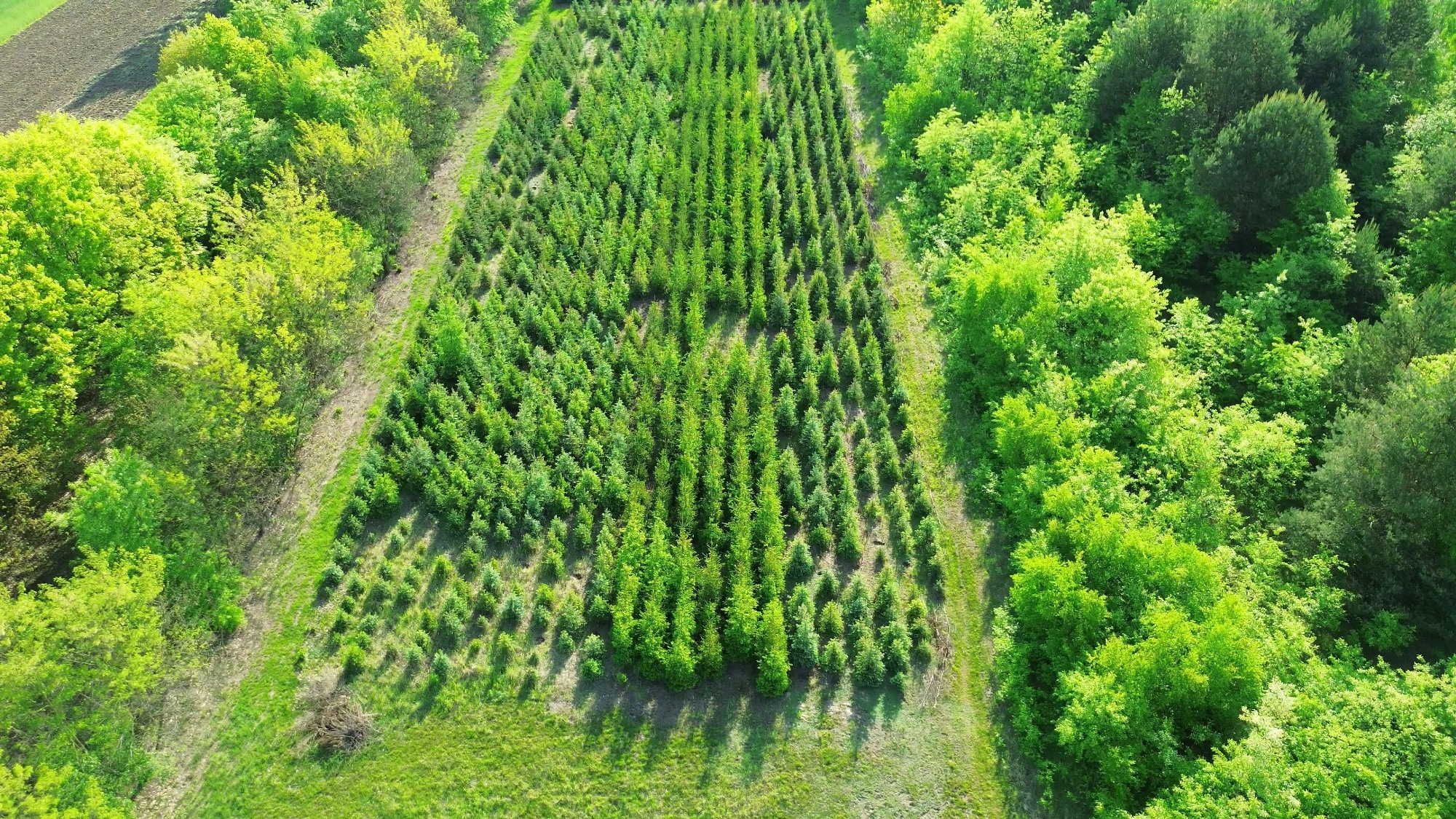
Image Credit: alexgo.photography/Shutterstock.com
Soil Fertility and the Global Carbon Cycle
Soil organic carbon (SOC) and total nitrogen (TN) are crucial components of soil fertility and play a significant role in regulating the global carbon cycle.
Microbial necromass, consisting of fungal and bacterial cell wall residues, is a major contributor to soil organic matter, accounting for a substantial proportion of SOC and TN. These microbial remnants help stabilize soil organic carbon by promoting soil aggregation and protecting nutrients from rapid decomposition.
Vegetation restoration increases plant-derived inputs that feed microbial communities, which, in turn, enhance necromass production. In semi-arid regions, plant species used for afforestation and the duration since planting influence the dynamics of microbial residue accumulation. Leguminous plants, for example, can increase nitrogen availability through symbiotic fixation, thus further stimulating microbial biomass.
Soil properties, such as texture, pH, and the nitrogen-to-phosphorus (N:P) ratio, also regulate microbial necromass formation by influencing nutrient availability and microbial metabolism. Furthermore, climatic conditions and topographic features indirectly impact soil nutrient accumulation by shaping plant and microbial patterns.
The Study
The investigation sampled sites with 10-, 20-, and 40-year-old plantations of Caragana microphylla (a leguminous shrub) and Pinus sylvestris var. mongolica (Mongolian pine) on mobile dune sands in northern China.
These plantations were compared with neighboring mobile dunes, natural grasslands, and native forests as references. Soil samples from the top 20 centimeters were collected and analyzed for organic carbon, total nitrogen, and amino sugar biomarkers, which serve as indicators of microbial necromass levels.
Statistical analyses, including redundancy analysis (RDA) and piecewise structural equation modeling (pSEM), were employed to elucidate the relationships between environmental factors and microbial necromass accumulation. These analyses helped identify soil properties and nutrient ratios that influence necromass formation. The approach provided insights into the direct and indirect effects of environmental variables and vegetation on soil nutrient enhancement.
Results and Discussion
Afforestation led to notable increases in SOC and TN compared with barren mobile dunes, although natural grasslands and native forests showed the highest levels of microbial necromass and nutrient content.
Estimates suggest that after 40 years of afforestation, approximately 26.3 teragrams of soil organic carbon and 2.5 teragrams of total nitrogen could be sequestered across the region in question, while full restoration to natural grassland levels would likely take more than 110 years. Microbial necromass accounted for between 22.3 and 41.0 percent of soil organic carbon and an even greater proportion of total nitrogen (24.4 to 49.5 percent).
Notably, fungal necromass contributed about four times as much as bacterial necromass, underscoring the critical role of fungi in decomposing recalcitrant plant material such as lignin in afforested ecosystems.
The increase in microbial residues was more pronounced during earlier restoration stages, particularly where leguminous species enhanced soil nitrogen status. Soil physical properties, such as texture and structure, were identified as primary determinants facilitating microbial necromass accumulation by promoting aggregation and protecting organic matter.
The soil N:P ratio was a significant nutrient-related parameter influencing bacterial necromass and overall microbial residue formation. Climatic, topographic, and vegetation factors largely influenced microbial necromass indirectly by altering soil properties. Importantly, nitrogen limitation characteristic of these semi-arid zones restricts microbial growth and residue accumulation. Therefore, mitigating nitrogen scarcity represents a viable strategy to boost microbial-mediated soil carbon and nitrogen storage.
The research also highlighted water availability as a fundamental constraint for plantation sustainability and soil nutrient recovery in arid environments. Overly dense planting can exceed the soil moisture-carrying capacity, underscoring the need for ecologically informed management practices. Furthermore, although this study focused on surface soil layers due to their responsiveness to afforestation, deeper soil horizons might also play a role in long-term carbon and nitrogen dynamics, given that most tree roots extend well below 20 centimeters.
Want to save for later? Click here.
Conclusion
This study demonstrates that afforestation of severely unproductive desertified land in semi-arid regions can effectively enhance soil carbon and nitrogen pools, primarily through the accumulation of microbial necromass.
The presence and increase of microbial residues, especially fungal-derived material, underpin a significant pathway for long-term nutrient storage in restored soils. The findings highlight afforestation as a promising approach to rehabilitate degraded lands and contribute to climate change mitigation by fostering natural, microbial-driven soil nutrient cycling.
This research informs sustainable restoration efforts by highlighting the microbial mechanisms behind soil recovery, the importance of plant species selection, and the necessity of balanced soil nutrient management to support enduring ecosystem health in arid landscapes.
Journal Reference
Chen Y., Cao W., et al. (2026). Afforestation of severely desertified land in semi-arid areas promotes soil carbon and nitrogen accumulation through microbial necromass. Communications Biology. DOI: 10.1038/s42003-026-09775-9, https://www.nature.com/articles/s42003-026-09775-9