A recent review published in the Agricultural Ecology and Environment examines the growing concern over microplastic contamination in agricultural soils and its potential consequences for ecosystem functioning and food security. The article highlights the complex interactions between microplastics, soil microorganisms, and viruses. In particular, it discusses the role of bacteriophages in regulating microbial populations and facilitating gene exchange within microplastic-associated biofilms. These insights suggest that understanding microbe–virus interactions in microplastic-contaminated soils could support new strategies for soil restoration and sustainable agroecosystem management.
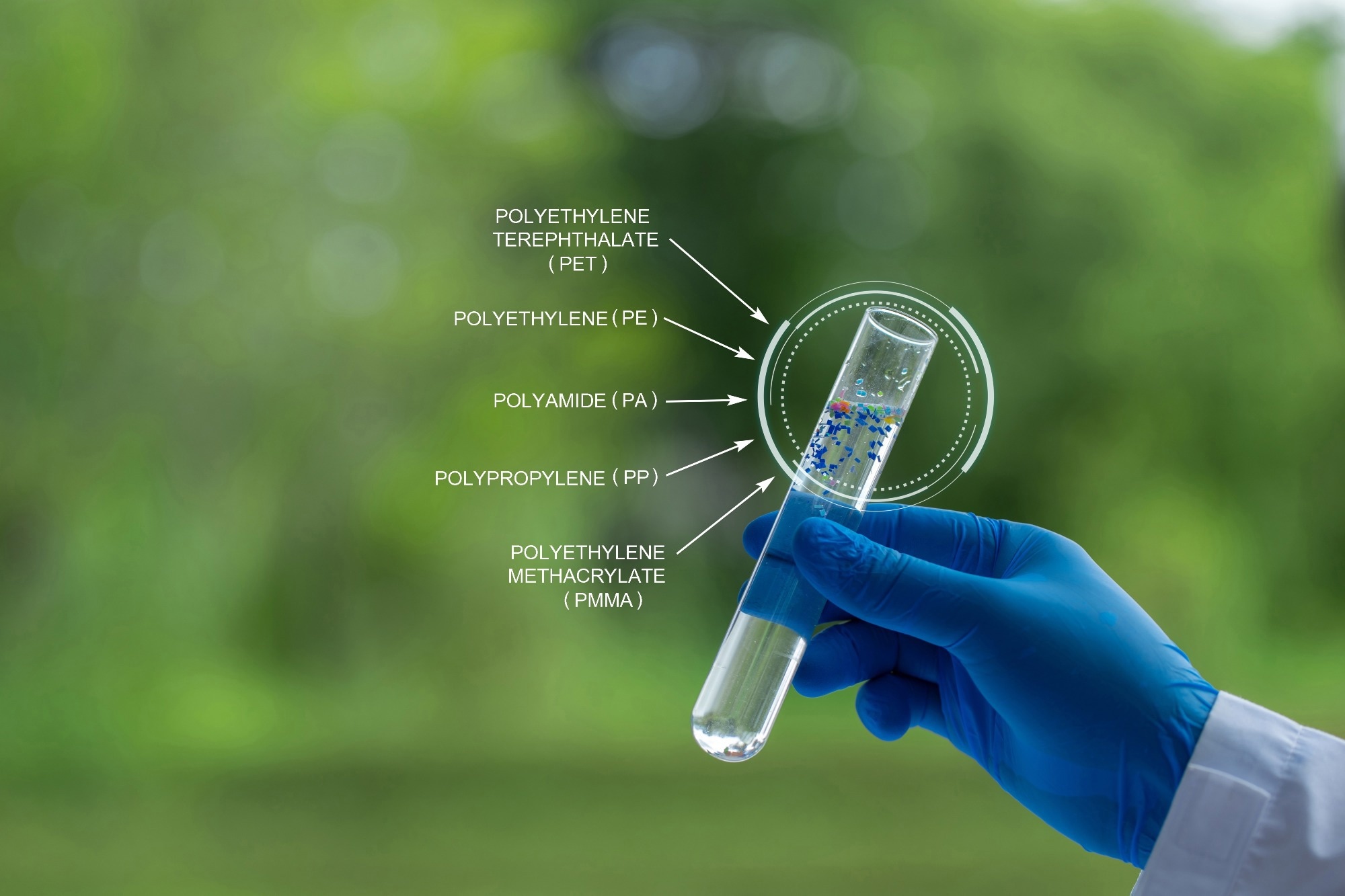
Image Credit: chayanuphol/Shutterstock.com
At an increasing rate, microplastics are detected in agricultural soils due to practices such as plastic mulching, wastewater irrigation, and the extensive use of agricultural plastics. Their accumulation can alter soil's physical and chemical properties, disrupt microbial habitats, and interfere with nutrient cycling processes vital to maintaining soil fertility and crop productivity. They can also act as physical barriers and chemical stressors in soil, affecting microbial activity and overall soil health.
A distinctive ecological feature of microplastics is their ability to host dense microbial biofilms known as the plastisphere. These microhabitats promote close microbial interactions and increase the likelihood of horizontal gene transfer, including genes associated with plastic degradation and antibiotic resistance. Previous research has focused primarily on microbial responses to microplastics, while the role of soil viruses, particularly bacteriophages, remains poorly understood.
This review explores the complex interactions between microplastics, soil microbial communities, and viruses within agricultural ecosystems. It brings together recent research to illustrate how microplastics influence microbial community structure and how viral processes such as lysis, lysogeny, and gene transduction regulate microbial populations.
Studies Highlighted in the Review
Recent studies explore microbial colonization, viral regulation, and genetic exchange in microplastic-contaminated soils. Much of the research focuses on the formation of plastisphere biofilms, where microbial species such as Pseudomonas and Bacillus often dominate. These microbes display strong metabolic flexibility and can degrade various pollutants. Some produce enzymes that break down polyethylene terephthalate (PET) into simpler compounds.
Researchers have also investigated how microbes adapt to stress caused by microplastics. Plastic additives, pollutants adsorbed onto microplastic surfaces, and other environmental pressures can alter microbial metabolic pathways. These conditions often favor stress-tolerant organisms. As a result, microbial communities may gradually shift toward species capable of using plastic-derived compounds as carbon sources.
Other studies examine the role of viruses in soil ecosystems. Bacteriophages regulate microbial populations through infection cycles and influence gene exchange among microbes. Through viral transduction, genes associated with plastic degradation, stress tolerance, and antibiotic resistance can spread within plastisphere communities.
Click here to download a free PDF copy of this page
Recent research also explores the biotechnological potential of viruses. Scientists are investigating engineered bacteriophages and virus-like particles as delivery systems for plastic-degrading enzymes or genetic material. These approaches aim to strengthen microbial biodegradation processes while maintaining ecological balance in microplastic-contaminated soils.
Discussion
The review highlights the complex ecological effects of microplastics in soil ecosystems, particularly their influence on interactions between microbes and viruses. It also highlights the important regulatory role of bacteriophages in microbial communities. Phages control microbial populations through two main infection pathways. In the lytic cycle, phages infect bacterial cells and trigger host lysis, releasing nutrients back into the environment. In the lysogenic cycle, phages insert their genetic material into host genomes and may introduce genes that enhance microbial metabolism or stress tolerance. Together, these mechanisms influence the structure and functional capacity of microbial communities associated with microplastic surfaces.
Horizontal gene transfer (HGT) significantly shapes plastisphere ecosystems. Through viral transduction, microbes can acquire genes specific to plastic degradation, potentially accelerating the breakdown of complex polymers. Conversely, this mechanism facilitates the dissemination of antibiotic resistance genes (ARGs) and virulence factors, presenting substantial ecological and public health risks. Environmental variables such as nutrient stoichiometry, soil architecture, and chemical stressors dictate these dynamics, determining whether viral activity promotes beneficial microbial succession or disrupts established degradation pathways.
Recent literature also explores biotechnological applications of viral systems for environmental remediation. One such innovation involves virus-like particles (VLPs) functionalized with catalytic nanoenzymes to directly target microplastic polymers. However, the viability of these strategies hinges on rigorous assessments of ecological safety, unintended gene transfer, and long-term environmental persistence.
Conclusion
This review presents microplastic contamination in agricultural soils as a complex ecological challenge that extends beyond physical pollution. Microplastics serve as ecological substrates that modify interactions between microbes and viruses and influence soil processes. They also alter microbial community structure and promote genetic exchange, supporting plastic-degrading microorganisms.
The review focuses on bacteriophages, which are important yet underexplored regulators within these systems. Through infection cycles and horizontal gene transfer, phages regulate microbial population dynamics and affect the functional capacity of plastisphere communities. Depending on environmental conditions and community composition, these interactions may enhance biodegradation pathways or introduce ecological risks.
The authors emphasize the need for further research to better understand these processes. Future studies should investigate how microplastics reshape microbe–virus interactions and affect soil ecosystem functions. Researchers should also examine how microplastics influence microbial community structure and gene exchange processes that contribute to plastic degradation.
Journal Reference
Iqbal, B., Khan, A. A., et al. (2026) Soil microplastics hidden web interaction of microbes and viruses as a frontier for sustainable ecosystem recovery. Agricultural Ecology and Environment, 2(1). DOI: 10.48130/aee-0026-0003, https://www.maxapress.com/article/id/69a288c7fa6c5807ab2eb126
Disclaimer: The views expressed here are those of the author expressed in their private capacity and do not necessarily represent the views of AZoM.com Limited T/A AZoNetwork the owner and operator of this website. This disclaimer forms part of the Terms and conditions of use of this website.