As companies and countries continue to extract limited mineral resources, deep-sea mining is emerging as a potential new approach to mineral extraction, with valuable minerals nestled in significant deposits on the deep-sea floor. These minerals are highly sought after because they are vital to the technology industry, including renewable energy technologies.
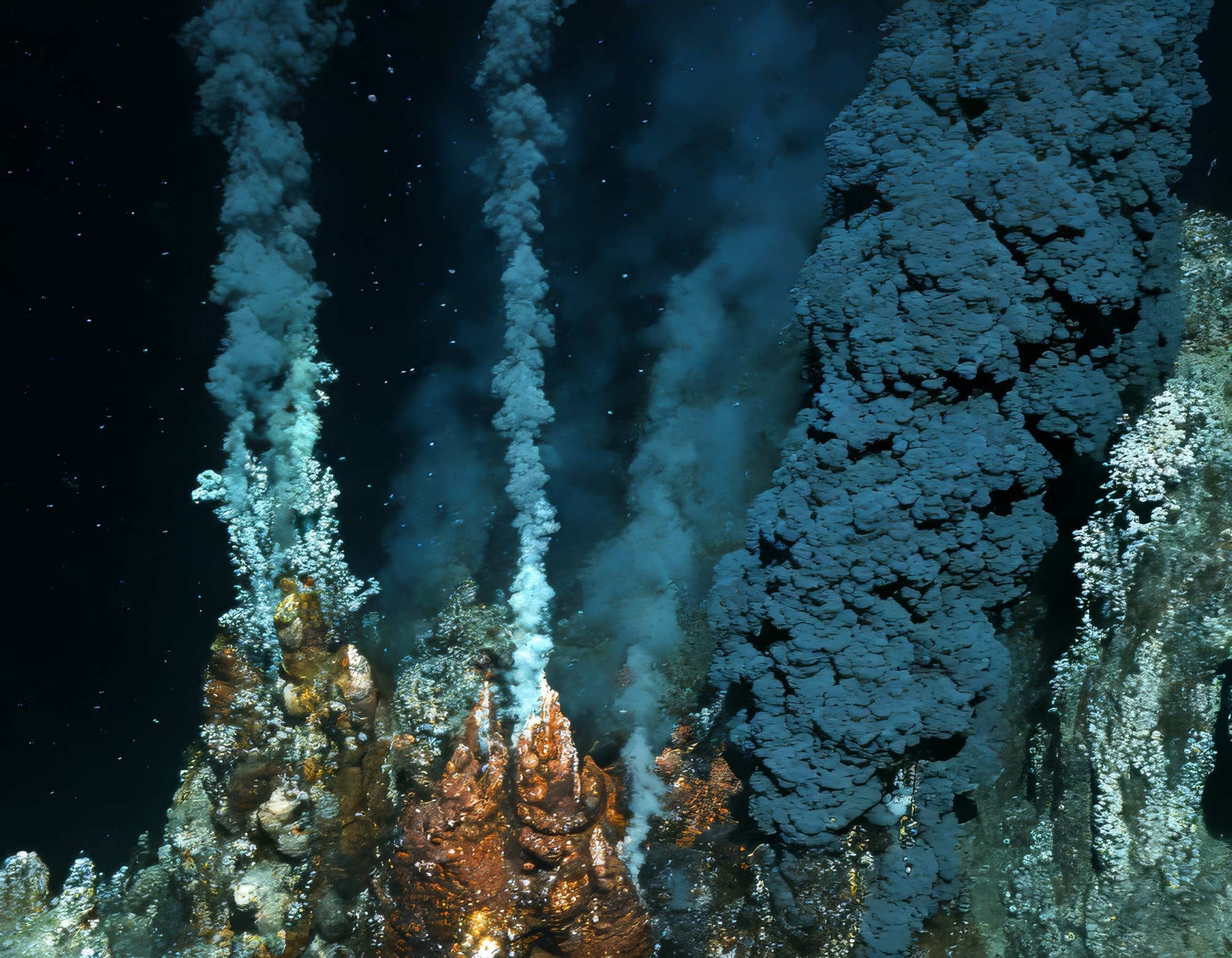
Image Credit: Gallwis/Shutterstock.com
What is the Current Status of Deep-Sea Mining?
Although, to date, no commercial deep-sea mining operations are currently underway, numerous governments and corporations have expressed interest, arguing that these operations could offer a lower-impact alternative to terrestrial mining.
Significant deep-sea mineral deposits include:
- Cobalt-rich ferromanganese crusts: Nickel, copper, cobalt, and rare metals can be found deposited in the seafloor at depths of up to 3.5 km.
- Polymetallic sulfides: Concentrations of copper, lead, zinc, gold, and silver can be found near hydrothermal vents at depths of between 1 and 4 km.
- Polymetallic nodules: Nodules of cobalt, copper, nickel, and manganese can be found on the seafloor at depths between 3 and 6.5 km.
However, growing scientific evidence suggests that harm to deep-sea ecosystems, biodiversity, and climate stability could be acute and irreversible.
Environmental Risks of Deep-Sea Mining
Contrary to the notion that the deep sea is largely barren, it is home to a diverse range of species, many of which are yet to be studied or even identified.
Some of the most promising deposits are located in the Clarion-Clipperton Zone (CCZ). Located between Hawaii and Mexico, it is a region spanning more than 9 million square kilometers. Scientists recently discovered more than 5,000 new species in the CCZ.1 Mining operations would not only threaten newly discovered species, such as the gummy squirrel and star-shaped dytaster, but also countless species we have yet to find in the region.
The deep sea is a unique environment filled with particularly delicate species. Mining operations there would pose several threats, including:
- Habitat Destruction: Removing large chunks of the sea floor would permanently alter the environments where they are located.
- Sediment Plumes: Mining operations would send clouds of sediment into the water column. These plumes can travel long distances, affecting fish and other species critical to the marine food web.
- Noise and Light Pollution: Deep-sea ecosystems are specifically tuned to darkness and silence. Introducing industrial machinery would disrupt the behaviors of all kinds of species. Research has found that artificial lights can significantly affect the behaviors of some sea creatures.2
- Chemical Pollution: Mining processes would release toxic materials sequestered in the sea floor, according to the World Wildlife Fund.3 They could also release industrial pollutants, such as fuel and machine oil.
These threats pose the most significant environmental risks to the immediate area. However, pollution and disturbances can travel hundreds of miles up and down the water column, putting all kinds of ecosystems at risk. For example, a recent study found jellyfish living at depths of 1,500 to 2,000 feet showed signs of stress when exposed to seafloor sediments.4
How Could Deep-Sea Mining Impact the Climate?
The deep ocean is Earth’s largest carbon sink, sequestering carbon in sediments for millions of years. Disturbing these environments could interfere with natural carbon sequestration, accelerating climate change.
The physical disruption of the deep-sea floor poses the most direct risk to our global climate. If mining operations were to release long-held carbon back into the water column, it would destabilize the planet’s carbon cycle.
Mining operations also pose indirect climate change risks. The operations themselves are energy-intensive and would generate significant greenhouse gas emissions. Furthermore, many deep-sea and midwater organisms play vital roles in carbon transport. Stress or population loss could weaken these natural carbon pathways.
While advocates of deep-sea mining argue that it will facilitate the development of more clean energy technologies, these benefits could be significantly offset by the environmental impacts of mining operations.
The governance of deep-sea mining in international waters falls under the purview of the International Seabed Authority (ISA), established by the United Nations Convention on the Law of the Sea.
Click here to download a free PDF copy of this page
The ISA is tasked with ensuring that mining activities are beneficial while protecting the marine environment. Unfortunately, some countries - most prominently the United States - have not ratified the United Nations Convention on Law of the Sea, undercutting the influence of the ISA. Furthermore, critics argue that corporate influence has eroded the ISA and similar organizations.
Outside of the ISA, there have been calls to action against deep-sea mining. In 2023, Switzerland announced support for a moratorium on commercial deep-sea mining until more scientific research can guarantee environmental protection.5 Germany, France, Chile, and other nations have made similar commitments.
The European Investment Bank has categorized deep-sea mining as unacceptable on environmental and climate grounds. Therefore, any deep-sea mining activities cannot benefit from the central bank’s funding.6
Furthermore, Apple, Google, Volkswagen, and dozens of other major corporations have publicly pledged not to source minerals from the deep sea. Citing serious risks and a lack of knowledge, these companies called for a moratorium on deep-sea mining and an exploration of all other alternatives.7
For now, scientists, governments, and policymakers increasingly agree that precaution - not extraction - must guide the path forward.
References and Further Reading
- McVeigh, K. (2023 May 25). More than 5,000 new species discovered in Pacific deep-sea mining hotspot. The Guardian. https://www.theguardian.com/environment/2023/may/25/more-than-5000-new-species-discovered-in-pacific-deep-sea-mining-hotspot
- University of Exeter. (2015 April 28). Coastal light pollution disturbs marine animals, new study shows. EurekAlert. https://www.eurekalert.org/news-releases/719414
- World Wildlife Fund. (2025 March). Analysis Of The Implications Of Deep Seabed Mining For The Global Biodiversity Framework And The Sustainable Development Agenda. World Wildlife Fund. https://wwfint.awsassets.panda.org/downloads/wwf-report---analysis-of-the-implications-of-deep-seabed-mining-for-the-global-biodiv.pdf
- Stenvers, V. et al. (2023 November 21). Experimental mining plumes and ocean warming trigger stress in a deep pelagic jellyfish. Nature Communications, Volume 14: 7352. https://www.nature.com/articles/s41467-023-43023-6
- The Federal Council of Switzerland. (2023 June 28). Federal Council adopts position on moratorium on commercial exploitation of international seabed area. https://www.news.admin.ch/en/nsb?id=96138
- European Investment Bank. (2022). EIB Eligibility, Excluded Activities And Excluded Sectors List. https://www.eib.org/files/publications/eib_eligibility_excluded_activities_en.pdf
- Stop Deep Seabed Mining. (Retrieved 2025 November 3). Business Statement Supporting a Moratorium on Deep Sea Mining. World Wildlife Fund. https://www.stopdeepseabedmining.org/statement
Disclaimer: The views expressed here are those of the author expressed in their private capacity and do not necessarily represent the views of AZoM.com Limited T/A AZoNetwork the owner and operator of this website. This disclaimer forms part of the Terms and conditions of use of this website.