Over the next 50 years, the future of the aerospace industry hinges on meeting two critical goals. First, the industry is aiming to achieve net-zero carbon emissions by 2050 - a target that reflects its growing commitment to environmental responsibility (Organization, 2026). This environmental push is one of the key drivers shaping the sector’s long-term strategy.
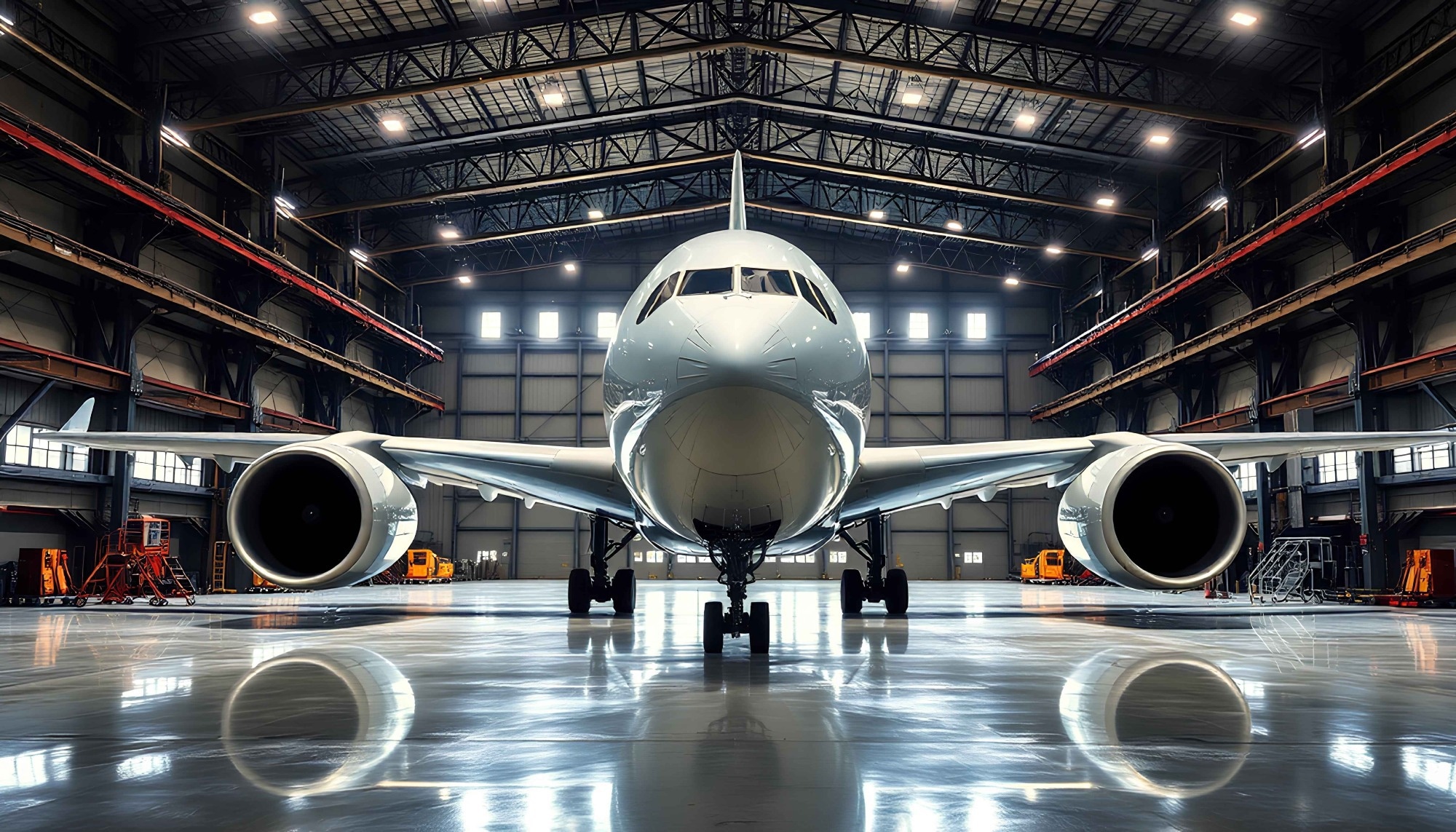
Image Credit: Grandeur Frames/Shutterstock.com
Equally important, however, is ensuring the industry's economic and structural resilience in the face of ongoing operational challenges. These include a fragile global supply chain, high financial risks associated with developing next-generation technologies (Berckman, 2026), and a significant shortage of skilled workers.
Many academic studies point to the need for a synchronized approach to these goals. In other words, environmental necessity should serve as a catalyst to address operational hurdles, not a competing priority. Aligning both aims could be the most sustainable path forward for the aerospace industry (Akca, 2026).
Current Sustainability in the Aerospace Field
The industry's current state presents a mixed picture of high market demand and internal operational difficulties.
The International Civil Aviation Organization’s (ICAO) Long-Term Global Aspirational Goal (LTAG) is to achieve net-zero carbon emissions by 2050, which is the industry's primary environmental strategy. At the ICAO’s third conference on Aviation and Alternative Fuels, it has been agreed that the industry will attain reduction of at least 5 % carbon intensity through the use of sustainable aviation fuel (SAF) by the end of 2030 (Long term global aspirational goal (LTAG) for international aviation, 2025), which makes it an important sustainability target for the near future.
Continue Reading: The Most Notable Developments in Sustainable Aviation Fuel
Much research points to Sustainable Aviation Fuel (SAF) as the leading solution for reducing carbon emissions in the aerospace industry. However, despite its potential, current adoption remains limited - accounting for less than 1 % of global jet fuel consumption.(Ydersbond, 2025).
According to the research published in the Journal of Aerospace Engineering and many AIAA conference papers, passenger travel will increase three times by 2050 (Jones, 2025) (Forum, 2025). This presents a significant challenge to the aerospace industry’s current sustainability efforts, which largely focus on optimized flight operations and more fuel-efficient aircraft. While these measures help, they risk being outpaced by the steady rise in global air travel demand. As a result, the industry faces a moving target - any solution must reduce emissions and keep up with the nonlinear growth in air traffic to remain truly sustainable.
The entire aerospace ecosystem is financially threatened by the gap between orders and their delivery rate. This phenomenon in the aerospace management industry is known as the backlog paradox, in which a weak supply chain and a shortage of workforce cause the delivery rate to be extremely low, and hence the previous orders to Original Equipment Manufacturers (OEMs) remain open while new orders keep coming.
This imbalance between low supply and high demand creates a misleading sense of stability. On paper, companies like Boeing and Airbus appear to have secured their economic future, with 6,500 and 8,700 aircraft orders, respectively (Johnson, 2026). These backlogs suggest a guaranteed revenue stream for at least the next decade. However, this seemingly solid foundation masks an economic paradox. The reality is undermined by a critical shortage in the workforce and a range of internal and external challenges that threaten the industry's long-term stability. Addressing these issues is essential to ensure the true sustainability of the aerospace sector (Njo, 2024).
Major Sustainability Challenges of the Aerospace Industry
The industry’s path to a sustainable future is blocked by a complex interplay of environmental, economic, and human capital hurdles.
|
Challenge Category
|
Primary Challenge
|
Impact on Sustainability
|
|
Environmental
|
SAF Cost and Availability
|
Sustainable Aviation Fuel is 2 to 5 times more expensive in comparison with conventional fuel, according to research this disparity in cost puts a limit on environmental progress for now (Ydersbond, 2025) (Global, 2026).
|
|
Economic
|
Supply Chain Fragility
|
Due to a lack of availability of main raw materials, such as titanium, which are the primary components of aircraft parts like engines, the production process is being delayed. It affects customer trust in the industry and the main reason for the increasing costs (Berckman, 2026) (Williams, 2026).
|
|
Human
|
Workforce Crisis
|
29 percent of the workforce in the aerospace technical industry belongs to the 55+ age group, posing a threat to production and innovation capacity. It ultimately leads to bottlenecks in growth of the industry (Staffing, 2025) (Spiteri, 2026).
|
|
Technological
|
New Program Risk
|
New aircraft or aircraft technology are very expensive to develop as they must pass very strict regulations and safety checks before being cleared up for manufacture and delivery. This scrutiny causes delays for many years (e.g. Boeing 777x delays) (Johnson, 2026)
|
One of the most critical long-term threats to the sustainability of the aerospace industry is the growing workforce shortage. Projections from the U.S. commercial sector indicate a need for 123,000 new technicians over the next two decades - a demand that puts serious pressure on the industry's ability to maintain current production levels, let alone innovate for the future.
This concern is more than theoretical. An academic analysis published in the AIAA Journal reveals that nearly 30 % of the current aerospace workforce is aged 55 or older, underscoring the urgency of the issue (Staffing, 2025). Without a strong pipeline of skilled talent, the industry risks stalling at a time when both production and innovation are more crucial than ever.
How Are These Challenges Being Addressed?
The challenges halting the aerospace industry's growth are being addressed through a synchronized strategy of policy action, innovation in technology, and overall structural investment
The European Union's ReFuelEU Aviation policy serves as a strong example of how governments are working to reduce investment risks in the aerospace industry - an approach likely to be adopted globally. The policy introduces a pull mechanism, effectively creating a guaranteed market for Sustainable Aviation Fuel (SAF) producers. This strategy helps tackle cost barriers by combining mandates with targeted incentives.
Academic studies support this approach, emphasizing that such policies are essential for reducing the financial risks associated with new technologies and infrastructure. By reducing uncertainty, these initiatives also encourage the industry to embrace the so-called “green premium” mindset - prioritizing long-term sustainability over short-term cost concerns (4AIR, 2025).
To stabilize the supply chain, investments are being made by OEMs in the integration of key suppliers with the in-house workforce to secure the capacity and control quality (Torralba-Carnerero, 2024). This integration will smooth the flow of manufacturing as the supply chain will be under the control of prime contractors. Using this strategy, the fragile key component suppliers will turn into dependable partners, and they will ensure the overall integrity of the production ecosystem. This shift toward vertical integration has also been discussed in recent research by the International Journal of Production Economics.
The workforce crisis requires a multi-level approach to bridge the skills gap, which can be devastating for the industry. One such approach involves using AI and other digital twins that shift their focus from big data to real-world, practical applications in maintenance and engineering. Such AI-driven design optimization and maintenance prediction have been highlighted in IEEE conference papers. This approach will increase the overall productivity of the workforce and will also fill the void in the skill gap by automation of routine tasks (IEEE, 2026).
Want to save for later? Click here.
Major Developments in Sustainability
Substantial developments are being made on the dual mandate (environmental and structural) of sustainability, which lays the foundation for the future.
Technological developments (environmental)
The focus is on developing scalable, zero-emission propulsion:
- To resolve the feedstock constraint of HEFA, the use of renewable energy (electricity) and capturing CO2 to create synthetic fuel is to be seen as the main pathway. This Power to Liquid (PtL) SAF, is named as a critical pathway for 2050 net-zero goal in the Advanced Energy Sustainability Research (Mubasshira, 2025).
- In addition to emerging technologies like hybrid-electric aircraft - which are being explored as a bridge solution for regional applications (Nilsson, 2026) - Airbus’s ZEROe (Zero Emissions) project stands out as a leading example of efforts to potentially eliminate in-flight CO2 emissions altogether (Airbus, 2026). Recent studies published in AIAA papers have also explored the feasibility of fuel-cell-powered aircraft designs and direct-hydrogen combustion systems. These innovations signal promising directions for the industry as it looks beyond incremental improvements toward more transformative, scalable solutions.
Structural developments (economic and product)
The industry is evolving its business model and product strategy to enhance resilience:
- Before innovations fully reach the aerospace market, it’s important to recognize the critical role the Maintenance, Repair, and Overhaul (MRO) sector plays in keeping the industry structurally stable. Backed by both academic and economic research, the MRO segment has proven resilient - especially during periods of uncertainty. Older fleets, in particular, generate steady, high-margin revenue that helps cushion the financial impacts original equipment manufacturers (OEMs) often face in this volatile industry (Berckman, 2026). In many ways, MRO acts as the backbone of the sector, sustaining operations while the next wave of technology continues to develop.
- The Commercial Aircraft Corporation of China (COMAC) is emerging as a serious challenger to the long-standing dominance of Airbus and Boeing. Its development of the C919 - a narrow-body aircraft designed to compete directly with the Airbus A320 and Boeing 737 - is pushing Western OEMs to rethink their timelines for innovation. Rather than continuing to rely on legacy aircraft platforms, companies are now being pressured to accelerate the development of new technologies to stay competitive in the commercial sector (Taylor, 2025). COMAC’s entry marks a shift in the global landscape, introducing a new layer of urgency for innovation and market adaptation (Taylor, 2025).
What Does the Future Hold?
The aerospace industry’s future is dependent on environmental and structural sustainability, and they are both linked to each other.
In the next four years, which is the 2030 horizon, the industry’s ability to execute will be put under immense pressure as the target to meet 2030 SAF will be a measuring unit of sustenance. The stabilized production rate to clear the backlog of orders will also be a critical feature to test the industry's success. According to the project made by the academia, the innovative circle of the aerospace industry will have its first region hybrid electric aircraft as a new product category by the end of 2030 (Nilsson, 2026).
Looking ahead to 2050, achieving net-zero emissions remains the aerospace industry’s primary long-term goal. While emerging technologies like hydrogen propulsion and electric fuel cells will play an important role, Sustainable Aviation Fuel (SAF) is expected to remain the leading contributor to reducing CO2 emissions (IATA, 2025).
For the industry to survive and thrive, it must:
- Prioritize Execution: Production rate and SAF supply should be prioritized along with the delivery of orders over the ambitious innovation target.
- Invest in Human Capital: Human capital should be recognized as the ultimate bottleneck in the growth of industry. The workforce crisis should be addressed through targeted training and extensive recruitment
- Embrace Digital Resilience: Fully integrate digital tools across the supply chain and MRO to build a system that is both efficient and resilient to external shocks.
The aerospace industry is not just aiming for a greener future; it is fundamentally rebuilding its operational and technological foundation to ensure its survival in the 21st century.
References and Further Reading
4AIR. (2025). 2025 Aviation Decarbonization Policy Deep Dive & Outlook. Retrieved from https://www.4air.aero/whitepapers/2025-aviation-decarbonization-policy-deep-dive-amp-outlook
Airbus. (2026). ZEROe: our hydrogen-powered aircraft. Retrieved from https://www.airbus.com/en/innovation/energy-transition/hydrogen/zeroe-our-hydrogen-powered-aircraft
Akca, M. (2026). Decarbonizing the Skies: A Multidimensional Analysis of Sustainable Aviation from the Perspective of Industry Executives in Türkiye. MDPI. https://www.mdpi.com/2071-1050/18/1/465
Berckman, L. (2026). Aerospace and defense industry outlook. Retrieved from Deloitte: https://www.deloitte.com/us/en/insights/industry/aerospace-defense/aerospace-and-defense-industry-outlook.html%5D
Forum, W. E. (2025). Global Aviation Sustainability Outlook 2025. Retrieved from World Economic Forum: https://www.weforum.org/publications/global-aviation-sustainability-outlook-2025/
Global, S. (2026, January). Decarbonizing aviation: The scale-up challenge. Retrieved from https://www.spglobal.com/energy/en/news-research/blog/agriculture/010826-decarbonizing-aviation-scale-up-challenge-saf-prices
IATA. (2025). Sustainability. Retrieved from https://www.iata.org/en/programs/sustainability/
ICAO. (2026). ICAO Strategic Plan. Retrieved from ICAO: https://www.icao.int/about-icao/Council/strategic-plan-2026-2050
IEEE. (2026). AeroConf 2026 IEEE Aerospace Conference Proceedings. https://www.aeroconf.org/
Johnson, J. (2026). Airbus Vs. Boeing: Who Will Rule The Air In 2026? Retrieved from Simple Flying: https://simpleflying.com/airbus-boeing-rule-air-2026/
Jones, S. (2025). The Future of Green Aviation: Advancements in Fuels, Technology, and Policy. AIAA. https://arc.aiaa.org/doi/10.2514/6.2025-99762
Long term global aspirational goal (LTAG) for international aviation. (2025). Retrieved from ICAO: https://www.icao.int/environmental-protection/long-term-global-aspirational-goal-ltag-international-aviation
Mubasshira. (2025). The Future of Hydrogen-Powered Aviation: Technologies, Challenges, and a Strategic Roadmap for Sustainable Decarbonization. Advanced Energy and Sustainability Research. https://advanced.onlinelibrary.wiley.com/doi/full/10.1002/aesr.202500223
Nilsson, S. (2026). What to Expect in 2026 for Advanced Air Mobility. (Dawn Zoldi) Retrieved from https://www.autonomyglobal.co/what-to-expect-in-2026-for-advanced-air-mobility/
Njo, C. (2024). Overcoming Supply Chain Challenges in Commercial Aviation: Enhancing Aircraft Maintenance,Operational Efficiency and Sustainability. https://www.researchgate.net/publication/389745702_Overcoming_Supply_Chain_Challenges_in_Commercial_Aviation_Enhancing_Aircraft_Maintenance_Operational_Efficiency_and_Sustainability
Spiteri, G. (2026). Aviation Maintenance Staff Shortage: 710,000 Technicians Needed by 2044. (AVIATHRUST) Retrieved from https://www.aviathrust.com/article/aviation-maintenance-staff-shortage-710000-technicians-needed
Staffing, R. (2025, March). The Aerospace Industry Is Taking Off What It Means for Employers and the Workforce. Retrieved from https://www.rolinc.com/2025/03/28/the-aerospace-industry-is-taking-off-%F0%9F%9A%80-what-it-means-for-employers-and-the-workforce/https://www.rolinc.com/2025/03/28/the-aerospace-industry-is-taking-off-%F0%9F%9A%80-what-it-means-for-employers-and-the-workforce/
Taylor, D. (2025). COMAC Aircraft Programmes – Status & Outlook. (IBA) Retrieved from https://www.iba.aero/resources/articles/comac-aircraft-programmes-status-outlook/
Torralba-Carnerero, G. (2024). Supply Chain Management Control in the Aerospace Sector: An Empirical Approach. MDPI. https://www.mdpi.com/2305-6290/8/4/132
Williams, H. (2026). Outlook 2026: Aerospace, Defense & Government Services. Retrieved from https://www.harriswilliams.com/our-insights/adg-2026-industry-outlook-trends-aerospace-defense-government-services
Ydersbond, I. M. (2025). How can aviation be decarbonized faster? An assessment of relevant short- and medium-term policy measures in a Nordic context. Journal of Air Transport Management. https://www.sciencedirect.com/science/article/abs/pii/S0969699725000754
Disclaimer: The views expressed here are those of the author expressed in their private capacity and do not necessarily represent the views of AZoM.com Limited T/A AZoNetwork the owner and operator of this website. This disclaimer forms part of the Terms and conditions of use of this website.