The Environmental Cost of Lithium Extraction
The Case for Lithium Batteries
Why Lithium Batteries Fall Short of Sustainability
Pathways Toward Sustainable Lithium Supply
Sustainable Lithium Requires Systemic Change
References and Further Reading
The global push toward electrification and renewable energy has placed lithium batteries at the center of the sustainability conversation. Although these batteries enable the transition away from fossil fuels, their production raises significant environmental and social concerns. The question remains: can lithium batteries truly become sustainable, or must we seek alternatives?
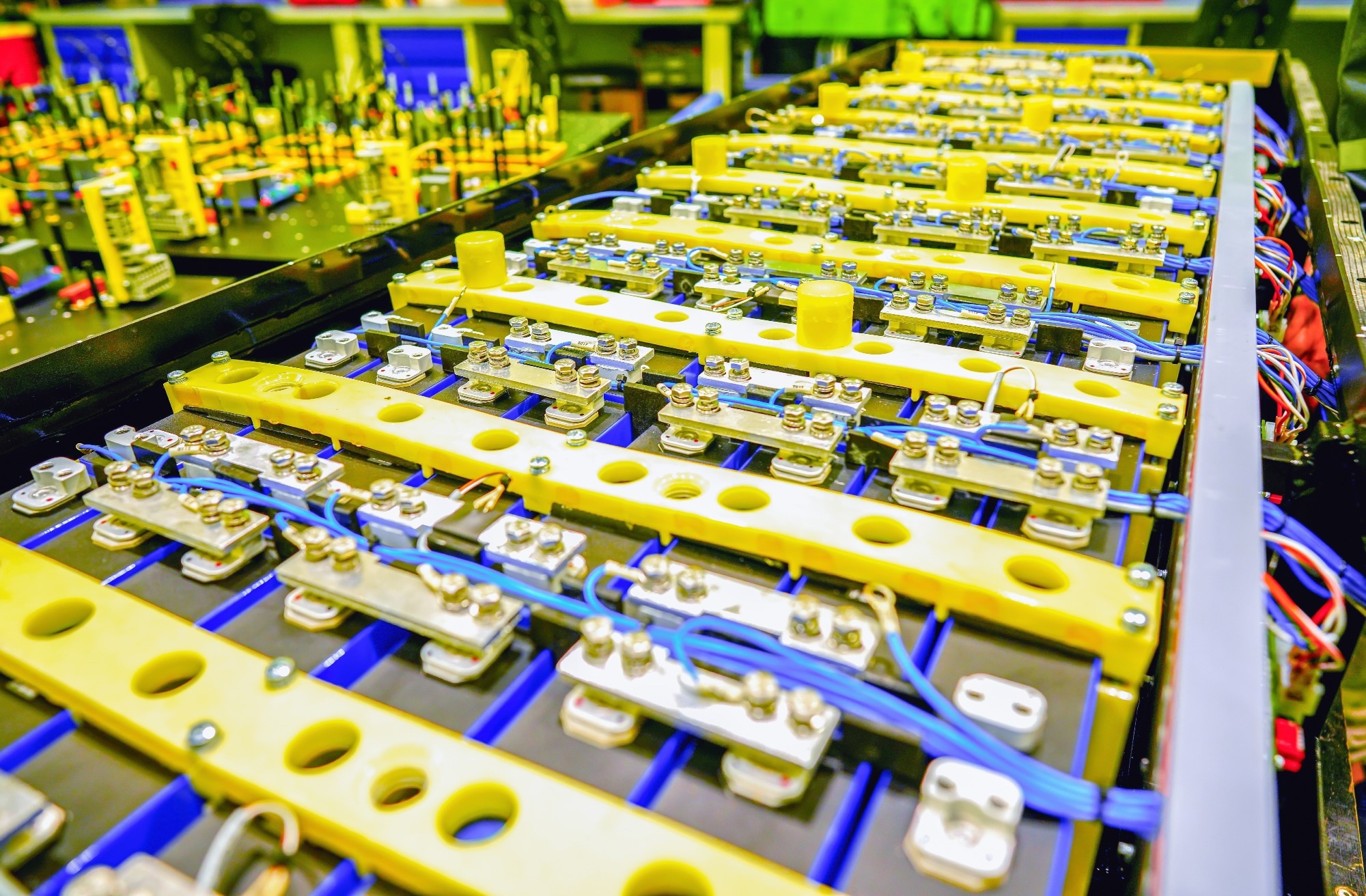
Image Credit: Maksim Safaniuk/Shutterstock.com
Lithium extraction currently relies on two primary methods, each carrying distinct environmental burdens. Brine evaporation, predominantly used in South American salt flats, involves pumping lithium-rich brine into vast evaporation ponds where solar energy concentrates the mineral over 12-18 months. This process places enormous strain on water resources in already arid regions. Studies in Chile's Atacama Desert and Argentina's lithium triangle document severe freshwater depletion and ecosystem disruption, with local communities reporting water insecurity and agricultural impacts.1, 2
Hard rock mining, primarily spodumene extraction in Australia, presents different challenges. Open-pit operations disturb large land areas and generate substantial waste rock. The subsequent processing requires high-temperature roasting at 1000 °C and chemical conversion, both of which consume significant energy and produce greenhouse gas emissions. Life cycle assessments show that lithium refining can contribute 5-15 % of a battery cell's total climate impact, depending on the extraction route and ore grade.3
The environmental footprint varies considerably with resource quality. Lower-grade brines require more water and processing chemicals per kilogram of lithium recovered, while declining ore grades in hard rock deposits increase energy intensity and land disturbance.3, 4 As demand accelerates, producers increasingly turn to marginal deposits, potentially worsening these impacts.
The Case for Lithium Batteries
Despite extraction concerns, lithium batteries remain central to decarbonization strategies for compelling technical reasons. Their high energy density, typically 150-250 Wh/kg, enables practical electric vehicle ranges that have driven global EV adoption from niche to mainstream. This energy density advantage over alternative chemistries is not incremental but transformative, making long-range electric transport viable at scale.5
Beyond transportation, lithium batteries provide grid-scale energy storage essential for integrating variable renewable sources like wind and solar. Their rapid response times and cycle life allow them to replace fossil fuel peaker plants and stabilize grids with high renewable penetration. Case studies of utility-scale installations demonstrate tangible benefits: these systems reduce curtailment of renewable generation, improve grid reliability, and displace carbon-intensive backup generation.6
The technology's maturity offers another advantage. Decades of development have produced diverse chemistries, from nickel-manganese-cobalt (NMC) to lithium iron phosphate (LFP), allowing optimization for specific applications. Manufacturing infrastructure exists globally, and ongoing research continues to improve performance and reduce costs. This established ecosystem cannot be easily replicated with nascent alternatives.
Why Lithium Batteries Fall Short of Sustainability
The sustainability challenges extend well beyond extraction. Current recycling infrastructure recovers only a fraction of end-of-life batteries, though precise global rates remain poorly documented. Industrial-scale recycling can reduce environmental impacts by approximately 55 % compared to virgin material production, yet most spent batteries still enter waste streams rather than circular supply chains.7
Material composition presents additional concerns. Batteries contain cobalt, nickel, and other critical metals with problematic supply chains. Cobalt mining, concentrated in the Democratic Republic of Congo, carries well-documented human rights and environmental issues. Nickel production generates toxic waste and high emissions. These materials complicate recycling economics and perpetuate harmful extraction practices.8
Social dimensions compound technical challenges. Lithium production has sparked conflicts in producing regions, where communities contest water rights and environmental damage. In Argentina's Jujuy province and Chile's Atacama region, indigenous groups and farmers have organized resistance to new projects, citing threats to traditional livelihoods and inadequate consultation. These disputes reflect deeper tensions between global decarbonization goals and local environmental justice.2,9
Demand projections intensify these pressures. Industry forecasts anticipate lithium demand growing five to tenfold by 2040 as EV adoption accelerates and grid storage expands. Meeting this demand through conventional extraction would multiply current environmental and social impacts unless fundamental changes occur.10
Pathways Toward Sustainable Lithium Supply
Recent technological developments offer potential pathways to reduce lithium's environmental footprint. Direct lithium extraction (DLE) technologies represent the most promising near-term innovation. Unlike pond evaporation, DLE uses adsorption, ion exchange, or electrochemical methods to selectively extract lithium from brines in days rather than months. Pilot projects demonstrate reduced water consumption, smaller land footprints, and faster recovery rates.4, 11
Electrochemical extraction methods show particular promise. Techniques such as electrodialysis and capacitive deionization use electrical fields to separate lithium ions from competing elements, achieving higher purity with less chemical waste. Laboratory results indicate these approaches could work with lower-grade brines and even seawater, potentially expanding lithium resources while reducing environmental impacts.12
However, significant barriers remain. Most DLE technologies exist only at pilot scale, facing challenges with membrane fouling, energy requirements, and economic viability. Scaling from laboratory to industrial production requires substantial capital investment and technical refinement. Energy sources matter critically - DLE powered by fossil electricity may offer limited environmental benefits over conventional methods.11
Recycling improvements offer another critical pathway. Recent industrial demonstrations show that closed-loop systems can recover battery-grade cathode materials from mixed waste streams, with environmental benefits heavily dependent on electricity sources. When powered by renewable energy, recycling can reduce greenhouse gas emissions by 80 % compared to virgin production. Expanding recycling infrastructure and designing batteries for easier disassembly could dramatically reduce virgin lithium demand.7
Sustainable Battery Recycling: How Watercycle Technologies is Closing the Loop
Alternative battery chemistries continue advancing, though none yet match lithium's combination of energy density, cycle life, and manufacturing maturity. Sodium-ion batteries show promise for stationary storage where weight matters less. Research into lithium-metal anodes and solid-state electrolytes could increase energy density while reducing material use. These developments may complement rather than replace current lithium technologies through the 2030s.10
Sustainable Lithium Requires Systemic Change
Lithium batteries can become substantially more sustainable, but not through incremental improvements alone.
The path forward requires deploying direct extraction technologies at scale, building comprehensive recycling infrastructure, powering production with renewable energy, and addressing social dimensions through improved governance and community engagement. Whether these changes occur quickly enough to match demand growth remains uncertain.
The transition to sustainable lithium supply is technically feasible but demands coordinated action across industry, government, and civil society. Without such efforts, the batteries that enable our clean energy future will continue to impose unacceptable environmental and social costs.
References and Further Reading
- Balaram V, Santosh M, Satyanarayanan M, et al. Lithium: A review of applications, occurrence, exploration, extraction, recycling, analysis, and environmental impact. Geoscience Frontiers. 2024;15(3):101868. https://doi.org/10.1016/j.gsf.2024.101868
- Díaz Paz WF, Bianchi F, Rosso JC. Lithium mining, water resources, and socio-economic issues in northern Argentina: We are not all in the same boat. Resources Policy. 2023;81:103288. https://doi.org/10.1016/j.resourpol.2022.103288
- Chordia M, Nordelöf A, Ellingsen LAW. Life cycle comparison of industrial-scale lithium-ion battery recycling and mining supply chains. ChemRxiv. 2023. https://doi.org/10.26434/chemrxiv-2023-qwmb2-v3
- Ruberti M. Pathways to greener primary lithium extraction for a really sustainable energy transition: Environmental challenges and pioneering innovations. Sustainability. 2024;17(1):160. https://doi.org/10.3390/su17010160
- Graham JD, Rupp JA, Brungard E. Lithium in the green energy transition: The quest for both sustainability and security. Sustainability. 2021;13(20):11274. https://doi.org/10.3390/SU132011274
- Olusesan OO, Nasir FO, Atumah PE, et al. Life cycle assessment of lithium-ion batteries in utility-scale applications: Impacts on power supply sustainability and grid decarbonization. Global Journal of Engineering and Technology Advances. 2025;24(3):262-277. https://doi.org/10.30574/gjeta.2025.24.3.0262
- Life cycle comparison of industrial-scale lithium-ion battery recycling and mining supply chains. ChemRxiv. 2023. https://doi.org/10.26434/chemrxiv-2023-qwmb2-v3
- Sankar TK, Meshram P. Environmental impact assessment in the entire life cycle of lithium-ion batteries. Reviews of Environmental Contamination and Toxicology. 2023;261:54. https://doi.org/10.1007/s44169-023-00054-w
- Barandiaran J. Lithium and development imaginaries in Chile, Argentina and Bolivia. International Development Policy. 2019;11:23-41. https://doi.org/10.1016/j.worlddev.2018.09.019
- Vega-Muratalla VO, Ramírez-Márquez C, Lira-Barragán LF, et al. Review of lithium as a strategic resource for electric vehicle battery production: Availability, extraction, and future prospects. Resources. 2024;13(11):148. https://doi.org/10.3390/resources13110148
- Park J, Lee S, Kim Y, et al. Critical review of lithium recovery methods: Advancements, challenges, and future directions. Processes. 2024;12(10):2203. https://doi.org/10.3390/pr12102203
- Battistel A, Palagonia MS, Brogioli D, et al. Electrochemical methods for lithium recovery: A comprehensive and critical review. Advanced Materials. 2020;32(23):1905440. https://doi.org/10.1002/ADMA.201905440
Disclaimer: The views expressed here are those of the author expressed in their private capacity and do not necessarily represent the views of AZoM.com Limited T/A AZoNetwork the owner and operator of this website. This disclaimer forms part of the Terms and conditions of use of this website.