What is the SSPP Challenge?
Priority Themes
Key Outcomes and Infrastructure Investments
Recognition and the Broader Policy Context
Outlook
References and Further Reading
Since 1950, global plastic production has increased nearly 200-fold. The OECD’s Global Plastics Outlook (2022) found that plastic waste more than doubled between 2000 and 2019, reaching 353 million tons annually, while the global recycling rate remained at just 9 %.1 Without intervention, the OECD projects global plastic waste will nearly triple by 2060, with roughly half still going to landfill.2
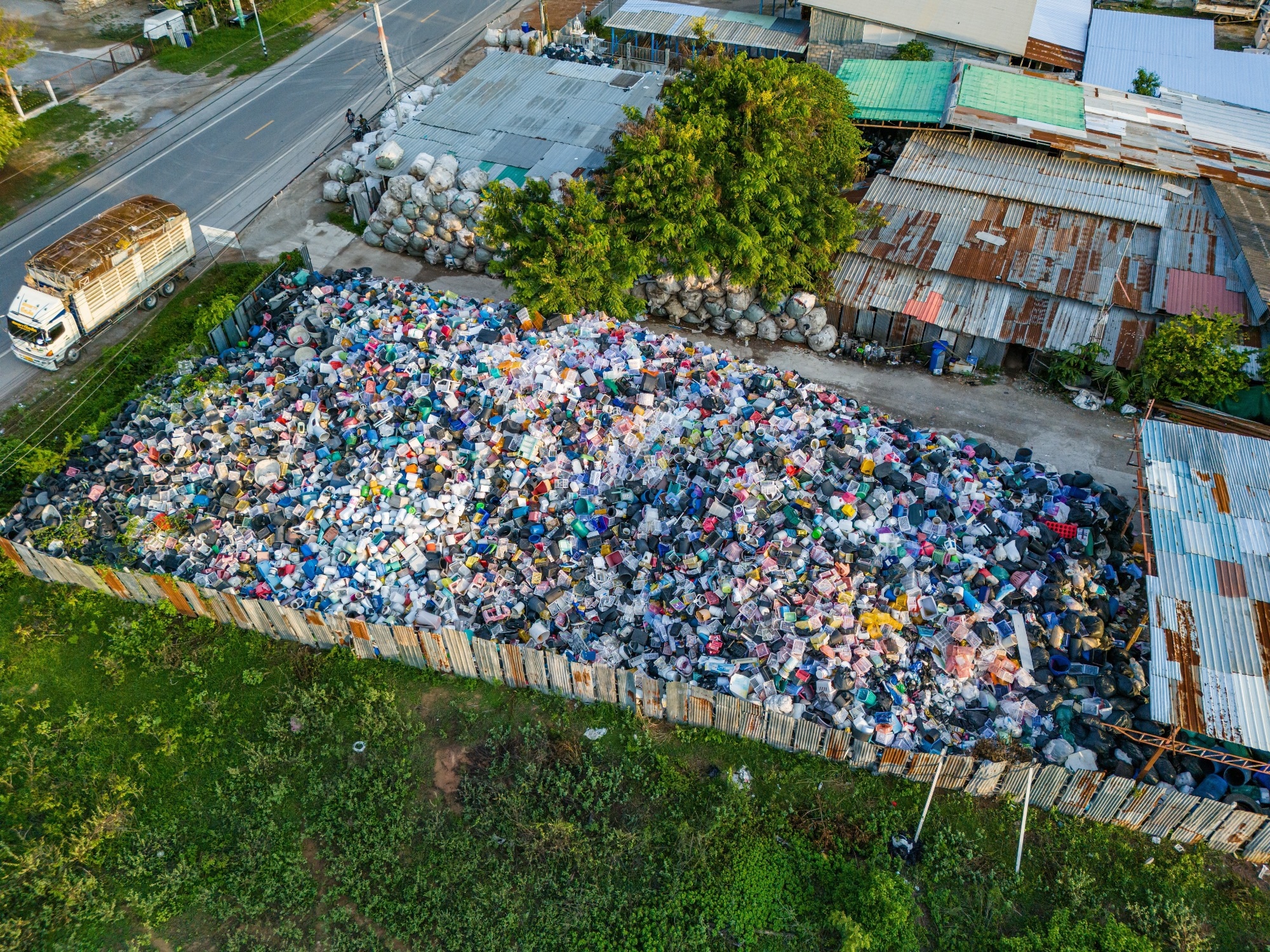
Image Credit: onapalmtree/Shutterstock.com
Packaging accounts for approximately 36 % of all plastics produced globally, much of which is single-use. The Ellen MacArthur Foundation estimates that only 14 % of plastic packaging is collected for recycling worldwide, and that around a third leaks into the environment. Against this backdrop, UK Research and Innovation (UKRI) launched the Smart Sustainable Plastic Packaging Challenge (SSPP) - the largest public investment in sustainable plastics the UK has undertaken to date.3
What is the SSPP Challenge?
Launched in 2019 and running through to 2025, the SSPP Challenge was delivered by Innovate UK, with the Natural Environment Research Council (NERC) co-funding an Enabling Research Programme. The Challenge had a total public budget of £60 million and was structured around three objectives: reducing unnecessary and single-use plastic packaging; increasing the viability of reuse and refill systems; and supporting improved recycling technologies and infrastructure.3
The £60 million in public funding was designed to catalyze private co-investment. To date, it has secured over £149 million in industry match funding and is expected to leverage over £220 million in total, reflecting considerable supply chain engagement. The Challenge was aligned with the 2025 targets of the UK Plastics Pact, a voluntary agreement led by WRAP that brought together over 200 businesses, NGOs, and governments to advance a circular economy for plastic packaging.3
Eight funding competitions were completed over the program’s life, resulting in a portfolio of over 80 projects spanning feasibility studies, university-led enabling research, business-led R&D, and large-scale commercial demonstrators. A cross-sector model was central: academia, industry, and the third sector were brought together to address interlocking technical, commercial, and behavioural barriers.
Want to save for later? Click here.
Priority Themes
Reuse and Refill
Mainstreaming reuse and refill models proved one of the more complex challenges. Barriers include cost, logistics, consumer engagement, and the practicalities of tracking, cleaning, and redistributing reusable packaging in a retail environment. SSPP-funded projects range from large-scale in-store trials with major retailers to packaging tracking technology and consumer behaviour research, including a WRAP-led project with Asda and Unilever examining how citizens interact with refill systems across a shopping journey.3
Food-Grade Recycled Plastics
The UK Plastic Packaging Tax, in force since April 2022, requires packaging to contain at least 30 % recycled material and has increased demand for high-quality recycled content. One of SSPP’s headline investments targeted this directly: a consortium led by Berry Circular Polymers developed the world’s first mechanical recycling plant capable of producing food-grade recycled polypropylene (rPP). The facility opened in autumn 2023.3
Films and Flexible Packaging
Flexible plastics, films, pouches, and multilayer laminates are widely acknowledged as among the most difficult formats to recycle at scale.
SSPP funded innovation across the full value chain, from design and material development through to kerbside collection pilots and novel recycling processes. The co-funded FPF FlexCollect project (£2.9 million) ran the most extensive pilot for household collection and recycling of flexible plastic packaging ever undertaken in the UK, working with multiple local authorities across varied geographies and demographics.3
Key Outcomes and Infrastructure Investments
The SSPP’s most visible legacy is its large-scale demonstrator programme, where a £20 million investment supported four commercial-scale recycling projects. The most prominent is the ReNew ELP facility in Teesside, operated by Mura Technology.
Using the Hydrothermal Plastic Recycling Solution (HydroPRS), the plant employs supercritical water to break down post-consumer plastics, including contaminated multilayer films that cannot be processed mechanically, into liquid hydrocarbons, such as naphtha and gas oils, for manufacturing virgin-grade plastics. Following a £4.4 million SSPP grant in 2020, the plant entered commissioning in late 2024 and was scheduled for commercial operations in early 2025.3,4
Chemical recycling remains contested. Questions around energy intensity, economic viability at scale, and whether such technologies complement or displace mechanical recycling are live in the literature.5 The ReNew ELP plant, alongside a second demonstrator focused on film recycling, will provide real-world operational data to inform that debate.
The £8 million Enabling Research Programme funded 10 university-led projects on recycling barriers, plastic pollution, and systemic change. The University of Manchester’s ‘One Bin to Rule Them All’ project applied an interdisciplinary approach to improving household plastic recycling behaviour.3 Beyond the UK, SSPP contributed £250,000 to establishing the India Plastics Pact, the first such agreement in Asia, launched in September 2021, and supported similar pacts in Latin America, recognizing that plastic packaging pollution requires coordinated international responses.3
Recognition and the Broader Policy Context
The quality of innovation supported by SSPP attracted external recognition. One funded project received a Prince William Earthshot Prize, and three of the five finalists for the Alliance to End Plastic Waste’s flexibles prize, including the winner, were SSPP-funded.3
The UK Plastics Pact’s 2023–24 annual report provides useful context. Pact members removed over 187,000 tons of virgin plastic compared to 2018 levels and achieved a 14 % reduction in packaging greenhouse gas emissions. However, WRAP acknowledged that two of the Pact’s four 2025 targets, on recycling rates and recycled content, will not be met, largely due to delays in implementing Extended Producer Responsibility and Simpler Recycling policies.6 This underscores a persistent structural challenge: innovation funding alone cannot achieve system-level change without complementary policy infrastructure. SSPP has also fed directly into government work, including co-funding the UK’s largest-ever kerbside film collection pilot with Defra and advising on the economics of domestic plastics recycling.3
Outlook
The SSPP Challenge has delivered a substantive portfolio: two world-first commercial recycling facilities, the UK’s largest flexible plastics collection pilot, new food-grade recycled material streams, and a pipeline of earlier-stage innovation across reuse, AI-based sorting, biodegradable materials, and packaging data. With over £220 million in anticipated co-investment drawn from £60 million in public funding, the financial leverage is credible.
What the Challenge also illustrates is the gap between funding innovation and achieving system change. The OECD’s modelling is unambiguous: under current policies, plastic waste will nearly triple by 2060.2 Addressing that trajectory requires changes to production volumes, packaging design norms, collection infrastructure, and consumer behaviour - not just better recycling technology. SSPP has made a credible contribution to the evidence and technology base. Whether that contribution is fully put to use will depend on the harder policy levers: producer responsibility frameworks, mandatory recycled content requirements, and the implementation of international treaty obligations.
References and Further Reading
- OECD (2022). Global Plastics Outlook: Economic Drivers, Environmental Impacts and Policy Options. OECD Publishing, Paris. Available at: https://doi.org/10.1787/de747aef-en
- OECD (2022). Global Plastics Outlook: Policy Scenarios to 2060. OECD Publishing, Paris. Available at: https://doi.org/10.1787/aa1edf33-en
- UKRI / Innovate UK (2019–2025). Smart Sustainable Plastic Packaging Challenge. UK Research and Innovation. Available at: https://www.ukri.org/what-we-do/browse-our-areas-of-investment-and-support/smart-sustainable-plastic-packaging/
- Mura Technology / ReNew ELP (2025). Project case study. UKRI SSPP Challenge Discovery Hub. Available at: https://www.discover.ukri.org/smart-sustainable-plastic-packaging/
- Borrelle, S.B. et al. (2020). Predicted growth in plastic waste exceeds efforts to mitigate plastic pollution. Science, 369(6510), pp. 1515–1518. Available at: https://doi.org/10.1126/science.aba3656
- WRAP (2024). UK Plastics Pact Annual Report 2023–24. WRAP. Available at: https://www.wrap.ngo/resources/report/uk-plastics-pact-annual-report-2023-24
Disclaimer: The views expressed here are those of the author expressed in their private capacity and do not necessarily represent the views of AZoM.com Limited T/A AZoNetwork the owner and operator of this website. This disclaimer forms part of the Terms and conditions of use of this website.