A new study shows that pairing hydrogen storage with batteries can help solar-powered data centers remain reliable, slash carbon emissions, and sharply reduce reliance on the grid.
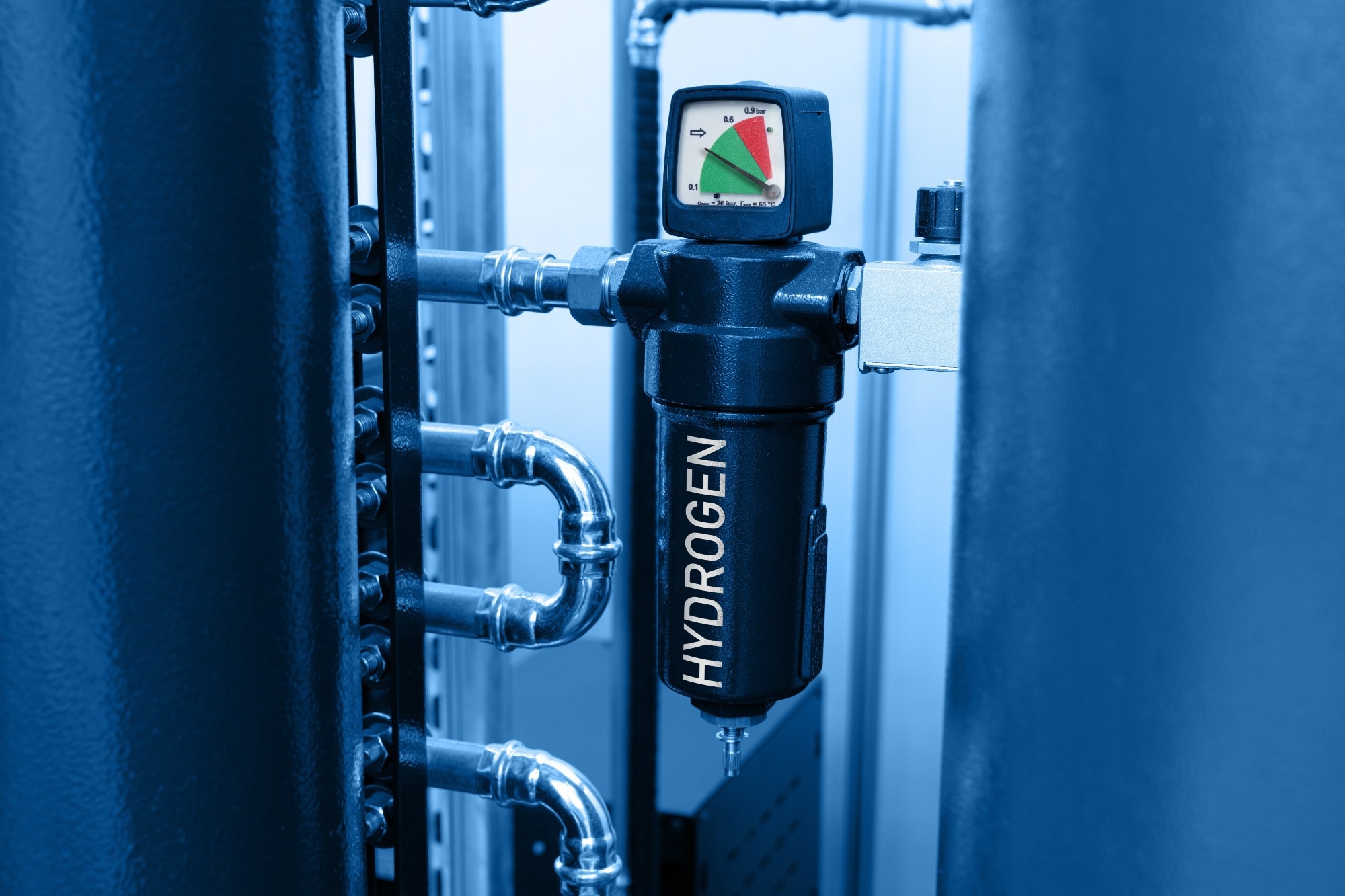
Study: Design of a Hybrid Hydrogen Electrolyzer–Fuel Cell System for On-Grid Renewable Energy Supply of Data Centers. Image Credit: Scharfsinn / Shutterstock
A new study in the journal Applied Sciences reports the design and evaluation of a hybrid hydrogen battery energy storage system for powering data centers using renewable energy. The system integrates photovoltaic (PV) generation with an electrolyzer, hydrogen storage, a fuel cell, and a battery to address solar intermittency.
The proposed configuration achieves about 95% self-sufficiency using real-world data and simulations, reducing emissions compared to the study’s present grid-supported scenario and supporting the development of sustainable data centers.
Data Center Energy Demand and Storage Challenges
The rapid expansion of cloud computing and digital services has positioned data centers among the fastest-growing energy consumers, driving demand for a stable, sustainable power supply. Their continuous operation requires high reliability, making the integration of renewable energy sources both essential and challenging. Solar energy offers a low-carbon alternative; however, its inherent intermittency leads to temporal mismatches between generation and demand, limiting its direct application in mission-critical infrastructure.
Energy storage technologies play a central role in addressing these limitations. Conventional battery systems provide high efficiency and rapid response but are mainly suited for short-duration storage. In contrast, hydrogen offers high energy density and long-term storage capability, making it suitable for mitigating seasonal or extended energy gaps. However, hydrogen-based systems face key challenges, including high capital costs, infrastructure constraints, and operational issues such as fuel cell degradation.
This study proposes a hybrid hydrogen battery energy storage framework to overcome these barriers. By integrating complementary storage technologies, the system improves self-sufficiency, reduces carbon emissions, and enhances cost-performance in a grid-connected data center, using real operational and solar generation data.
Hybrid Energy System Design and Control Strategy
A simulation-based model was developed in Python to evaluate the performance of multiple energy storage configurations under realistic operating conditions. The system is parameterized using one year of high-resolution (10-minute interval) data collected from a data center in Nantes, France. The proposed architecture integrates PV generation with a hybrid storage system consisting of a battery, an electrolyzer, hydrogen storage tanks, and a fuel cell.
The energy management strategy follows a rule-based hierarchy. First, PV generation satisfies the data center load. Excess energy is stored in the battery until its capacity is reached, after which surplus power is directed to hydrogen production through electrolysis. During periods of energy deficit, the battery supplies power first, followed by the fuel cell when additional support is required. The electrical grid serves as a final backup source.
A parametric optimization framework is used to determine optimal system sizing. Key decision variables include electrolyzer capacity, fuel cell power, hydrogen storage volume, and battery capacity. System performance is evaluated using metrics such as self-sufficiency rate (SSR) and levelized cost of electricity (LCOE). Economic assessment includes capital, maintenance, and replacement costs over a 15-year lifecycle, while environmental impact is quantified through lifecycle carbon emissions.
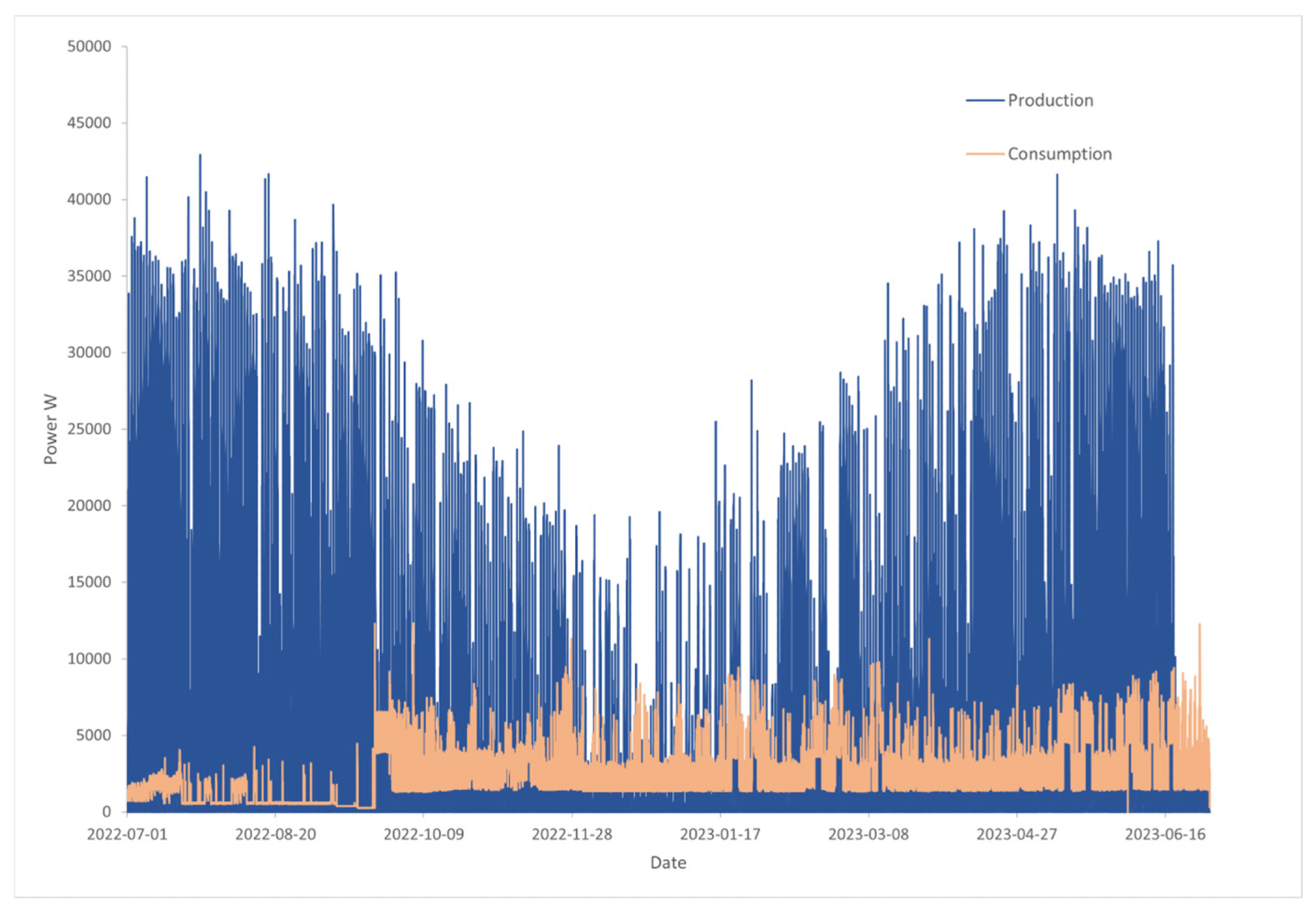
PV panels’ power production and data center power consumption in the research period, July 2022 to June 2023.
Battery Capacity and System Performance Results
The hybrid hydrogen battery configuration demonstrates significant improvements in both self-sufficiency and environmental performance. Sensitivity analysis shows that battery capacity strongly influences system performance up to approximately 50 kWh, beyond which improvements in self-sufficiency become limited. Hydrogen storage capacity has a smaller impact once a minimum threshold is reached, indicating diminishing returns as storage size increases.
Optimization identifies an effective system configuration consisting of a 5-kW electrolyzer, a 2 kW fuel cell, a 200 L hydrogen storage tank, and a 50 kWh battery. This configuration achieves approximately 95% self-sufficiency, with most energy demand met through renewable generation and storage. On an annual basis, the system produces about 217 kg of hydrogen and supplies more than 3300 kWh of electricity.
The economic analysis shows a levelized cost of electricity of 0.47 USD/kWh. Although higher than conventional grid electricity, this reflects the inclusion of storage technologies and the system’s small scale. The results highlight the importance of optimal sizing, as increasing component capacity raises costs without proportional performance gains.
Environmental assessment highlights substantial carbon emission reductions, with nearly 90% savings over 15 years compared to the present scenario. Emissions decrease from more than 10,000 kg CO2 to approximately 1045 kg. The results also demonstrate the complementary roles of storage technologies: batteries efficiently manage short-term fluctuations, while hydrogen provides long-duration storage. However, hydrogen systems exhibit lower round-trip efficiency (30,40%), resulting in energy conversion losses.
Sustainable Data Center Design Implications
This study demonstrates the technical feasibility and practical relevance of a hybrid hydrogen battery energy storage system for renewable-powered data centers. The system effectively addresses solar intermittency while ensuring a reliable power supply with grid backup by combining high-efficiency short-term storage with long-duration hydrogen storage. The optimized configuration delivers high self-sufficiency and substantial carbon emission reductions, demonstrating a balanced trade-off between performance, cost, and sustainability.
The findings highlight the advantages of hybrid systems, where batteries improve responsiveness and efficiency, while hydrogen extends storage duration and enhances system flexibility. The use of real-world data and commercially available technologies strengthens the applicability of the proposed approach. Despite these advantages, challenges remain, including high capital costs, hydrogen conversion losses, and infrastructure limitations.
Future work should focus on improving electrolyzer and fuel cell efficiency, advancing hydrogen storage technologies, and integrating smarter control strategies. Overall, the study offers a case-study framework for sustainable data center energy systems and highlights the role of hybrid hydrogen storage in enabling low-carbon digital infrastructure.
Disclaimer: The views expressed here are those of the author expressed in their private capacity and do not necessarily represent the views of AZoM.com Limited T/A AZoNetwork the owner and operator of this website. This disclaimer forms part of the Terms and conditions of use of this website.
Source:
- Ai, T., Sehili, Y., et al. (2026). Design of a Hybrid Hydrogen Electrolyzer,Fuel Cell System for On-Grid Renewable Energy Supply of Data Centers. Applied Sciences 2026, 16(7), 3479. DOI: 10.3390/APP16073479, https://www.mdpi.com/2076-3417/16/7/3479