As airlines work to reduce emissions while maintaining operational efficiency with existing aircraft and infrastructure, a critical barrier to 100 % sustainable aviation fuel (SAF) adoption has been overcome. Independent testing by Washington State University has validated that Universal Fuel Technologies’ (Unifuel) Flexiforming technology successfully converts HEFA-derived naphtha into synthetic aromatic kerosene that, when blended with paraffinic SAF, creates a fully synthetic jet fuel meeting all essential performance standards. HEFA (Hydroprocessed Esters and Fatty Acids) is the most widely used SAF production process today, but produces only paraffinic fuel components.
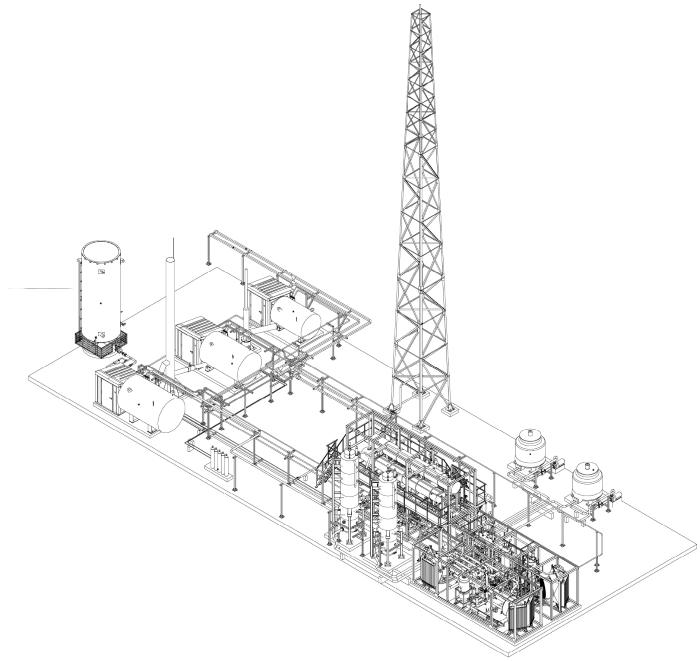 Image Credit: Universal Fuel Technologies
The testing evaluated a blend of 16 % Flexiforming-produced aromatic SAF and 84 % HEFA-derived paraffinic SAF, demonstrating that the combined fuel performs comparably to conventional jet fuel across critical parameters. This is the first demonstration that HEFA naphtha, traditionally a low-value byproduct accounting for up to 20 % of HEFA output, can be upgraded into the aromatic components essential for jet fuel performance.
“This validation from Washington State University confirms what we’ve been working toward: a practical solution that enables HEFA producers to maximize their product yields while creating a fully synthetic jet fuel that performs like the fuel aircraft already use today,” said Alexei Beltyukov, CEO of Universal Fuel Technologies. “By upgrading the naphtha byproduct that SAF producers already generate and often struggle to monetize, we’re not only improving the economics of SAF production but also creating a pathway to fully synthetic aviation fuel that doesn't require continued blending with fossil jet.”
Washington State University’s Bioproducts, Sciences, and Engineering Laboratory evaluated the fuel against conventional jet fuel reference points as part of ASTM-authorized screening tests for SAF candidate fuels. The blend met all critical jet fuel properties, including density, viscosity, freeze point, and flash point. The fuel's heating value indicates energy performance comparable to or exceeding that of conventional jet fuel, while maintaining the molecular profile and distillation characteristics essential for modern jet engines and aircraft.
“Our tests indicate that Flexiforming-produced aromatic components, when blended with HEFA paraffinic component, meet the performance parameters established for jet fuel that we test at the screening stage,” said Dr. Joshua Heyne, Director of the Bioproducts, Sciences and Engineering Lab at Washington State University. “Flexiforming addresses a key limitation in SAF production today: producing a fully synthetic jet fuel with both the paraffinic and aromatic components required for drop-in equivalency with conventional kerosene.”
"The blend demonstrated excellent performance across all testing parameters," added Harrison Yang, Research Assistant Professor at Washington State University's Bioproducts, Sciences and Engineering Lab. "The freeze point of -43.5 °C, viscosity performance at low temperatures, and heating value all indicate this fuel would perform reliably under the demanding conditions of commercial aviation."
HEFA, Ethanol-to-Jet (ETJ), and Fischer-Tropsch (FT) processes, which account for the majority of today's SAF production, typically produce only paraffinic fuel components. Conventional jet fuel contains 8-25 % aromatic molecules that are essential for aircraft engines and fuel system components. Flexiforming's approach to upgrading naphtha byproducts into aromatic components applies to both HEFA and FT operations, as well as other pathways that generate naphtha. Current ASTM standards require SAF to be blended with fossil jet fuel to provide the required aromatics, but the industry is moving toward 100 % synthetic drop-in fuels that eliminate reliance on fossil fuels.
Flexiforming provides HEFA, FT, and ETJ producers with a bolt-on solution that works within existing infrastructure with minimal additional capital investment. Rather than building entirely new facilities or implementing complex blending logistics with external aromatic sources, producers can integrate Flexiforming as a complementary processing step. This upgrades their naphtha byproducts into aromatic SAK blending components, enabling them to advance toward fully synthetic fuel production.
“Aromatics have been the missing piece for fully synthetic aviation turbine fuel," said Denis Pchelintsev, Co-Founder of Universal Fuel Technologies. "These results confirm we can reliably make aromatic molecules from the byproducts HEFA producers already generate, improving both the technical and economic challenges of making a fully synthetic aviation turbine fuel. We intend to apply a similar approach to other pathways that generate naphtha as a byproduct.”
Beyond the HEFA napththa upgrade pathway, Unifuel is also advancing its ethanol-to-jet technology through ASTM qualification. In August of last year, Unifuel’s ETJ SAF, produced via the company’s Flexiforming technology, was accepted into the ASTM D4054 Clearinghouse, which supports the technical evaluation of new aviation fuels. This milestone places Unifuel among a limited number of companies progressing through the ASTM qualification process required for new aviation fuels to reach commercial use.