A recent study in the journal GeoHealth investigates the evolving patterns of wildfire smoke exposure across California and introduces the concept of recovery periods between smoke waves. The researchers analyzed statewide wildfire smoke data from 2006 to 2020 to assess how the frequency, duration, and temporal spacing of smoke events have changed under increasingly severe wildfire conditions. The study offers a new approach to assessing cumulative exposure risks and highlights the growing public health challenges posed by more frequent, closely spaced wildfire smoke events.
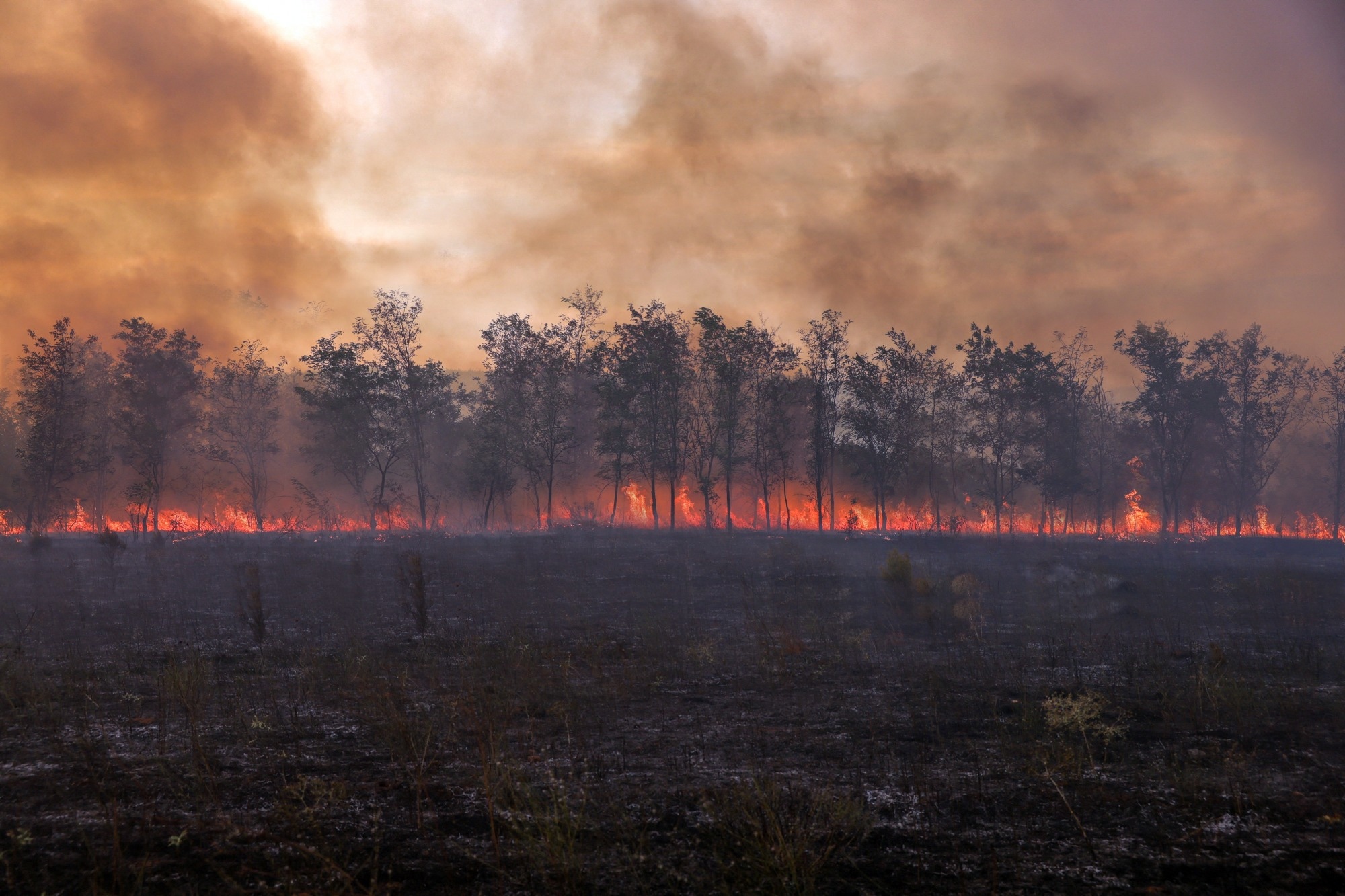
Image Credit: Tayiba8258/Shutterstock.com
Wildfires in California: Background
Wildfires have become a major environmental challenge across California. Rising temperatures, prolonged drought, and shifting precipitation patterns linked to climate change have intensified wildfire activity, extended fire seasons, and increased the total area burned. These fires release large amounts of fine particulate matter (PM2.5) into the atmosphere, posing serious risks to respiratory and cardiovascular health. Evidence also suggests that wildfire-derived PM2.5 can be more harmful than particulate pollution from many other sources.
While researchers have extensively studied the health effects of short-term exposure to wildfire smoke, the impacts of repeated exposure remain poorly understood. Recurring smoke waves can place cumulative environmental and health stress on communities that must repeatedly adapt to degraded air quality. To address this gap, the study introduces a framework based on recovery periods, defined as the time between successive smoke waves. By tracking these intervals, the approach identifies repeated exposure patterns and identifies communities experiencing increasingly shorter recovery times between smoke events.
Methodology and Approach
The researchers conducted a spatiotemporal analysis of wildfire smoke exposure across California from 2006 to 2020 at the census tract level. They combined environmental exposure datasets with demographic information to examine how wildfire smoke patterns interact with community characteristics. The team used modeled estimates of wildfire-specific fine particulate matter (PM2.5) to estimate exposure. They generated these estimates using machine learning methods that integrated multiple environmental datasets.
The models incorporated predictor variables such as ground-based air quality measurements, satellite-derived aerosol optical depth, meteorological conditions, and land-use characteristics. By separating wildfire-related particulate matter from background pollution, the models produced daily wildfire-specific PM2.5 estimates for individual census tracts.
The researchers defined smoke waves as periods of at least two consecutive days in which wildfire-specific PM2.5 concentrations exceeded 1 µg m-3. Using this definition, they calculated three key exposure metrics: the frequency of smoke waves, the duration of each event, and the recovery period, defined as the number of days between the end of one smoke wave and the start of the next.
To investigate social disparities in repeated exposure to smoke, the researchers incorporated demographic and socioeconomic data from the American Community Survey (ACS). They analyzed variables including race and ethnicity, median household income, educational attainment, age distribution, and household composition. The team then categorized changes in recovery periods over time as large decreases, moderate decreases, or minimal change, allowing them to compare exposure dynamics across different communities.
Want to save for later? Click here.
Results and Discussion
The analysis revealed substantial changes in wildfire smoke dynamics across California over the fifteen-year study period. On average, census tracts experienced three to four smoke wave events per year, each lasting roughly three to four days. The most significant shift, however, occurred in the interval between events, with smoke episodes becoming increasingly clustered within shorter timeframes.
Comparing the early period (2006–2010) with the later period (2016–2020) shows a sharp contraction in recovery periods. The time between smoke waves declined by about 60 %, while smoke wave frequency increased by approximately 85 %, and event durations lengthened. Together, these trends indicate a transition toward more persistent and closely spaced smoke exposure across the state.
Regional patterns further highlighted uneven exposure dynamics. Northern California consistently experienced frequent smoke waves and maintained the shortest recovery intervals throughout the study period. In contrast, Southern California and the Central Valley showed the most pronounced declines in recovery periods, signaling a rapid rise in repeated smoke events in these regions.
Demographic analysis revealed clear links between exposure patterns and community characteristics. Census tracts with the largest reductions in recovery periods tended to have higher proportions of racial and ethnic minority populations, lower household incomes, and more single female–headed households, suggesting that socially vulnerable communities face a disproportionate burden of repeated wildfire smoke exposure.
Overall, the findings point to an emerging compound exposure challenge, where smoke events occur in rapid succession. Shorter recovery periods leave communities less time to recover from poor air quality and increase the need for protective measures such as indoor air filtration, reduced outdoor activity, or temporary relocation.
Conclusion
This study establishes recovery periods between smoke waves as a critical metric for understanding wildfire smoke exposure dynamics. The analysis shows that smoke events in California are becoming both more frequent and more closely spaced, reducing the time communities have to recover between episodes. As recovery intervals shrink, repeated exposures may compound respiratory and cardiovascular risks while increasing adaptation pressures on affected populations.
The recovery-period framework provides a new tool for environmental health research by capturing the episodic and cumulative nature of wildfire smoke exposure. It also highlights important equity dimensions, as communities with lower incomes and higher proportions of minority populations experienced the largest declines in recovery time. These insights support the development of improved public health strategies, including early warning systems, community preparedness, and clean-air infrastructure.
Journal Reference
Jones-Ngo, C. G., et al. (2026). Shorter Recovery Periods Between Smoke Waves: A Spatio-Temporal Analysis in California (2006–2020). GeoHealth, 10(3), e2025GH001389. DOI: 10.1029/2025GH001389
https://agupubs.onlinelibrary.wiley.com/doi/10.1029/2025GH001389
Disclaimer: The views expressed here are those of the author expressed in their private capacity and do not necessarily represent the views of AZoM.com Limited T/A AZoNetwork the owner and operator of this website. This disclaimer forms part of the Terms and conditions of use of this website.