Researchers have presented an in-depth analysis of ice core samples from the Weißseespitze summit glacier in the Eastern Alps, revealing valuable insights into trace pollution from pre-industrial periods spanning the Roman Empire to the early modern era.
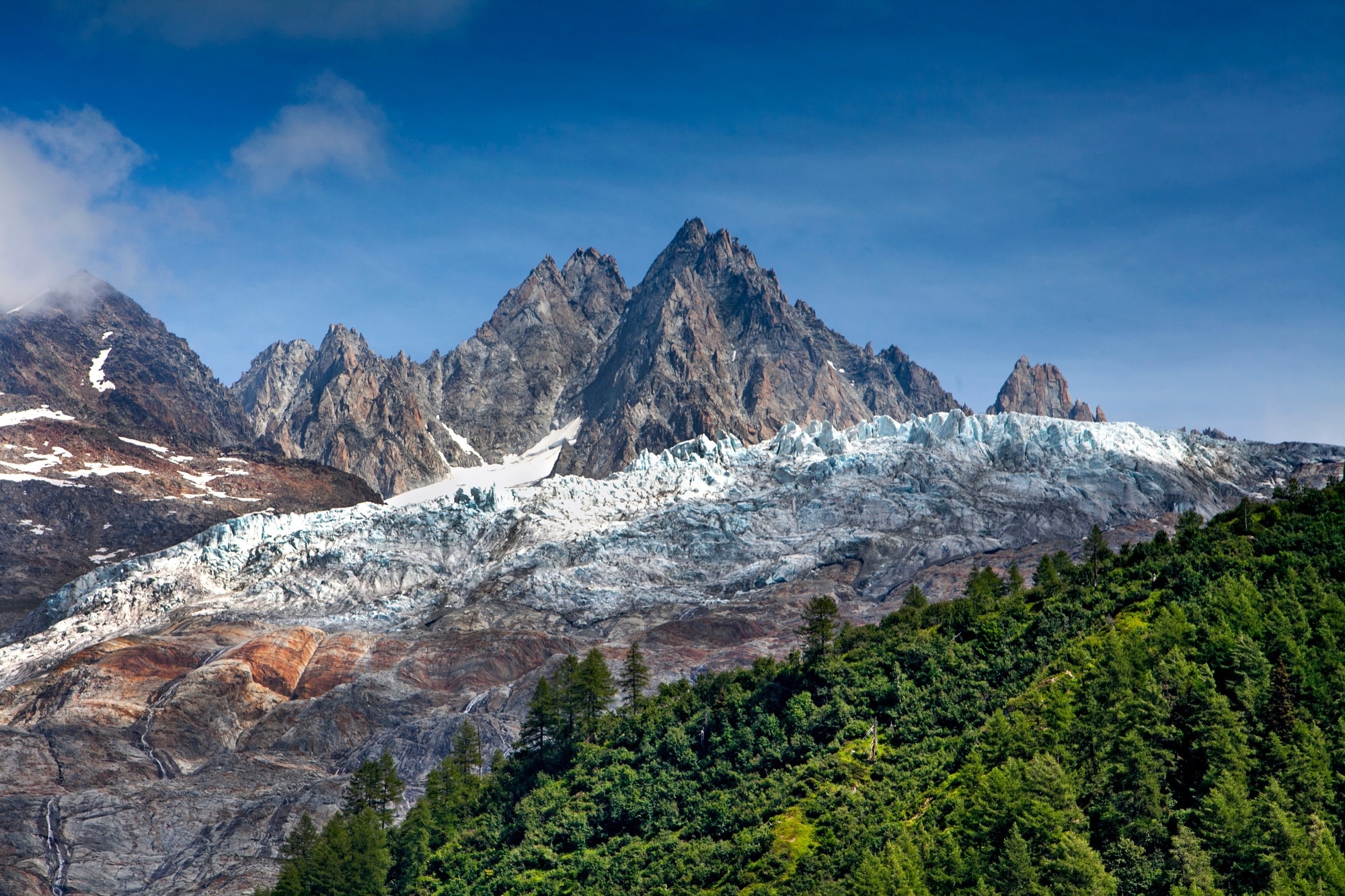
Image Credit: Elena Protcheva/Shutterstock.com
Research on Alp Glaciers: Background
Previous work on glaciers in the Alps has predominantly focused on the Western Alps due to their higher altitude, which facilitates better preservation of ice layers and thereby the preservation of environmental and climatic signals.
In contrast, glaciers at lower elevations in the Eastern Alps were traditionally considered unsuitable for collecting uncontaminated ice cores due to basal melt and ice-flow processes that compromise the integrity of the records.
Nevertheless, research has established that cold-based ice frozen onto bedrock, as observed at the Weißseespitze summit ice cap, can retain long-term records under specific cold conditions.
Unlike the well-studied Western European Alps, where industrialization has led to a notable rise in pollutants over the last two centuries, the Eastern Alps have received fewer comprehensive investigations, partly due to challenges posed by glacier elevation and melting. However, recent discoveries confirm that cold ice preserved near bedrock at elevations below 4,000 meters can maintain undisturbed historical records.
The Weißseespitze glacier, situated at 3,499 meters above sea level, serves as a prime example, with its approximately 6,000-year-old ice archive preserved at a relatively shallow depth. This offers a unique perspective on the long-term dynamics of atmospheric pollution before modern industrial emissions.
The Study
Expanding upon earlier investigations, this study concentrated on the upper 8.5 meters of a 9.95-meter ice core extracted from the Weißseespitze glacier in 2019.
A suite of 18 trace elements, including lithium, vanadium, chromium, manganese, cobalt, nickel, copper, zinc, arsenic, rubidium, strontium, silver, cadmium, barium, thallium, lead, bismuth, and uranium, was analyzed alongside organic compounds, including carboxylic and dicarboxylic acids.
Discrete ice samples collected during the 2022 melt season were examined offline in the laboratory to obtain these detailed chemical profiles. To distinguish natural mineral dust inputs from human-induced pollution, data interpretation leveraged Positive Matrix Factorisation (PMF), a statistical technique that deconvolutes complex datasets into source-related factors.
This was complemented by calculating Enrichment Factors (EF) to quantitatively evaluate the degree of anthropogenic enhancement relative to crustal baselines. Advancements in age determination used both carbon-14 and newer argon-39 dating methods, improving the accuracy of correlating chemical horizons with historical periods. Additionally, levoglucosan measurements, indicative of biomass burning, were compared to micro-charcoal data from a nearby peat bog to assess local fire activity and its influence on atmospheric aerosols.
Want to save for later? Click here.
Results and Discussion
The refined age-depth model derived from the combined dating techniques indicates that the glacier’s surface formed approximately 371 years before 2019, with an uncertainty range of 311 to 467 years.
A prominent peak in chemical deposition found at 640 centimeters depth dates to roughly 891 years before 2019. Trace element concentrations demonstrated variability linked to both natural dust contributions and anthropogenic sources.
The PMF analysis effectively distinguished several factors associated with crustal material, long-range-transported pollution, and biomass burning. The enrichment factors confirmed that elements such as lead and bismuth showed notable increases above crustal levels, indicating human influence well before the industrial era, with some signatures traceable to metallurgical activities associated with the Roman period.
Organic acid profiles and levoglucosan data together reinforce evidence of biomass combustion events during these pre-industrial centuries. The correspondence between the ice core organic markers and micro-charcoal records from the nearby Schwarzboden mire strengthens interpretations of local fire history and its impact on atmospheric composition.
This comprehensive chemical fingerprinting of ice core layers underscores the sensitivity of alpine glaciers as long-term monitors of environmental change. However, the study highlights the accelerating loss of ice at Weißseespitze, with an estimated 4.5 meters of ice lost by 2025, threatening the longevity of this invaluable archive. Given projections that up to 30% of glaciers in the Ötztal region may disappear by 2030, the urgency to document and preserve these environmental records is paramount.
Conclusion
The Weißseespitze summit glacier serves as a unique and critical natural archive, capturing multi-millennial records of atmospheric chemical composition, including early anthropogenic pollution signatures far preceding modern industrialization.
Through detailed chemical analyses and improved dating methods, this research reveals the complex interplay between natural dust sources and various human activities such as metallurgical processes and biomass burning across centuries.
The findings emphasize how alpine ice cores from previously overlooked lower-elevation glaciers in the Eastern Alps can provide key insights into long-term environmental changes and pollution history. Importantly, the study underscores the urgent need for intensified preservation efforts and continued monitoring as climate-driven ice loss diminishes the potential for future insights. This work ultimately contributes to a better understanding of historical pollutant dynamics and forms a crucial baseline for evaluating ongoing and future atmospheric changes in sensitive mountain environments.
Journal Reference
Spagnesi M., Fischer A., et al. (2026). Long-term pre-industrial anthropogenic pollution recorded in the Weißseespitze glacier ice core (Eastern Alps). Frontiers in Earth Science, 14, 1680019. DOI: 10.3389/feart.2026.1680019, https://www.frontiersin.org/journals/earth-science/articles/10.3389/feart.2026.1680019/full