A new global model reveals that over 120 million hectares of forest have been cleared for commodity production since 2001, offering a clearer picture of agriculture-driven deforestation and its climate impact.
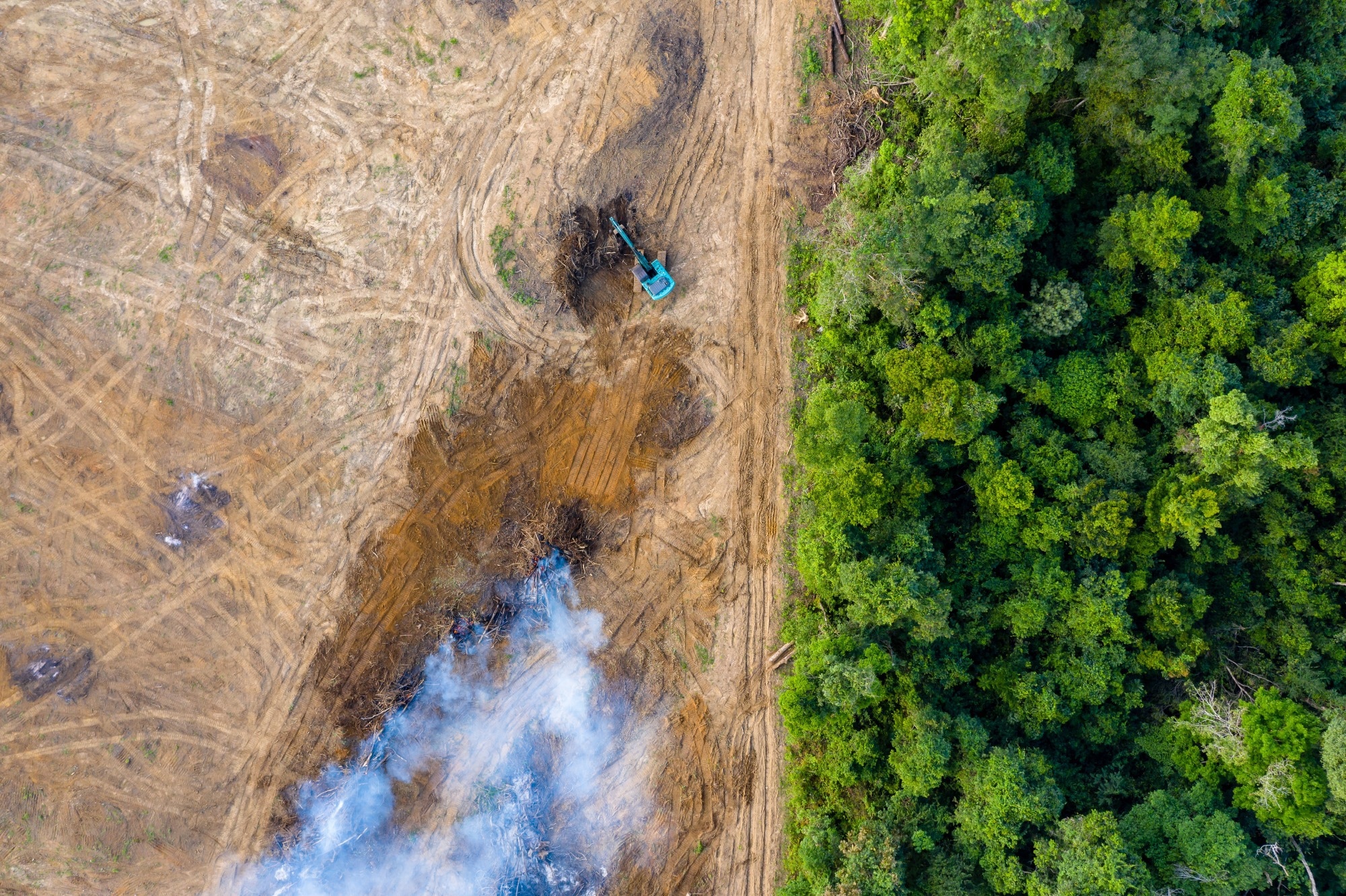
Study: Global patterns of commodity-driven deforestation and associated carbon emissions. Image Credit: Richard Whitcombe/Shutterstock.com
A recent study published in Nature Food has introduced a comprehensive modeling framework, DeDuCE (Deforestation Driver and Carbon Emissions), designed to quantify commodity-driven deforestation and its associated carbon emissions at a global scale.
By integrating high-resolution remote sensing data with agricultural statistics, the study delivers annual, country-level insights spanning 2001 to 2022.
The findings provide a more precise understanding of land-use change, highlight pathways for balancing food production with climate and biodiversity goals, and clarify the important distinction between tree cover loss and true deforestation.
Why Deforestation is Still Poorly Understood
Deforestation remains one of the most significant drivers of climate change and biodiversity loss, largely due to the continued expansion of agriculture. Forest ecosystems are essential for carbon storage and ecological stability, yet rising global food demand has accelerated their conversion at an unprecedented scale.
Current estimates suggest agriculture accounts for over 90 % of global deforestation, linking food systems directly to emissions and land degradation.
Despite this, the specific role of individual commodities in driving forest loss is still not well understood. Many existing datasets either lack the spatial detail needed to pinpoint where deforestation occurs or the global consistency required to compare trends across regions. As a result, policymakers and supply chain actors often work with incomplete or overly aggregated information.
This is where the DeDuCE framework comes in.
By integrating spatially explicit satellite observations with detailed agricultural statistics, it enables deforestation and carbon emissions to be attributed to specific commodities. This more granular perspective supports targeted interventions while also distinguishing true deforestation from broader processes like degradation or temporary tree cover loss.
Linking Forest Loss to Specific Commodities
To achieve this, DeDuCE combines multiple datasets within a hybrid spatial–statistical framework, built around three core components: deforestation attribution, carbon emissions estimation, and quality assessment.
The model links satellite-derived tree cover loss with land-use maps and agricultural data.
Where high-resolution spatial data are available, deforestation can be directly tied to specific commodities or land uses, such as cropland, pasture, or plantations. In regions where these data are incomplete, the model applies statistical methods to distribute deforestation based on observed patterns of agricultural expansion. This blended approach allows it to capture both direct and indirect drivers of land-use change.
Carbon emissions are then estimated by calculating the loss of ecosystem carbon stocks following deforestation. This includes aboveground and belowground biomass, as well as deadwood, litter, and soil organic carbon. Peatland emissions are treated separately, reflecting their slower, long-term release, which can continue for decades and differs fundamentally from immediate biomass loss.
To ensure scalability, the framework runs on cloud-based platforms capable of processing large volumes of high-resolution data. At the same time, the study introduces an Integrated Quality Index (IQI) to assess the confidence of its estimates. Rather than measuring accuracy directly, the IQI provides a transparent way to evaluate how data resolution and availability influence results across regions and commodities.
Where the Pressure is Coming From
Applying this framework, the study estimates that 121.8 million hectares of deforestation were driven by commodity production between 2001 and 2022. This corresponds to approximately 41.2 gigatonnes of CO2 emissions, with an additional 2.9 gigatonnes linked to peatland drainage.
On average, this amounts to about 1.9 gigatonnes of emissions per year, though these figures vary depending on modelling assumptions.
The distribution of deforestation is far from uniform.
Tropical regions like South America, Southeast Asia, and Africa account for the majority of forest loss, with countries such as Brazil, Indonesia, and the Democratic Republic of Congo emerging as key hotspots. However, deforestation is not limited to the tropics; countries like China and the United States also contribute to total forest loss.
Looking more closely at drivers, pasture expansion for cattle production dominates, accounting for roughly 42 % of deforestation and over half of associated emissions. Oilseeds, especially oil palm and soybeans, follow as major contributors. Other commodities, including forest plantations, cocoa, coffee, and rubber, also play important roles.
One of the more nuanced findings relates to staple crops. Rice, maize, and cassava together account for around 11 % of global deforestation, which is actually more than some widely regulated export commodities. Because these crops are deeply tied to global food security and are produced and consumed across regions, addressing their environmental impact presents a more complex challenge.
While the model improves on previous estimates by integrating spatial detail and refining attribution methods, the results remain sensitive to key assumptions. Variations in how forests are defined, how deforestation is attributed, and how changes unfold over time can shift estimates by ±30 % or more. The IQI further highlights uneven data quality, particularly in parts of Africa, where limited spatial data means greater reliance on statistical approximations.
What This Changes For Policy and Practice
The DeDuCE framework offers a clearer, more grounded view of how commodity production is shaping deforestation and carbon emissions. By bringing spatial and statistical approaches into conversation with one another, it produces insights that feel both globally coherent and locally meaningful - something that’s been missing, and is long overdue, in how we approach decision-making across policy, industry, and research.
What emerges quite plainly is that focusing solely on major export commodities is no longer enough. Staple crops must be part of the discussion if we’re serious about meeting climate and biodiversity goals without placing food security at risk. It’s a more complicated picture, certainly, but also a more honest one.
There’s also a clear and pressing need to improve global land-use data. Better coverage and higher resolution would allow for more confident, more precise attribution, especially in regions where current gaps leave too much to inference. If we want sharper decisions, we need sharper data.
All in all, DeDuCE draws a stronger line between food systems and environmental outcomes, while reminding us that deforestation is not a single-thread problem. It’s layered, uneven, and often inconveniently complex. Addressing it will require better data, yes, but also more thoughtful interventions and a willingness to look beyond the obvious levers if we’re to reduce emissions and protect what remains of the world’s forests.
Journal Reference
Singh, C., & Persson, U. M. (2026). Global patterns of commodity-driven deforestation and associated carbon emissions. Nature Food, 7(2), 138–151. DOI: 10.1038/s43016-026-01305-4. https://www.nature.com/articles/s43016-026-01305-4
Disclaimer: The views expressed here are those of the author expressed in their private capacity and do not necessarily represent the views of AZoM.com Limited T/A AZoNetwork the owner and operator of this website. This disclaimer forms part of the Terms and conditions of use of this website.