A water-based formulation developed at the University of Waterloo using nanotechnology is both greener and more effective than conventional methods for delivering agricultural pesticides.
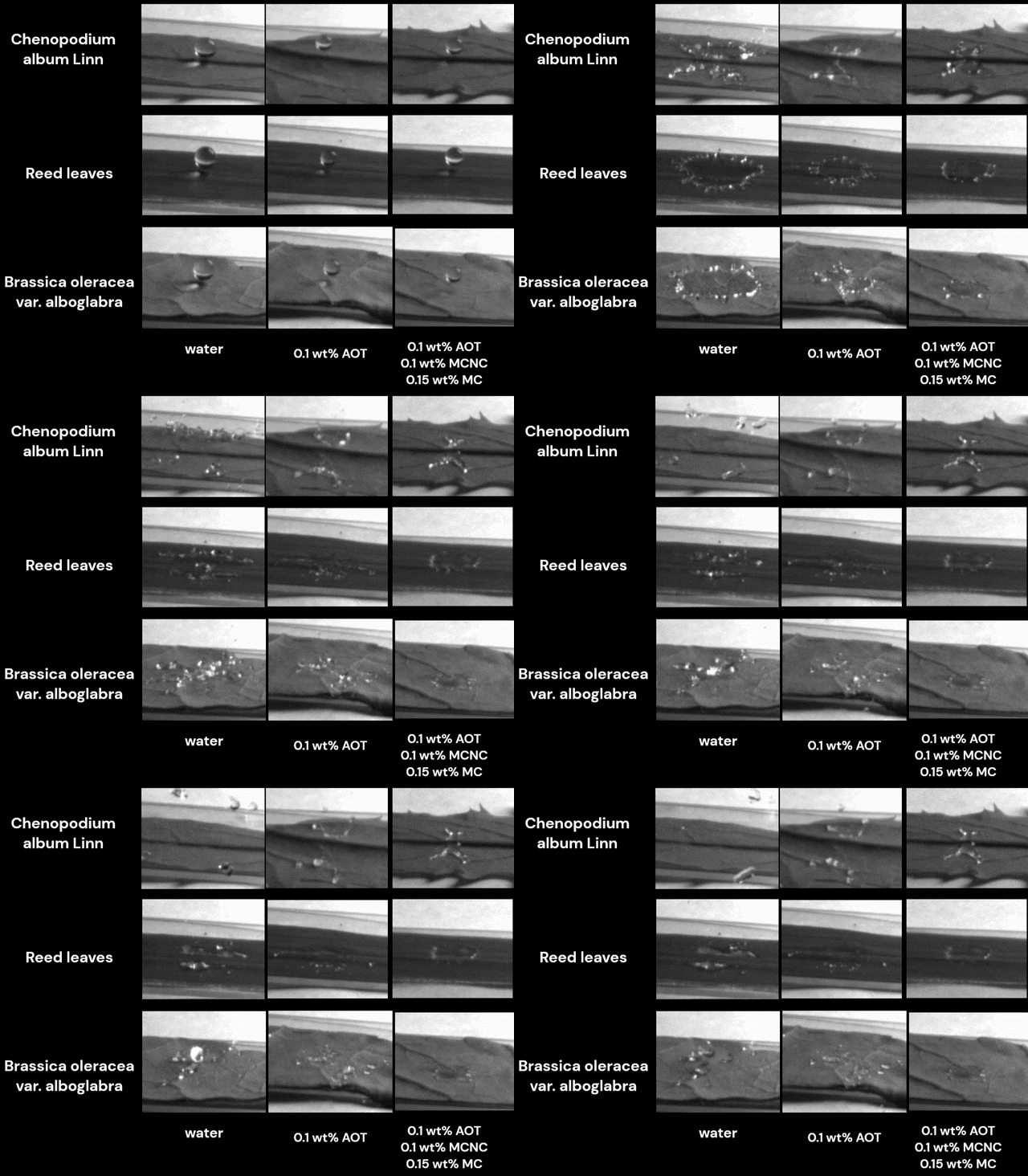 Animated sequence shows that a new formulation (right) developed by researchers at Waterloo can significantly improve the adhesion of water droplets to various hydrophobic and superhydrophobic plant leaves. Image Credit: University of Waterloo
The new solution dramatically improves how pesticides stick to plant leaves – even in wind and rain – minimizing splash and runoff that contribute to costly waste and environmental contamination.
In early field trials in cabbage plots with an industrial partner in Singapore, the formulation outperformed conventional delivery systems, which use chemicals and solvents to help droplets stick to leaves, by providing better pest control with less pesticide.
“With our new formulation, the pesticide is dispersed in water,” said Dr. Michael Tam, a chemical engineering professor at Waterloo. “We are spraying water, not solvent, making this approach well aligned with sustainable agriculture goals.”
How to effectively deliver pesticides to crops is a major challenge in agriculture. Liquids are now typically applied via nozzles and misting sprays and from planes.
Those methods often fail to deposit pesticides precisely where they are needed. Droplets can bounce off leaf surfaces, drift away in the air, or wash into soil and waterways.
To help solve those issues, Waterloo researchers carefully altered the surface of particles known as cellulose nanocrystals (CNCs) to create a nanostructured formulation that stabilizes pesticide droplets without chemicals or solvents. The formulation uses carbon-neutral CNCs produced from water, pesticides, and inorganic and metallic nanoparticles.
“This unique nanostructure significantly enhances droplet strength, suppressing droplet splash during the impact process,” said Tam, noting high-speed imaging confirmed their effectiveness.
Instead of splashing, fragmenting, or rebounding off leaves, droplets remain intact upon impact, flattening into a pancake-shaped film that adheres strongly. The stabilization method works even when surface tension is reduced by rain and wind, a key distinction from existing technologies.
Researchers are now seeking industrial partners to scale and commercialize their innovation.